A
Impact sound reduction
This is the most relevant interpretation for many 15 dB flooring claims: footsteps or impacts on the floor create less transmitted sound to the space below when the acoustic floor system is tested.



Acoustic vinyl flooring is resilient sheet flooring designed to reduce impact sound while retaining the practical advantages of commercial vinyl roll installation. For buyers searching for sound absorbing vinyl sheet or 15 dB vinyl flooring, the key is not the marketing number alone: the acoustic value must be tied to the exact foam-backed construction, wear layer, roll format, installation system and test report. 3C-Floor supports acoustic heterogeneous vinyl programs for offices, schools, healthcare, hospitality, apartments and project supply.

Acoustic vinyl flooring is a resilient floor covering engineered to reduce impact sound, usually by adding a resilient foam or acoustic layer beneath the wear surface. A commercial acoustic vinyl roll combines this cushioned structure with a protective wear layer, decorative surface and large sheet format. For a 15 dB vinyl flooring specification, buyers should confirm that the 15 dB value belongs to the exact selected construction and tested installation—not simply to the product family name.
“Sound absorbing vinyl sheet” is a useful search phrase, but procurement documents should be more precise. Flooring acoustics may refer to impact sound transmitted to the room below, walking noise heard in the same room, or both. The quotation should therefore name the acoustic test requirement and the exact product construction.
A 15 dB acoustic value is useful only when the buyer knows what was measured. In resilient flooring, 15 dB commonly refers to an improvement in impact sound insulation for a defined test assembly. That is different from saying the floor “absorbs 15 dB of all room noise.”
This is the most relevant interpretation for many 15 dB flooring claims: footsteps or impacts on the floor create less transmitted sound to the space below when the acoustic floor system is tested.
Walking noise heard inside the same room is another comfort issue. A softer acoustic construction may improve perceived room comfort, but the measurement is not interchangeable with impact sound insulation.
Buyers often search for sound absorbing vinyl sheet. For technical approval, translate that phrase into a measurable acoustic requirement, the named test method and the exact approved vinyl construction.
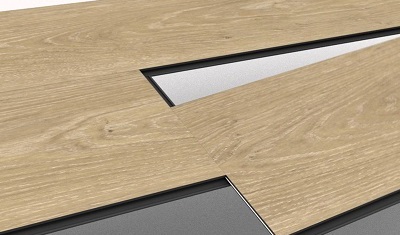
Heterogeneous vinyl is built in functional layers. A typical commercial construction can combine surface treatment, transparent wear layer, printed design, stabilization and a compact or cushioned backing. For acoustic vinyl flooring, the backing or acoustic interlayer is the critical difference because it adds resilience that helps reduce impact energy.
3C-Floor’s current heterogeneous PVC flooring supplier page explicitly distinguishes compact/dense backing from comfort-oriented foam backing. This acoustic page focuses on the foam-backed performance decision rather than the broader heterogeneous category.

The values below separate information already shown in 3C-Floor’s current heterogeneous vinyl range from items that must remain project-specific. This prevents a 15 dB keyword from becoming an unsupported blanket performance claim.
| Specification | 3C-Floor / Project Direction | Why It Matters for Acoustic Vinyl |
|---|---|---|
| Product type | Heterogeneous PVC / acoustic vinyl sheet | Separates a layered foam-backed acoustic floor from compact homogeneous sheet or rigid plank flooring. |
| Acoustic target | 15 dB target available for discussion; exact product and report must be confirmed | The dB value must belong to the tested construction and installation, not to the category name alone. |
| Overall thickness | 2.0–3.0 mm range shown in the current 3C-Floor heterogeneous roll program; acoustic construction subject to selected SKU | Thickness affects construction and comfort but is not a substitute for an acoustic test result. |
| Wear layer | 0.12–0.7 mm options shown in the current heterogeneous range | Choose by traffic and maintenance. A 15 dB acoustic floor can still require a commercial wear layer. |
| Roll format | 2 m × 20 m is a common current heterogeneous vinyl direction | Roll width and length influence seam map, waste, lifting, transport and cutting plan. |
| Backing | Foam / cushioned acoustic direction by project specification | The resilient backing is central to acoustic behavior and underfoot feel. |
| Surface | UV / easy-clean or functional surface direction depending on selected product | Cleaning and stain performance should be balanced with acoustics rather than specified separately. |
| Installation | Commercial glue-down sheet; welded seams where the compatible system/project requires them | Adhesive, substrate and seam details can affect both installed performance and lifecycle. |
| Indentation / rolling load | Confirm by selected construction and project requirement | Softer acoustic layers improve resilience but must still support furniture, caster chairs, beds or carts where applicable. |
| Test documents | Confirm exact acoustic, fire, slip, VOC or other required reports before order | Do not assume one color, backing or thickness shares the same documentation as another. |
| OEM / private label | Color, roll marking, labels, packaging and documentation can be discussed by program | Repeat-order control is essential when acoustic performance becomes part of the marketed SKU. |
Important: 3C-Floor currently publishes 15–22 dB sound-reduction references in selected office/theater vinyl content. For any new 15 dB commercial order, confirm the exact construction and supporting test report before publishing the figure on your own data sheet.

A more resilient backing can improve footfall comfort and sound reduction, but buyers should not assume the softest product is the best commercial floor. Furniture legs, chair casters, rolling beds, trolleys and concentrated loads can expose weaknesses if the acoustic layer is not matched to the application.
This is why leading 15 dB commercial products are usually sold as a performance compromise: meaningful acoustic reduction without sacrificing the load response expected in the intended use area. For B2B sourcing, ask for acoustic and indentation data together whenever heavy rolling traffic is expected.
Acoustic vinyl is strongest where people need a quieter walking environment but still want the easy-clean, large-area and design benefits of resilient sheet flooring.
Footsteps, heels and movement can dominate quiet work areas. Acoustic vinyl can add walking comfort while a suitable wear layer and surface system address daily commercial use.
Sound reduction can support calmer learning environments. Furniture movement, desk legs, cleaning and seam planning should be checked together with the acoustic target.
Quieter footsteps can be valuable, but healthcare buyers must also evaluate rolling beds, indentation, cleaning chemicals, welded seams, hygiene and project-specific documentation.
Acoustic sheet can support quieter corridors and residential-style interiors while providing large-area coverage and decorative flexibility.
Impact sound is often a floor-to-floor concern. Confirm the required assembly-level acoustic result because the building structure affects what occupants ultimately hear.
3C-Floor’s existing theater content specifically highlights cushioned vinyl and a 15–22 dB sound-reduction direction, making this a relevant use case for quieter circulation areas.
The fastest way to get a useful quotation is to turn the acoustic requirement into a complete technical SKU. The four steps below remove the assumptions that cause most quote mismatches.
State 15 dB or another required value and identify the project test standard or consultant requirement where available.
Tell the supplier whether the floor will see desk chairs, beds, trolleys, retail fixtures, school furniture or mainly foot traffic.
Confirm total thickness, wear layer, backing, surface, roll size, color, adhesive and seam strategy before final pricing.
Make sure the approved sample, production code and acoustic documentation refer to the same construction before bulk order approval.
Acoustic vinyl roll and acoustic flooring underlayment are not the same product strategy. A foam-backed acoustic sheet normally gets its sound-reducing behavior from its own tested construction. Adding an unrelated separate underlay under a glue-down sheet can change adhesive behavior, indentation response and test performance.
Separate underlay is more typical for compatible floating SPC, WPC, laminate or selected LVT systems. If a project already specifies an acoustic vinyl sheet, preserve the tested floor system unless the manufacturer or project designer approves another assembly.
For buyers comparing the two approaches, review 3C-Floor’s acoustic flooring underlayment supplier page.

Large acoustic vinyl rolls reduce joint density, but the remaining seams still matter. Compatible commercial sheet systems may use heat-welded seams where the project requires them. The substrate must also be smooth, dry, sound and compatible with the adhesive because soft resilient flooring can telegraph underlying defects.
| Installation Check | What to Confirm | Why It Affects the Project |
|---|---|---|
| Subfloor | Flatness, moisture, strength, cleanliness and preparation system | Surface defects or moisture can damage appearance, adhesion and long-term stability. |
| Adhesive | Compatibility with exact acoustic backing and substrate | A cushioned backing may require a different installation approach from a compact sheet. |
| Seam method | Butt seam or compatible heat-welded seam according to product/project | Healthcare and education projects often treat seams as part of the cleanable floor system. |
| Welding rod | Color, diameter, floor compatibility and installer method | Coordinate accessories before shipment rather than searching for a match on site. |
| Site conditions | Temperature, acclimation, rolling, curing and handover schedule | Installation quality can influence how a well-specified acoustic floor performs after occupancy. |
For compatible seam accessories, see the verified 3C-Floor vinyl floor welding rod page.
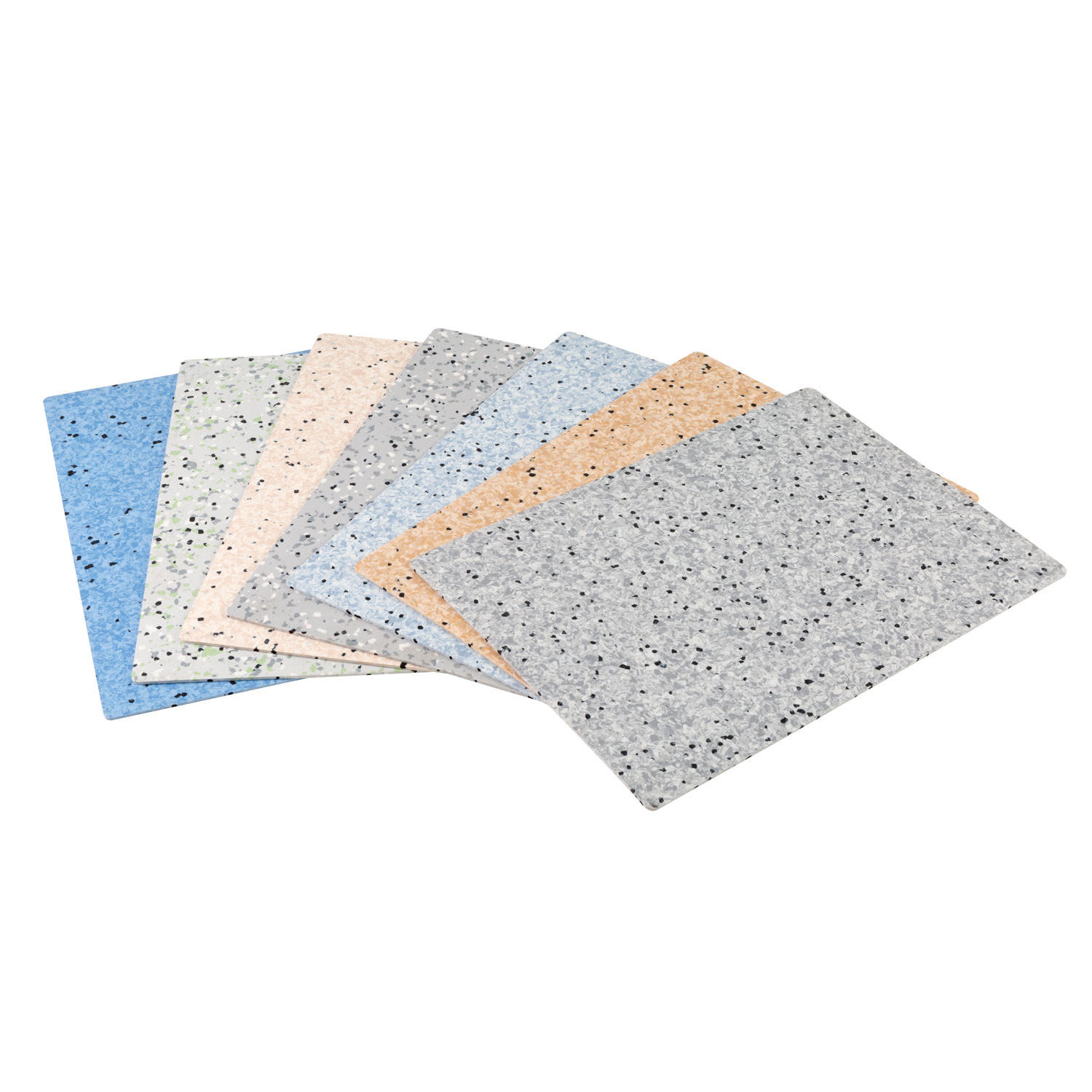
The gallery uses real 3C-Floor images covering roll product, structure, office application, commercial sheet and a theater environment. Each image has a descriptive ALT for Google Images without keyword stuffing.

These verified pages support the next buyer decision without duplicating this page’s core 15 dB acoustic-performance intent.
Answer-first questions written for flooring importers, architects, contractors and project procurement teams comparing acoustic vinyl roll and 15 dB sheet flooring.
Acoustic vinyl flooring is resilient vinyl designed to reduce impact sound compared with a compact floor of similar use. In sheet products, acoustic performance is commonly created with a resilient foam or acoustic interlayer while the wear surface provides cleanability and traffic resistance.
15 dB vinyl flooring generally refers to a tested improvement in impact sound insulation of about 15 decibels for the defined floor construction and test setup. Ask for the exact test method, construction, report and sample reference instead of treating 15 dB as a generic claim that applies to every vinyl roll.
The terms are often used together in commercial searches, but acoustic flooring is more accurately specified by measured impact sound reduction and the exact floor construction. Sound absorption inside a room and impact sound transmission through the floor are related acoustic topics but are not identical measurements.
Yes, it can be a practical office option when footfall noise and underfoot comfort matter. The selected construction should also meet wear, indentation, caster-chair, fire, slip, VOC and installation requirements for the project.
It can be considered for patient rooms, care areas and selected corridors when the exact product meets the facility requirements. For areas with heavy rolling beds or equipment, balance sound reduction with residual indentation, rolling-load performance, seams, hygiene and cleaning chemistry.
No. Overall thickness alone does not predict acoustic performance. Backing density, resilience, construction, adhesive system and the complete floor assembly affect the measured result, so buyers should compare tested systems rather than millimeters alone.
Commercial acoustic vinyl sheet is commonly installed as a glue-down roll system over a prepared subfloor. Subfloor flatness, moisture, adhesive, rolling, seam welding and perimeter details should be planned as one compatible system.
Send the project type, target acoustic value, required test standard, total thickness, wear layer, roll size, backing preference, rolling-load or indentation needs, surface, color, seam requirement, quantity, packaging, documentation and destination port. A complete RFQ helps 3C-Floor match the acoustic target with the correct commercial construction.
Tell 3C-Floor whether your project needs 15 dB acoustic vinyl flooring or another sound-reduction target. Add the room type, traffic, rolling loads, thickness, wear layer, roll format, foam backing, color, surface, seam method, test requirements, quantity, packaging and destination so the quotation can be tied to a repeatable product specification.
Recommended RFQ fields: acoustic dB target · test method · application · m2 · total thickness · wear layer · backing · roll size · surface · color · indentation / rolling load · welding · required reports · private label · destination port.