Can the surface be cleaned predictably?
A smooth, non-porous resilient surface supports routine cleaning. The selected finish should be checked against the facility’s actual detergents, disinfectants and stain exposure.



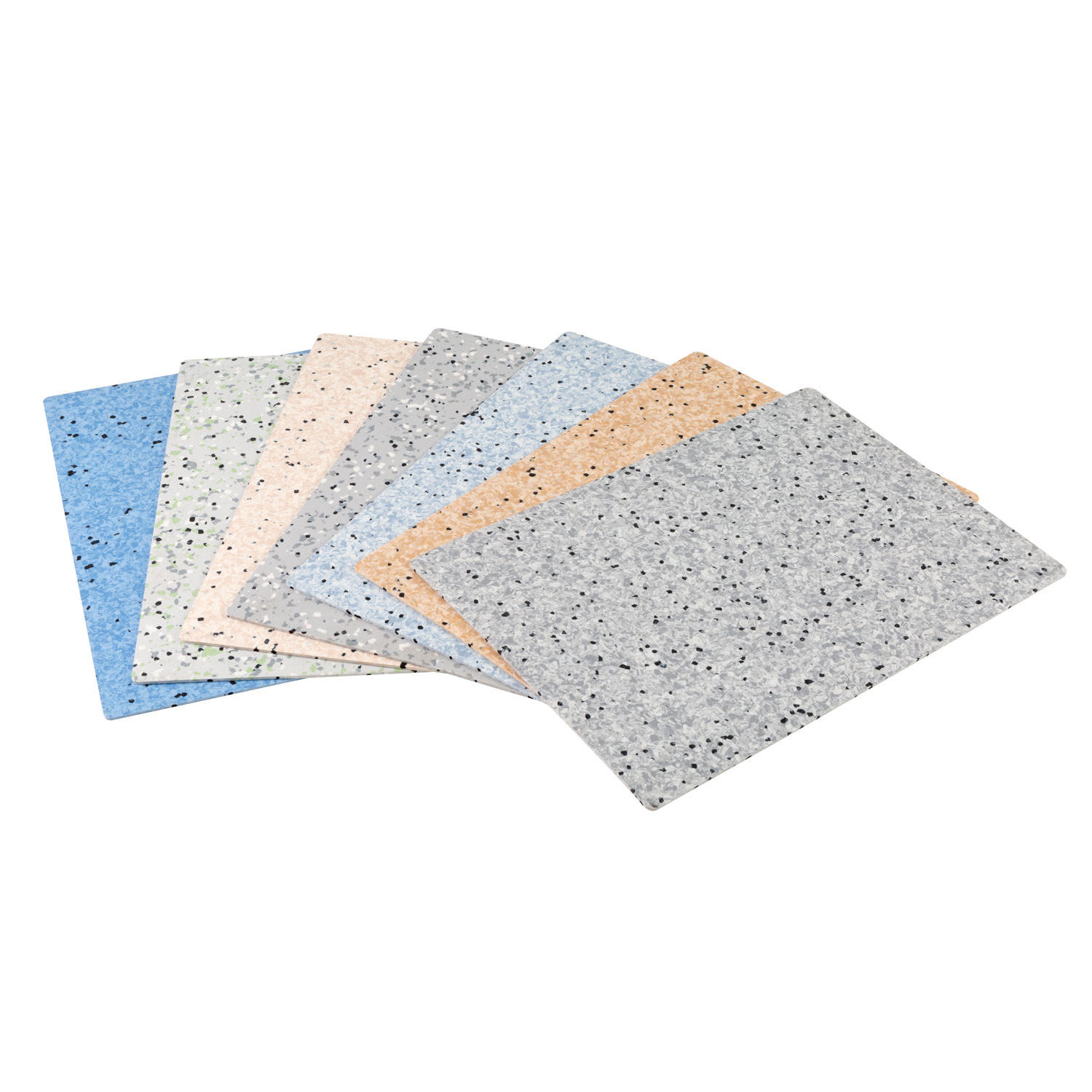
3C-Floor supplies antibacterial vinyl flooring for hospitals, clinics, laboratories, schools and other interiors where the floor must stay easy to clean while handling frequent traffic, rolling equipment and routine disinfection. Choose homogeneous or heterogeneous hygienic vinyl sheet according to wear, design, maintenance and project requirements.

Antibacterial vinyl is resilient PVC flooring designed for spaces where easy cleaning and hygienic surface performance matter. In demanding projects, the best result comes from combining a non-porous sheet surface with correct adhesive, heat-welded joints, appropriate perimeter detailing and a cleaning protocol matched to the facility.
Many product pages reduce healthcare flooring to a single promise: “antibacterial.” Real specifications are more demanding. A hospital corridor has wheelchairs, trolleys and cleaning machines. A treatment room may face disinfectants and staining agents. A laboratory may add static-control or chemical-resistance requirements. A school clinic needs hygiene but also comfort, color zoning and practical maintenance.
That is why 3C-Floor approaches antimicrobial hospital flooring as a project system. We help buyers decide whether a homogeneous sheet, heterogeneous sheet or a specialty resilient floor is the better starting point, then align roll size, thickness, surface, welding accessories, color and documentation with the room function.
For infection-sensitive environments, antibacterial or antimicrobial claims should always be checked against the exact product test report and specified test method. They do not replace routine cleaning and disinfection. This distinction makes procurement clearer and helps contractors avoid approving a floor on a marketing term alone.
A smooth, non-porous resilient surface supports routine cleaning. The selected finish should be checked against the facility’s actual detergents, disinfectants and stain exposure.
Sheet formats reduce the number of joints. Where hygiene or water-tight detailing matters, compatible welding rod and correct heat-welding workmanship become part of the specification.
Foot traffic alone is not enough. Beds, carts, mobile diagnostic equipment and cleaning machines can create concentrated rolling loads that influence construction choice.
Entrances, wash areas and treatment zones may need different slip targets. Ask for performance data for the exact construction rather than assuming one rating suits an entire facility.
Healthcare projects should identify frequent disinfectants, iodine-type staining agents and laboratory chemicals early, then confirm compatibility using the relevant test data.
VOC, fire, slip, antibacterial and other documentation varies by country and project. Send the required standards with the inquiry so the proposed floor can be checked before sampling.
Large-format hygienic vinyl sheet can cover corridors and rooms with fewer joints than small tiles or planks. After full-spread bonding, compatible seams can be grooved and heat welded. In healthcare projects, the floor can also be detailed with coved edges where the specification requires easier edge cleaning.

The values below are practical starting points based on 3C-Floor’s commercial vinyl roll programs. Final construction, test results and tolerances should be confirmed against the exact sample and technical data sheet supplied for your project.
| Specification item | Homogeneous hygienic sheet | Heterogeneous hygienic sheet | Procurement note |
|---|---|---|---|
| Typical format | Commercial vinyl roll | Commercial multi-layer vinyl roll | Sheet format is efficient for large-area coverage with fewer joints. |
| Typical overall thickness | About 2.0–3.0 mm program range | About 2.0–3.0 mm program range | Select by traffic, rolling loads, maintenance plan and project standard. |
| Typical width | 2 m | 2 m | Roll length and packing should be confirmed with color and quantity. |
| Wear concept | Through-body construction | Dedicated wear layer over printed construction | Homogeneous favors consistent wear; heterogeneous increases design flexibility. |
| Surface / hygiene | Maintenance-oriented treated surface; antibacterial program available | UV-treated commercial surface; antibacterial program available | Request the exact antibacterial, stain and chemical test data required by the project. |
| Installation | Full-spread glue-down; heat-welded seams where specified | Full-spread glue-down; heat-welded seams where specified | Subfloor flatness, moisture, adhesive and welding workmanship remain critical. |
| Typical applications | Hospitals, clinics, laboratories, schools, public buildings | Healthcare public zones, education, offices, retail and hospitality | Room-by-room specification is better than choosing one construction for every area. |
| Customization | Color / project specification / packaging support | Color / printed visual / wear layer / packaging support | OEM and distributor programs can be discussed by volume and market. |
Important: test values and regulatory classifications can vary by product construction and destination market. Confirm the required standard before order approval.
With material and color carried through the body, homogeneous vinyl is often preferred where long-term wear, repair logic and consistent appearance matter more than realistic printed visuals. It is a practical direction for corridors, wards, treatment areas, laboratories and other high-use interiors.
Heterogeneous sheet uses multiple layers so visual design and performance layers can be optimized separately. It is useful when hospitals, senior-care facilities, schools or commercial interiors need a softer visual language, zoning, printed patterns or a specific wear-layer target.


Corridors, wards, outpatient areas and treatment rooms where cleaning access, rolling traffic and welded sheet detailing are key.
Hygienic surfaces for labs and technical rooms, with chemical, stain or static-control requirements reviewed separately.
Easy-maintenance sheet flooring for nurse rooms, classrooms, corridors and shared spaces with high daily traffic.
Cleanable resilient floors with coordinated colors and practical maintenance for care homes, therapy spaces and circulation areas.
Project-selected homogeneous sheet where hygiene, joints and documentation must align with controlled operating procedures.
Hygienic vinyl sheet for compact clinical spaces that need routine disinfection and an easy-to-maintain finish.
Selected projects can use resilient sheet where cleanability and moisture resistance are priorities; slip requirements should be specified explicitly.
Libraries, government facilities and transport interiors where durable, low-maintenance sheet flooring reduces joint density over large areas.
A useful tender or RFQ should define the floor by what it must do, not only by a headline feature. This is especially important in healthcare because the same building can include entrance zones, wards, operating support areas, laboratories, pharmacies, offices and staff spaces with different risks.
When you send a project to 3C-Floor, include the room schedule if possible. We can then help separate standard hygienic vinyl sheet from areas that may require specialty slip resistance, ESD control, additional chemical resistance or a different resilient flooring construction.
This room-by-room approach also reduces over-specification. A specialty floor that is justified in a technical room may add unnecessary cost in a low-risk office or waiting area.
Sheet flooring telegraphs substrate defects. Confirm moisture conditions, flatness, surface strength and preparation requirements before adhesive application.
Adhesive selection should match the substrate, floor construction and jobsite conditions. Correct open time and rolling help prevent bubbles and weak bond zones.
Heat-welded joints rely on proper groove geometry, compatible welding rod, temperature, speed and trimming. The goal is a durable joint—not merely a sealed-looking seam.
These six related pages help buyers compare base constructions, healthcare applications, seam welding and specialty static-control options.
Tell us the room types, quantity, thickness, required test standards and destination market. We can help compare homogeneous and heterogeneous antibacterial vinyl sheet, match welding accessories and prepare a project-oriented quotation.