SPC · WPC · LVT · PVC Flooring Manufacturer & Exporter
Apartment Flooring · Multi-Family · Rental Renovation
Apartment Flooring Built for Quieter Units, Faster Turnovers & Repeatable Projects
3C-Floor supplies SPC flooring for apartments where developers, property managers, contractors and flooring distributors need more than a good-looking plank. The floor must control footfall sound, survive tenant turnover, handle kitchens and daily spills, install efficiently over common subfloors, and remain consistent across dozens or thousands of units.

Direct answer
What makes a floor work well in apartments?
The best apartment flooring is a system, not a single plank. For multi-level buildings, the finished result depends on the surface, wear layer, rigid core, backing, subfloor, ceiling assembly, transitions and installation quality working together.
That is why an acoustic apartment floor should not be purchased from one headline dB number. The useful question is: what complete floor assembly matches the building requirement, expected traffic and renovation method?
- Impact noise: footsteps, dropped objects, pet movement and chair movement between floors.
- Tenant turnover: scratch exposure, cleaning cycles, furniture movement and localized replacement.
- Moisture: kitchens, entrances, utility areas and routine spills.
- Floor height: door clearances, transitions, elevators and renovation over existing surfaces.
- Repeatability: color consistency, carton identification and future reorders across phased buildings.
Built for apartment economics
Apartment flooring has to satisfy residents and the asset owner at the same time
A homeowner may choose flooring mainly by appearance. A multi-family buyer has to think about noise complaints, maintenance, vacancy days, repeat installation, spare stock and how reliably the same specification can be supplied in the next phase.
Quieter daily living
Matched acoustic backing helps soften the sharp sound of footsteps and reduces the hollow room tone often associated with rigid floating floors.
Faster unit turnover
Click-lock SPC can support cleaner renovation workflows with less adhesive work in compatible projects, helping teams move from one unit to the next efficiently.
Waterproof practicality
The rigid SPC core is suited to daily residential areas where spills and routine damp cleaning are normal, including kitchens, entries and many renovation zones.
Repeatable procurement
Approved décor, backing, wear layer, click profile, carton code and pallet marking can be recorded as one repeat-order specification for phased housing projects.
Product image display
See the apartment floor as a complete construction
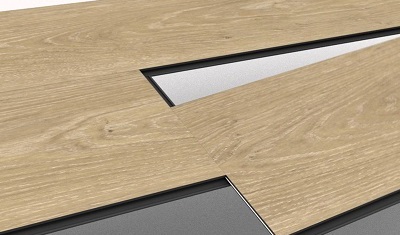
The visual on top sells the apartment. The structure underneath determines how the installed floor sounds, fits, locks and performs.


IXPE acoustic backing
A common direction for premium apartment flooring where buyers want controlled support, comfort and improved impact-sound positioning.

EVA acoustic backing
A practical value-to-performance option for rental, residential and multi-family programs when the density and compression behavior match the plank.
Specification matrix
Choose apartment flooring by building use—not by thickness alone
The ranges below are practical starting points for quotation and sampling. Final construction should be confirmed against the project acoustic requirement, traffic, subfloor, local building rules and approved test documentation.
| Apartment program | Typical total thickness | Wear layer | Backing direction | Surface / format | Main purchasing focus |
|---|---|---|---|---|---|
| Value rental renovation | 5.0–5.5 mm | 0.3 mm | EVA or project-matched IXPE | Matte oak, neutral wood, standard plank | Cost control, fast installation, easy cleaning, repeatable stock colors |
| Busy rental apartments | 5.5–6.5 mm | 0.5 mm preferred | 1.0–1.5 mm IXPE / EVA | Low-gloss embossed or EIR wood look | Tenant turnover, scratches, pets, backing density, click strength, spare stock |
| New multi-family development | 5.5–8.0 mm | 0.5 mm | Acoustic IXPE, EVA or selected cork | Coordinated light oak / warm neutral collection | Assembly acoustic target, batch consistency, phased delivery, unit schedules |
| Serviced apartments | 6.0–7.0 mm | 0.5 mm | Resilient attached acoustic pad | Warm wood visual, micro bevel, low gloss | Guest comfort, cleaning frequency, luggage, replacement SKU continuity |
| Apartment corridors / shared zones | 6.0–8.0 mm | 0.5–0.7 mm | Project-matched backing | Durable texture, commercial neutral palette | Higher traffic, rolling loads, fire/slip documents, entrance protection |
| Premium private-label apartment collection | 6.5–8.0 mm | 0.5–0.7 mm | Custom IXPE / EVA / cork direction | EIR, deep emboss, wide plank, custom colors | Brand differentiation, sample boards, cartons, labels, repeat-SKU control |
Important: acoustic results vary with the complete assembly. A laboratory rating from one slab/ceiling/underlay construction should not be assumed to represent every apartment building.
Room-by-room planning
One apartment does not create one type of flooring stress
Living rooms, bedrooms and corridors all use the same address, but their traffic, sound and cleaning demands are different. A project specification works better when it starts with the zone.
Visual scale + footfall comfort
Use natural oak, warm neutral or wider plank formats to visually expand the room. Acoustic backing helps create a more solid, quieter walking feel.
Quiet, warm and low-glare
Bedrooms benefit from low-gloss wood visuals and a resilient backing that reduces sharp footstep sound without making the click system excessively soft.
Waterproof core + cleanability
SPC is attractive for apartment kitchens because the rigid core is moisture resistant and the surface supports routine cleaning. Edge detailing and installation remain important around spills.
Grit, shoes and concentrated wear
Specify a stronger wear-layer direction where exterior grit enters the apartment. Entrance mats and frequent dry soil removal protect appearance over time.
Furniture movement + re-leasing speed
Prioritize surface durability, practical plank widths, popular neutral colors and spare stock so damaged areas can be managed without redesigning the whole unit.
Acoustic approval comes first
Confirm building or owner requirements before finalizing the plank. The correct backing and tested assembly matter more than simply ordering a thicker product.
Acoustic apartment floor
Noise control: four questions to ask before approving SPC
1. What kind of noise are you trying to reduce?
Impact noise comes from footsteps, chair legs, dropped toys, pet movement and objects hitting the floor. Room sound is the click or hollow tone perceived inside the apartment. An underlay may improve both perceptions differently.
2. What assembly was tested?
IIC/STC or impact-sound claims only make sense with the test context. Ask whether the result used concrete or timber, the slab thickness, ceiling system, exact plank, exact backing and installation method.
3. Is the backing stable enough for the click joint?
A softer or thicker pad is not automatically better. Excessive compression can increase vertical movement at the joints. The underlay must absorb impact while still supporting the locking profile.
4. Does the building require written acoustic approval?
Many multi-family developments, condominium associations and project specifications require documents before a hard floor is approved. Build the RFQ around the required criterion instead of asking the supplier for a generic “soundproof” floor.
Three buying scenarios
Different apartment buyers need different versions of “best”
Reduce turnover cost without making units feel cheap
A practical rental program usually favors marketable neutral woods, reliable click installation, a wear layer suited to tenant turnover and a backing that improves perceived quality.
- Focus on easy cleaning and replacement logic
- Keep 1–2 core plank sizes and a controlled color palette
- Order spare stock by building or phase
- Standardize cartons so installers identify units quickly
Control thousands of square meters through one specification
Large apartment projects need batch consistency, acoustic documentation, installation coordination and delivery scheduling—not just a low price per square meter.
- Approve full construction before bulk production
- Record color, click profile and backing as one SKU
- Coordinate pallets by building, floor or installation phase
- Include transitions and spare quantity in planning
Build an apartment collection that is easy to sell and reorder
Create a clear value, mainstream and premium ladder using the same design story with different wear layers, backing options and surface treatments.
- Private-label cartons and market-specific color names
- Sample boards for acoustic / waterproof positioning
- OEM labels, barcodes and installation inserts
- Repeat-order references for long-term distribution
Apartment renovation strategy
Why click-lock SPC is often considered for apartment renovation
Low-profile construction
Rigid core plank systems can provide a practical floor build-up for apartments where door clearances, thresholds and existing finish levels limit the available height.
Floating installation workflow
Where site conditions allow, click installation can reduce full-spread adhesive work and help contractors move through occupied or time-sensitive renovation programs more cleanly.
Existing hard-floor opportunities
SPC can often be installed over suitable hard substrates when they are flat, clean, dry and structurally sound. Existing tiles still need grout-line, flatness and moisture evaluation.
Why 3C-Floor
A factory partner for the plank, the backing and the repeat order
3C-Floor combines SPC, LVT, WPC and underlayment supply, allowing project buyers to discuss the finished apartment floor as one commercial system instead of buying disconnected components from unrelated suppliers.
Project workflow
From an apartment brief to an order-ready flooring specification
Define the building
Rental apartments, condo units, serviced apartments, student housing or developer project; identify upper-floor and shared zones.
Set performance targets
Acoustic requirement, traffic, wear layer, moisture conditions, floor height, VOC/fire/slip documentation and project warranty needs.
Build the sample
Choose color, embossing, plank size, backing and total construction. Connect several planks to evaluate edges and walking feel.
Lock the SKU
Record approved décor code, gloss, wear layer, core, backing, click profile, carton code, label and pallet identification.
Plan delivery
Coordinate quantity, waste allowance, spare stock, building phases, packing, container loading and shipment timing.
RFQ checklist
What to send for a useful apartment flooring quotation
Project information
- Country / market and project location
- Apartment type and number of units
- Total net floor area and expected waste allowance
- Concrete, wood or existing hard-floor substrate
- Upper-floor acoustic requirement or requested documentation
- Target installation schedule and phased delivery needs
Product information
- Total thickness and wear-layer target
- IXPE / EVA / cork / separate underlay preference
- Plank size and visual direction
- Matte, embossed, EIR or other texture preference
- OEM carton, label, barcode and pallet-mark requirements
- Destination port and target delivery date
Related 3C-Floor resources
Continue the apartment flooring specification
These six internal pages build a clear topical path from apartment application to acoustic backing, click structure, heavy-use zones and final specification selection.
Apartment flooring FAQ
Questions buyers ask before samples and project approval
What flooring is best for apartments when noise is a concern?
For many apartment projects, SPC click flooring with a properly matched acoustic backing is a practical option because it combines impact-sound control, waterproof rigid-core performance and renovation efficiency. The important limitation is that no plank is “soundproof” by itself. Verify the complete floor-ceiling assembly against the building or project requirement.
Is SPC flooring suitable for upstairs apartments?
Yes, when the building permits a hard-surface floor and the assembly meets the required acoustic performance. For upper floors, confirm the slab or wood subfloor, backing material, plank construction, transitions and test documentation before ordering. Do not assume a thicker pad automatically gives a better result.
What wear layer should I choose for rental apartments?
A 0.3 mm wear layer can suit value-oriented residential programs. A 0.5 mm wear layer is a common starting point for busy rentals, multi-family projects, pets and more frequent tenant turnover. Corridors or heavier-use zones may justify 0.7 mm depending on the project lifecycle and traffic.
Should apartment SPC flooring use IXPE or EVA backing?
Both can be suitable. IXPE is often chosen for premium acoustic positioning and controlled resilient support. EVA can provide a cost-effective balance of comfort and performance. The important factors are density, thickness, compression behavior, backing adhesion and compatibility with the click joint.
Can SPC apartment flooring be installed over existing tile or concrete?
Often yes, if the existing surface is clean, dry, structurally sound and within the flooring flatness requirements. Concrete moisture conditions, tile grout depth, transitions, doors and expansion space must be checked. Do not use rigid core flooring to hide a damaged or uneven substrate.
Can 3C-Floor provide OEM apartment flooring and private label packaging?
Yes. OEM and private-label support can include décor selection, custom color direction, plank dimensions, wear layer, surface texture, IXPE/EVA backing, carton artwork, labels, barcodes, pallet marks, sample boards and repeat-order specification control.
Factory-direct apartment flooring supply
Send the building type, acoustic target, quantity and destination
3C-Floor can recommend a practical starting construction for samples and quotation, including total thickness, wear layer, backing, plank size, surface direction, cartons and phased project supply.