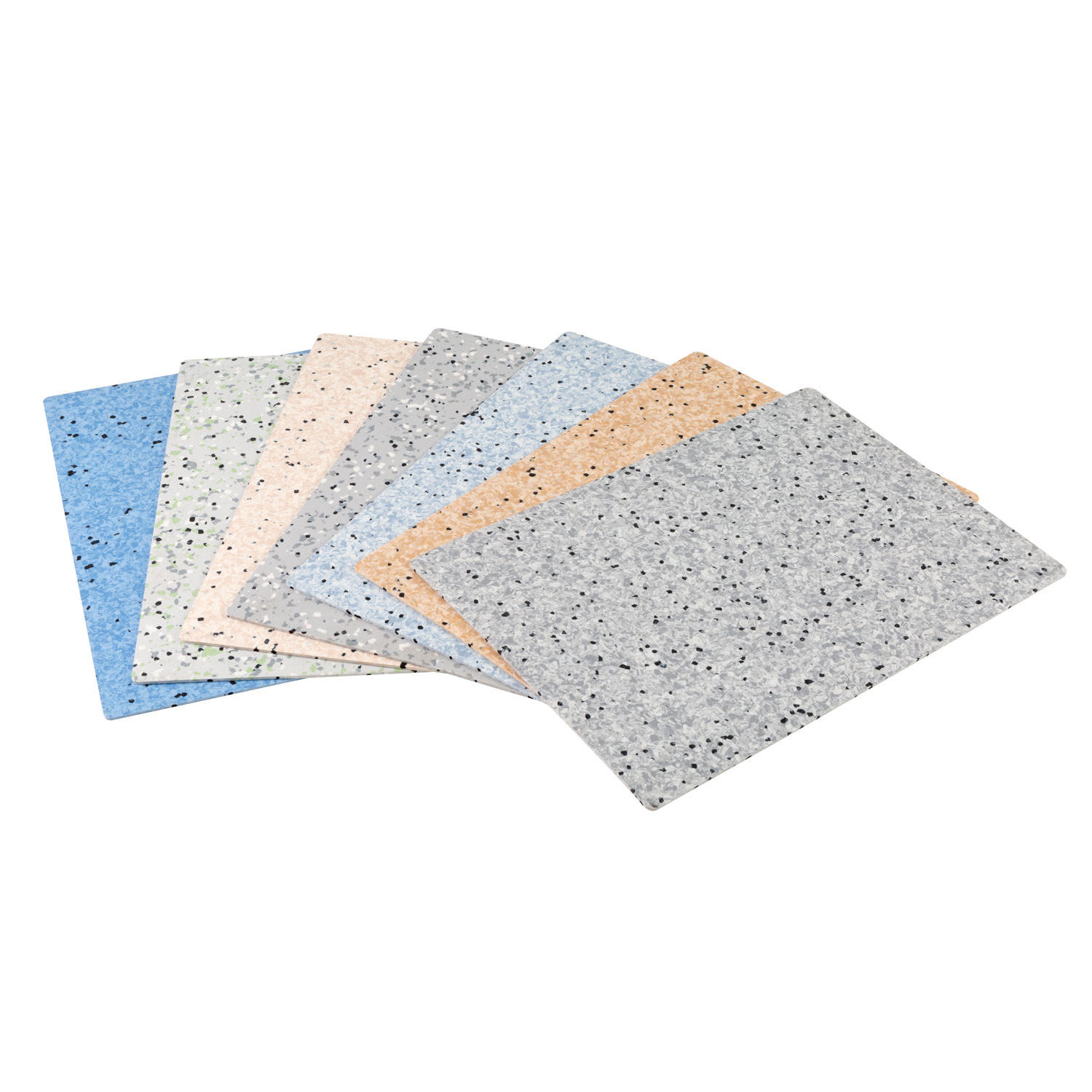
Sheet Vinyl
Often a strong cost-first choice for kitchens, rental housing and large areas where continuous coverage and easy cleaning matter.



The lowest-cost floor is not always the lowest-cost project. Sheet vinyl and peel-and-stick vinyl are commonly among the cheapest finished flooring choices upfront. For a stronger balance of affordability, water resistance, design flexibility and everyday durability, many buyers compare sheet vinyl, glue-down LVT and value-oriented SPC before choosing.

“Affordable” can mean four different things: lowest material price, lowest installed price, lowest maintenance cost or lowest lifecycle cost. Matching the flooring to the room usually saves more money than simply choosing the cheapest SKU.
Often a strong cost-first choice for kitchens, rental housing and large areas where continuous coverage and easy cleaning matter.
Useful where budget and installation simplicity matter more than long-term commercial wear or premium joint performance.
A practical permanent-floor option for apartments, offices and retail when a prepared subfloor and professional adhesive installation are available.
Not always the cheapest product, but often cost-effective when rigid click installation, moisture resistance and wood-look repeatability are priorities.
The table below uses relative cost positioning rather than fixed retail prices because material, freight, labor and subfloor costs vary by country and project. For sourcing decisions, compare like-for-like constructions and request a current quotation.
| Flooring Type | Typical Upfront Position | Water / Moisture Fit | Installation Cost Driver | Best Budget Use | Main Trade-Off |
|---|---|---|---|---|---|
| Peel-and-stick vinyl | Very low | Product is vinyl-based; adhesive/subfloor conditions still matter | Simple installation can reduce labor | Temporary renovations, light-use rooms, value retail programs | Lower wear reserve and more sensitivity to substrate quality |
| Sheet vinyl / PVC roll | Very low to low | Strong fit for moisture-prone interiors when installed correctly | Large sheets reduce joints; professional fitting may be needed | Large rooms, apartments, healthcare, education, budget projects | Subfloor defects can telegraph through; seam planning matters |
| Glue-down LVT | Low to moderate | Vinyl product is moisture resistant; adhesive system must suit site conditions | Subfloor preparation and adhesive workmanship | Permanent residential and commercial interiors | More substrate preparation than floating floors |
| SPC rigid core | Moderate | Strong moisture-resistant product direction | Click installation can reduce project downtime | Renovations, rentals, multi-unit projects, retail | Higher material position than the simplest vinyl options |
| Laminate | Low to moderate | Best treated as a dry-room choice unless a specific system is rated for moisture | Floating installation can be economical | Bedrooms, living rooms, dry residential areas | Moisture sensitivity varies by product |
| Carpet | Low to moderate | Not the preferred choice for wet areas | Pad, fitting, seams and replacement frequency | Bedrooms, low-traffic comfort-focused spaces | Cleaning, staining and traffic wear |
| Ceramic / porcelain tile | Material can be economical; installed cost can rise | Strong wet-area material choice | Labor, leveling, mortar, grout and cutting | Bathrooms, kitchens, long-life hard surfaces | Installation labor and subfloor preparation |
Decision rule: if two floors have similar material prices, the one that needs less leveling, less adhesive, less downtime, fewer accessories and fewer future replacements can be the more affordable floor overall.
A single “best budget flooring” answer is rarely useful. The right low-cost floor depends on moisture, traffic, furniture movement, cleaning frequency and how quickly the space must return to service.
Start with: value LVT, SPC or sheet vinyl.
Prioritize turnover speed, simple cleaning, replacement planning and consistent décor across multiple units.
Start with: sheet vinyl, LVT or SPC.
Focus on moisture management, easy cleaning and details around cabinets, thresholds and appliances.
Start with: laminate, carpet, LVT or basic SPC.
Because traffic is often lower, buyers can prioritize comfort, appearance and installed cost more heavily.
Start with: glue-down LVT or specified commercial vinyl.
Entrance grit, carts, chair movement, cleaning and replacement stock matter more than headline material price.
Start with: SPC, LVT or sheet vinyl after a moisture plan.
Do not use a “waterproof floor” label as a substitute for concrete moisture testing and substrate preparation.
Start with: click SPC, click LVT or selected loose-lay systems.
When downtime is expensive, a slightly higher material cost may reduce the total project cost through faster installation.
Vinyl flooring spans a wide cost and performance range. A buyer can choose a simple sheet or self-adhesive product for cost control, a glue-down LVT construction for low-profile permanent installation, or a rigid SPC plank when click installation and renovation speed add value.
That flexibility matters because the cheapest product category is not always the cheapest configuration for the job. Large roll goods can minimize joints across broad areas; glue-down LVT can keep floor build-up low; rigid SPC can simplify a floating renovation where the subfloor is suitable.
For a broader category overview, see the verified PVC floor roll guide and the LVT buying guide.

A low quote can become expensive if the specification is too weak for the traffic or if the installation system is mismatched to the site. Buyers should compare the complete construction.
| Specification Item | Budget Question to Ask | Why It Changes Total Cost | 3C-Floor Direction to Review |
|---|---|---|---|
| Product format | Roll, peel-and-stick, dry back, click or loose lay? | Changes labor, adhesive, floor build-up and replacement method. | Compare product families |
| Wear layer | How much traffic and rolling movement will the floor see? | Underspecification can increase premature replacement; overspecification can waste budget. | LVT specification guide |
| Rigid core | Is a click floating floor valuable for this renovation? | Can reduce installation complexity in suitable conditions but may cost more than basic sheet or glue-down products. | SPC buying guide |
| Underlayment / backing | Is acoustic comfort actually required? | Attached backing can add value, but unnecessary layers add cost. | Flooring underlayment |
| Subfloor condition | Is leveling or moisture mitigation required? | Preparation can exceed the saving achieved by choosing a cheaper surface. | Confirm project conditions before quotation. |
| Packaging & repeat orders | Will the same décor need to be reordered later? | SKU control and spare stock can reduce expensive patchwork replacements. | Lock the approved sample and written specification. |
3C-Floor publishes multiple resilient-flooring constructions and specification ranges. Exact available combinations, test documents, MOQ, lead time and current pricing should be confirmed for the specific SKU and order.
A thin low-cost floor can show every bump, crack or joint below it. Leveling and moisture repair should be priced before material selection.
Total thickness, wear layer, surface treatment, core and installation method solve different problems. One big number is not a complete specification.
Tile or complex bonded systems can turn an inexpensive material into a higher installed-cost project. Click or roll goods may reduce labor in the right setting.
Multi-unit housing, hotels and retail chains should hold spare stock and product codes. Replacing one damaged area is cheaper than changing an entire floor because the original décor cannot be matched.
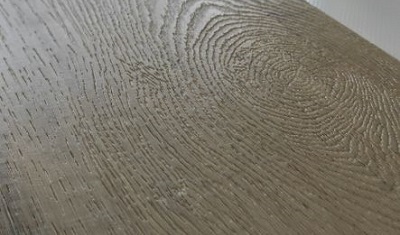
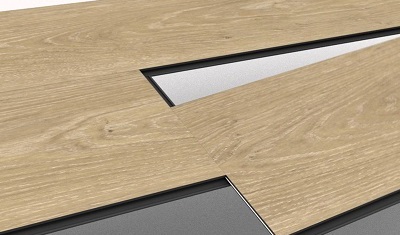
These images are from the 3C-Floor website and illustrate the visual, structural and installation differences that affect budget-flooring decisions.


For importers, distributors, private-label brands, contractors and developers, affordability comes from a repeatable specification—not a one-time low number.
If SPC is in the shortlist, use the verified SPC flooring cost guide to understand why core, wear layer, backing, surface, packaging and logistics affect the final quote. For a value-focused entry product, also review peel-and-stick vinyl flooring.
These verified 3C-Floor pages help buyers move from a broad budget question to a purchase-ready flooring specification.
Short, decision-ready answers to the questions buyers commonly ask when comparing inexpensive flooring options.
Tell 3C-Floor how the space will be used before asking for the lowest price. A complete brief helps compare sheet vinyl, LVT, SPC and other flooring on the same commercial basis.
Current pricing, MOQ, lead time and available product combinations should be confirmed for each specific program.