Welcome to 3C-Floor — Your Trusted Manufacturer of SPC Flooring, WPC Vinyl Flooring, LVT Flooring & PVC Flooring Rolls.
  • 0086 13321818576 (Steven Lee)
News
Current Location:Home > News

Click Lock WPC Flooring | Floating WPC Manufacturer | 3C-Floor

Update:2026/8/17 12:08:39 Views:1
WPC · SPC · LVT · PVC Flooring Manufacturer Email: info@3c-floor.com   |   Tel: +86 133 2181 8576
Floating WPC Flooring · OEM / Project Supply

Click Lock WPC Flooring Built Around Installation Efficiency

A good click lock WPC flooring program is more than a comfortable waterproof plank. It is a coordinated system: locking geometry, WPC core, wear layer, surface finish and backing must work together so installers can build a clean floating floor and buyers can sell a specification that fits the real market.

5.5–7.5 mmCommon WPC thickness range
0.3 / 0.5 / 0.7 mmTypical wear-layer options
Floating ClickGlue-free plank-to-plank installation
Wood look click lock WPC flooring in a finished bedroom interior
Comfort + Fast RenovationWPC is commonly selected when a project wants a quieter, warmer walking feel together with floating installation.
Start with the project outcome

Why Click Quality Changes the Economics of a Flooring Project

Buyers often compare flooring by square-meter price. For floating WPC flooring, that is only part of the cost picture. The click profile affects installation pace, rework, joint appearance, installer confidence, replacement strategy and even how easily a distributor can support the product after sale.

01

Installation Labor

A mechanically interlocking plank removes the need for full-spread adhesive across the field. On renovation projects, that can simplify sequencing and reduce adhesive-related waiting or cleanup steps. The actual saving still depends on substrate condition, room geometry and installer practice.

02

Project Downtime

Hotels, apartments, offices and occupied renovation sites often value faster room turnover. A well-planned WPC click system can help installers move from substrate preparation to floor completion with fewer wet-process stages.

03

After-Sales Risk

Edge precision matters because weak engagement, damaged profiles or poor subfloor conditions can show up later as gaps, movement or chipped edges. A lower purchase price is rarely a saving if it creates installation callbacks.

04

Merchandising Value

For retailers and private-label brands, “easy floating installation” is a useful selling point only when the product actually feels consistent from carton to carton. Repeatable joint fit supports the consumer experience and installer recommendation.

05

Floor Build-Up

Overall thickness, attached pad and transitions should be selected together. This is especially important in renovation where door clearance, adjacent floor height and existing hard surfaces can determine whether the specification is practical.

06

Collection Architecture

A distributor may use one décor family across several constructions—for example a comfort-led WPC click tier and a denser SPC tier. Coordinated colors, wear layers and packaging make the range easier to sell without forcing every project into the same product.

System design

How an Interlocking WPC Vinyl Plank Is Built

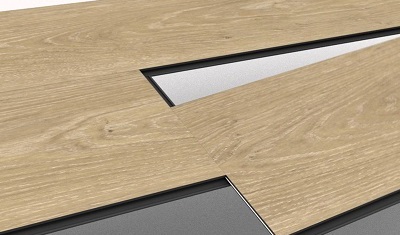
The click joint is milled into the edge of a multilayer plank. That means the edge cannot be considered separately from the rest of the board. A stable interlocking WPC vinyl plank needs enough edge integrity for installation while preserving the softer, comfort-oriented character buyers expect from WPC.

1
UV / Surface FinishSupports stain resistance, cleanability and gloss control. Matte, embossed and wood-grain directions can be matched to the décor.
2
Transparent Wear LayerSelected according to expected traffic, channel position and warranty strategy instead of automatically choosing the heaviest option.
3
Decorative FilmCreates the wood or stone visual. OEM programs can coordinate color family, print direction and surface texture with target-market preferences.
4
WPC CoreThe waterproof composite core provides the thicker, warmer and more cushioned character that differentiates WPC from denser rigid-core alternatives.
5
Attached Backing, OptionalIXPE/EVA or another approved backing can influence footfall sound, comfort and overall floor build-up. Backing density should complement the locking system.
WPC waterproof vinyl flooring layer structure with wear layer, print, waterproof core and attached underlayment
Locking strategy

Choose the Click Approach by Installation Workflow, Not by Name Alone

Different licensed and engineered locking technologies can use angle-angle, angle-tap, drop-lock or push-down principles. The important buying question is whether the approved system matches board thickness, profile strength, installer habits, production capability and the destination market.

Angle / Angle

  • Long and short edges are engaged through controlled angling.
  • Familiar workflow for many professional installers.
  • Useful where the team prioritizes deliberate joint engagement and alignment.
  • Room geometry and last-row access should be considered during planning.

Angle + Short-Side Drop

  • Long edge is angled while the short edge closes through a drop or tap action.
  • Can support faster row assembly on suitable products.
  • Short-side profile strength and correct tapping technique become important.
  • Installer instructions must match the exact profile supplied.

Push-Down / Fold-Down

  • Designed to simplify short-side locking through a downward movement.
  • Can be attractive for time-sensitive renovation programs.
  • Requires precise milling and product-specific installation guidance.
  • Availability depends on the selected construction, licensed system and production feasibility.
For RFQ purposes, do not specify only a locking brand name. Send the target plank thickness, board size, destination market, expected installer method and any mandatory click-system requirement. 3C-Floor can then confirm a feasible construction and sample route.
Specification planning

Build the WPC Click Specification Around the Sales Channel

There is no single “best” WPC plank. Residential retail, hospitality refurbishment and distributor private label programs have different priorities. The matrix below is designed as a quotation starting point, not a substitute for an approved sample and final technical data sheet.

Specification ItemTypical 3C-Floor Planning OptionsBuyer Decision LogicQuestions to Confirm
Overall Thickness5.5 / 6.0 / 6.5 / 7.5 mm common WPC constructions; custom structures subject to project reviewBalances comfort, floor height, locking profile, carton weight and market positioning.Is the project new construction or renovation? What adjacent-floor height must be matched?
Wear Layer0.3 / 0.5 / 0.7 mm common optionsMatch the traffic and sales tier. Heavier is not automatically better if it pushes the product outside the target price band.Residential, hospitality or light commercial? What warranty/market expectation applies?
Plank SizeCommon 6 × 48, 7 × 48, 8 × 48 in. directions; custom sizes can be discussedChanges visual scale, installation pace, carton layout, loading efficiency and showroom presentation.Which room sizes and décor style dominate the target market?
SurfaceWood grain, embossed, matte / semi-matte, EIR-inspired directions and custom décor matchingConnects visual realism with the intended retail tier and regional design preference.Do you need low gloss, deeper embossing or a specific oak/walnut color family?
Click InstallationFloating click construction; exact profile confirmed by approved system and board designThe edge system should be evaluated together with WPC core strength and installer workflow.Any mandatory licensed click system? DIY, retail or contractor-led installation?
Attached PadIXPE / EVA or other approved backing options according to programAffects walking feel, impact sound, total thickness and whether extra underlayment is needed.Do you have acoustic targets or building-code requirements?
Packaging / BrandPrivate-label cartons, labels, barcodes, SKU coding, sample coordination and export packingCritical for distributors building a repeatable collection instead of buying anonymous commodity stock.How many SKUs? Which languages, barcode standards and carton claims are required?
Specification ranges shown here are procurement planning references. Final dimensions, tolerances, click profile, test requirements, backing and packing should be confirmed on the approved quotation, sample and technical documentation.
Procurement value

Compare the Installed System, Not Only the Factory Price per m²

For importers and project buyers, the more useful question is: “What does this specification cost to land, install, support and reorder?” A slightly different board thickness, plank size or carton quantity can influence freight utilization, handling, installer productivity and the finished floor build-up.

Material Cost
Core, wear layer, décor, backing and click profile.
Logistics
Carton weight, pallet plan, container utilization and destination handling.
Installation
Subfloor preparation, cutting, transitions, trim and installer efficiency.
Risk Cost
Claims, edge damage, inconsistent fit, missing documentation or replacement stock.

For Distributors

Build a rational Good / Better / Best WPC click range instead of duplicating near-identical SKUs. Use wear layer, backing, plank width and décor realism to create clear reasons to trade up.

For Project Buyers

Send room usage, substrate type, traffic level, floor height limits and acoustic requirements before finalizing the product. That produces a more useful quotation than comparing thickness alone.

Failure prevention

Six Problems a Floating WPC Floor Should Be Designed to Avoid

A click floor can be fast to install, but it is not forgiving of every site condition. The best way to reduce callbacks is to connect product specification, substrate preparation and installation instructions before the order ships.

1

Uneven Subfloor

Rigid or semi-rigid planks can bridge minor texture, but they should not be used to hide serious low spots, loose tile or unstable substrate. Excess movement stresses the joint.

2

Insufficient Expansion Space

A floating floor needs perimeter and transition allowances according to the approved instructions. Trapping the floor tightly against fixed elements can create pressure and movement.

3

Damaged Click Edges

Improper tapping, forcing the wrong installation angle or installing damaged planks can weaken the connection before the room is even handed over.

4

Backing Mismatch

Too much compressibility under the board can increase movement at the joint. Attached pad selection should be part of the total plank design, not an afterthought.

5

Waterproof Misunderstanding

A waterproof WPC core resists moisture damage, but the room is not automatically a waterproof membrane. Perimeters, transitions and penetrations still require correct detailing.

6

Wrong Product for Traffic

Comfort-led WPC is attractive for many interiors, but denser SPC or glue-down LVT may be a better route where concentrated loads, heavy commercial use or lower floor build-up dominate the brief.

Where WPC click wins

Applications That Value Comfort, Waterproof Construction and Fast Renovation

WPC click flooring is particularly persuasive when the end user can feel the difference underfoot and the project team benefits from a floating installation workflow. The strongest use cases combine those two advantages instead of choosing WPC only because it is “waterproof vinyl.”

Residential

Apartments & Condos

Useful for unit renovation where a wood-look upgrade, comfortable foot feel and efficient installation are important.

Hospitality

Hotel Guestrooms

Supports warm aesthetics, quieter walking character and phased room refurbishment with a floating construction.

Home

Bedrooms & Living Rooms

Comfort-led WPC positioning works well in spaces where underfoot softness matters more than maximum core density.

Renovation

Existing Hard Floors

Can be considered over approved hard surfaces when they are secure, dry, clean and sufficiently flat.

Office

Light Office Refits

A practical route when project downtime and adhesive handling need to be controlled, subject to traffic and rolling-load review.

Retail

Flooring Collections

Creates a comfort-oriented waterproof upgrade tier alongside SPC, glue-down LVT and loose-lay options.

Rental

Serviced Apartments

Combines residential-style appearance with low-maintenance vinyl surfaces and a floating installation route.

OEM

Private-Label Programs

Décor, texture, wear layer, backing, carton design and SKU structure can be coordinated into a branded assortment.

Quality control

What Professional Buyers Should Check Before Approving a WPC Click Order

Appearance approval is necessary, but click flooring also needs mechanical consistency. The pre-production and shipment conversation should cover measurable product attributes, installation behavior and packaging integrity.

Board DimensionsLength, width, thickness and squareness consistency affect row alignment and carton-to-carton fit.
Click EngagementSample boards should lock repeatedly without abnormal force, edge chipping or visible joint mismatch.
Surface ConsistencyDécor tone, gloss, embossing and bevel appearance should match the approved reference and range tolerance.
Backing BondAttached pad should be aligned, bonded consistently and compatible with the intended installation system.
Packing ProtectionCartons, corner protection, palletization and labels should protect click edges through export handling.
If your market requires specific emissions, fire, slip, acoustic or other testing, state the standard and report requirement at RFQ stage. Certification availability can vary by product construction and destination market.
OEM / private label

From Market Brief to Container: A More Controlled WPC Click Development Workflow

3C-Floor works with distributors, flooring brands, wholesalers, contractors and project sourcing teams that need more than an off-the-shelf board. A useful OEM process turns the buyer’s market position into a controlled specification that can be sampled, quoted and reordered.

Define the Channel

Target country, retail/project use, price tier, traffic and expected installer profile.

Build the Structure

Select thickness, wear layer, plank size, backing and suitable click construction.

Approve the Visual

Confirm décor, embossing, gloss, bevel direction and sample appearance.

Lock Packaging

Finalize carton artwork, SKU labels, barcodes, language, pallet plan and export marks.

Scale with Control

Use the approved reference, documentation and packing standard as the baseline for repeat orders.

What to Send for a Faster Quotation

Include your target thickness, wear layer, plank dimensions, décor direction, surface finish, backing preference, estimated quantity, destination country, click-system requirement (if any), private-label needs, testing/documentation requirements and target shipping window. If you are still deciding between WPC and SPC, explain the project rather than guessing the construction—3C-Floor can compare the routes before sampling.

Quick comparison

WPC Click vs SPC Click vs Glue-Down LVT

Use this comparison to shortlist the installation route before discussing décor and price. Final selection still depends on project conditions, traffic, subfloor, acoustic targets and the specific product data.

Decision FactorClick Lock WPCSPC ClickGlue-Down LVT
InstallationFloating, mechanically interlockedFloating, mechanically interlockedFull-spread adhesive to prepared substrate
Underfoot FeelTypically warmer and more cushionedTypically firmer and denserFirm, low-profile feel tied closely to the substrate
Acoustic PositioningStrong fit for comfort-led rooms, especially with suitable backingCan perform well with the right attached pad / underlayDepends on total floor assembly and acoustic underlayment strategy
Renovation SpeedStrong advantage where floating installation is suitableStrong advantage where floating installation is suitableMore substrate and adhesive process dependency
Best First LookApartments, bedrooms, guestrooms, residential-style renovationBusier interiors needing a denser rigid corePermanent commercial layouts, low build-up and bonded-floor strategies
Buyer FAQ

Click Lock WPC Flooring Questions

Clear answers for distributors, contractors, OEM brands and project sourcing teams.

What is click lock WPC flooring?

Click lock WPC flooring is a multilayer vinyl plank with a waterproof WPC core and precision-milled interlocking edges. The planks connect to each other and are normally installed as a floating floor without full-spread adhesive. Buyers often choose WPC when they want a thicker, warmer and more cushioned feel than many denser rigid-core products.

Is floating WPC flooring the same as interlocking WPC vinyl plank?

In most purchasing conversations, they describe the same basic installation concept. “Interlocking WPC vinyl plank” refers to the mechanical plank-to-plank connection, while “floating WPC flooring” describes the fact that the installed field is not fully bonded to the substrate. The exact locking geometry varies by product and approved system.

What thickness and wear layer should I choose?

3C-Floor commonly discusses WPC constructions around 5.5–7.5 mm with 0.3, 0.5 or 0.7 mm wear layers. A residential private-label collection may prioritize comfort and cost balance, while hospitality or selected light-commercial projects may justify a heavier surface specification. The final choice should also consider backing, plank size, floor-height limits and target price.

Can click lock WPC flooring be installed over tile?

It may be possible over an existing hard surface when that surface is secure, clean, dry and sufficiently flat for the approved product. Deep grout joints, broken or loose tile, soft floors and major unevenness should not simply be covered. Substrate preparation remains essential even with a floating floor.

Does waterproof WPC mean the entire room becomes waterproof?

No. The plank itself can use a waterproof WPC core, but an installed room still has walls, doorways, transitions, plumbing penetrations and other details where water can reach the substrate. Treat “waterproof plank” and “waterproof room assembly” as different claims, and follow the approved wet-area installation instructions.

Can 3C-Floor make private-label click WPC flooring?

Yes. OEM planning can include décor selection, surface texture, gloss, board thickness, wear layer, attached backing, plank size, carton artwork, labels, barcodes, sample presentation and export packing. Send the target market and commercial position so the quotation is built around a saleable SKU rather than a generic WPC plank.

Build a quote-ready specification

Need Floating WPC Flooring for Distribution, Private Label or a Project?

Send your target country, quantity, thickness, wear layer, plank size, décor, surface, backing, click requirement and packaging needs. 3C-Floor can help organize those inputs into a sample-ready click lock WPC flooring specification.

Request A Quote
© 3C-Floor · SPC, WPC, LVT & PVC Flooring Manufacturer · https://www.3c-floor.com/
Landlord hotline:
+86-021-54361792
Email:
info@3c-floor.com