Liquid & food spills
Water, juice, coffee, wine, sauces and oils can reach the floor quickly. Prioritize a finished surface that is simple to wipe and an installation system suited to the room’s moisture exposure.



Easy clean dining room flooring should combine a wipeable wear surface, moisture-tolerant construction, practical scratch and scuff resistance, and a texture that does not make crumbs difficult to remove. For many residential, apartment and hospitality programs, SPC and LVT are strong starting points: SPC suits buyers who want a rigid click floor and stable plank construction, while LVT gives more flexibility in click, glue-down and loose-lay formats. 3C-Floor can support product specification, décor, backing and private-label planning for wholesale and project supply.

Featured Answer
For a dining room, a practical easy-clean floor is one that lets crumbs be removed quickly, lets common food and drink spills be wiped before they become stains, and tolerates repeated chair movement without demanding specialized maintenance. SPC rigid-core flooring and LVT/LVP are often shortlisted because their finished vinyl surfaces are compatible with routine sweeping and damp cleaning, while offering wood- and stone-look designs. The most suitable specification depends on traffic, chair movement, subfloor condition, installation method and the exact product’s surface and wear construction.
Do not choose by “waterproof,” thickness or décor alone. Dining rooms create a concentrated wear pattern under chairs and around the table, so the surface finish, wear layer, texture, point-load behavior and furniture protection matter as much as the core.
Room-Specific Selection
Dining rooms may see less continuous foot traffic than corridors, but they create four repeating stresses that generic flooring pages often overlook. A good specification should address each one before color selection.
Water, juice, coffee, wine, sauces and oils can reach the floor quickly. Prioritize a finished surface that is simple to wipe and an installation system suited to the room’s moisture exposure.
Chairs move over the same small arcs every day. Fine grit trapped under chair feet can create visible scuffs, making surface finish and furniture protection important.
Heavy dining tables, benches and cabinets concentrate weight on small contact points. Buyers should consider indentation behavior and use suitable load-spreading protectors where needed.
A floor that looks realistic but traps crumbs in aggressive texture can create unnecessary maintenance. Match emboss depth and gloss to the actual cleaning routine.

Selection Principle
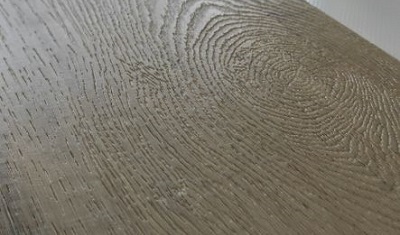
Easy-maintenance dining room flooring begins with the top surface. Wood-grain visuals can be combined with matte, embossed or registered textures, but cleaning effort changes as texture becomes deeper. A heavily textured surface may disguise fine scuffs and feel more tactile; a shallower matte texture may release crumbs and dried food more quickly.
SPC vs LVT
There is no single construction for every dining room. Use the operating conditions to choose the format, then confirm the exact SKU and installation instructions.
Choose SPC when rigid construction, click installation and moisture-conscious daily use are priorities. It can work well in houses, apartments, rentals and renovation programs where the buyer wants a stable wood-look plank.
Choose LVT when installation flexibility, low-profile bonded formats or easy local replacement are more important. LVT can be developed as click, dry-back/glue-down or loose-lay products depending on the project.
Choose another material when its specific strength matters more than low-maintenance resilient flooring. Real wood offers authentic timber; tile provides a hard mineral surface; selected laminate can serve dry interiors.
Waterproof is not the same as spill-proof room construction. Even when a plank or tile has a waterproof vinyl or SPC body, joints, transitions, perimeter gaps and the subfloor remain separate installation considerations. See 3C-Floor’s waterproof flooring explanation before writing a room-level claim into a catalog or project specification.
Dining Room Specification Matrix
This matrix is designed for importers, distributors, flooring brands, contractors and developers. It turns end-user concerns into a purchase brief without pretending one number defines performance.
| Dining-room risk | What to specify | What to inspect on the sample | Common buying mistake |
|---|---|---|---|
| Food & drink spills | Surface finish, stain response, moisture-tolerant construction, seam/joint strategy | Wipe common household soils from the approved finish; inspect edge behavior | Using “waterproof” as the complete specification |
| Repeated chair movement | Wear layer, UV/top finish, gloss, texture, furniture-protection guidance | Fine-scuff visibility under room lighting and chair-zone appearance | Choosing wear layer without reviewing the surface finish |
| Crumbs & dried soil | Texture depth and cleaning method | Brush, vacuum and damp-mop behavior on the real surface | Specifying the deepest emboss only for visual realism |
| Heavy table or buffet | Point-load/indentation suitability and load-spreading protectors | Product-specific guidance and physical plank behavior | Assuming a thicker plank automatically resists every dent |
| Open-plan kitchen/dining | Moisture plan, transitions, appliance movement, subfloor and perimeter details | Installed mock-up where practical | Specifying the dining zone separately from the adjoining kitchen |
| Hospitality / commercial dining | Traffic, cleaning chemistry, rolling loads, required test evidence and fixing method | Exact SKU documents and assembled sample, not a generic brochure | Using a residential-looking sample as proof of commercial suitability |
Buyer Specification
3C-Floor publishes SPC and LVT programs with multiple thickness, wear-layer and installation directions. Final combinations depend on the exact product program, so use the ranges below as an RFQ starting point and confirm the quoted SKU before approval.
| Specification | SPC direction | LVT / LVP direction | Dining-room buying logic |
|---|---|---|---|
| Construction | Rigid SPC core with décor and protective wear surface | Flexible or rigid vinyl construction depending on format | Select the complete system, not the material name alone |
| Overall thickness | Multiple rigid-core options; confirm current SKU | Multiple product thicknesses; format-dependent | Thickness affects build-up and handling but does not replace wear-layer selection |
| Wear layer | 0.2 / 0.3 / 0.5 / 0.7 mm directions are published across 3C-Floor programs | 0.2 / 0.3 / 0.5 / 0.7 mm directions are published across 3C-Floor programs | Match traffic and cleaning frequency; also approve the UV/top finish |
| Surface | Matte, embossed, EIR and other wood/stone textures by product | Matte, wood emboss, stone texture, registered emboss and other options by product | For easy cleaning, balance realistic texture with soil release and scuff visibility |
| Installation | Commonly click/floating; project-specific alternatives may exist | Click, glue-down/dry back or loose lay depending on construction | Choose around subfloor, area size, downtime, replacement and rolling loads |
| Backing | IXPE/EVA or no attached pad depending on product | Backing depends on click, loose-lay or bonded construction | Use backing for acoustic and installation goals, not to hide an unsuitable subfloor |
| Décor | Wood and stone visual programs; confirm current collection | Wood, stone and other resilient-flooring design directions | Mid-tone, low-sheen visuals can help disguise crumbs and fine use marks between cleanings |
| OEM / private label | Décor, surface, dimensions, backing, packaging and program details can be discussed by product and project specification | Freeze approved samples, product codes and packaging before repeat orders | |
Procurement rule: total thickness, wear layer, core/body, backing and installation method describe different parts of the flooring system. Compare supplier quotations only after these fields are normalized.
Wear Layer & Surface
Wear-layer thickness helps protect the decorative layer from traffic, but scratch visibility and cleanability also depend on the UV or top-coat system, texture, gloss, grit control and chair-leg protection. A glossy, highly uniform floor can show fine scuffs more readily than a matte, visually varied finish even when the underlying wear-layer number is similar.
For a deeper specification process, use the 3C-Floor SPC Buying Guide when rigid-core construction is the leading option, or the LVT Buying Guide when click, dry-back and loose-lay formats need to be compared.

Installation Decision
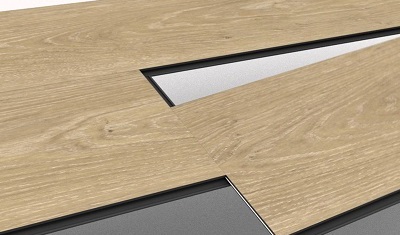
Useful when installation speed and cleaner renovation are important. Confirm subfloor flatness, expansion layout, transitions, attached pad and large-area requirements before approving the system.
Useful when a low finished height, bonded surface and controlled movement are preferred. Moisture testing, substrate smoothness, adhesive compatibility and handover schedule become part of the floor specification.
Useful where local replacement and reduced disruption matter. Room size, chair and rolling loads, perimeter fixing and the manufacturer’s installation instructions determine whether the format is suitable.
For buyers focused on rigid floating renovation systems, review 3C-Floor’s click lock SPC flooring. For moisture-conscious flexible vinyl formats, compare the published waterproof LVT flooring direction and confirm the exact product claim before using it in your market.
Maintenance Design
A low-maintenance floor is not created by cleaning instructions alone. Décor, texture, entrance protection, chair pads and cleaning chemistry should be planned during specification.
Remove crumbs, sand and grit with a soft broom, microfiber system or a hard-floor vacuum setting so abrasive particles are not dragged by chair legs.
Wipe food and drink spills promptly using the method recommended for the exact flooring product. Fast removal reduces staining risk and prevents slippery residue.
Use a lightly damp microfiber mop and a compatible neutral cleaner where the product instructions allow it. Avoid leaving excess water around edges or transitions.
Use clean, non-staining felt or suitable furniture protectors and replace them when worn. A strong floor still benefits from eliminating grit trapped under chair feet.
For projects that need a broader material decision before narrowing to dining use, the 3C-Floor Flooring Buying Guide compares SPC, WPC, LVT, vinyl sheet and other flooring categories by room, installation and sourcing conditions.
3C-Floor Image Pack
These images are hosted on the official 3C-Floor website and are placed next to relevant explanatory content with descriptive ALT text.


Information Gain
A, useful application page should explain limits as clearly as benefits. SPC and LVT solve many dining-room problems, but they are not automatically the right answer for every design brief.
Engineered or solid wood may be preferred when natural grain, aging and refinishing potential matter more than maximum spill tolerance or the easiest maintenance routine.
Porcelain or ceramic systems can suit dining areas where very hard surfaces, heat tolerance or continuity with a tiled kitchen is more important than resilient underfoot feel.
IXPE or EVA can support acoustics and installation convenience on suitable products, but an uneven, unstable or moisture-problem subfloor still needs project-specific correction.
A quiet apartment dining room, hotel breakfast area and busy restaurant front-of-house can all use dining furniture but create very different traffic, chair, cleaning and documentation requirements.
Wholesale & Project Procurement
Total thickness does not tell you the wear-layer thickness, top-finish quality, joint geometry, core/body composition or backing.
Dining rooms expose large areas around tables. Review full planks and multiple boards to judge décor repeat, shade balance, gloss and embossing.
Ask how the finish looks under repetitive chair movement and plan felt or compatible furniture protectors from the start.
A dramatic emboss may photograph well but can create more cleaning effort. Match texture to cleaning frequency and the target end user.
Put every supplier quote into the same template: type, total thickness, wear layer, size, surface, backing, installation, packing and required evidence.
Keep the approved décor code, surface, dimensions, backing, product construction, carton artwork and sample reference linked to future purchase orders.
RFQ Checklist
Give the supplier the operating conditions first. This makes quotations easier to compare and reduces the risk that a lower price simply represents a different construction.
3C-Floor Supply Support
3C-Floor’s published product range includes SPC flooring, WPC flooring, LVT flooring, PVC flooring rolls and related resilient-flooring solutions. For an easy-clean dining room program, the practical value is the ability to compare more than one construction before fixing the final specification.
Importers, distributors, contractors and private-label buyers can use a sample-led process: define the target application, shortlist the flooring construction, compare surface and wear options, confirm installation, approve physical samples and lock the product and packaging references before bulk supply.
People Also Ask / Buyer FAQ
Direct answers to common dining-room selection, cleaning and B2B purchasing questions.
For many dining areas, resilient vinyl floors such as SPC and LVT are practical easy-clean choices because routine crumbs can be removed by sweeping or vacuuming and everyday spills can be wiped from the finished surface. The final choice should still match the exact product construction, surface texture, traffic level and installation conditions.
SPC flooring is a strong dining-room option when a rigid click floor, moisture-tolerant construction, wood-look design and straightforward daily maintenance are priorities. Buyers should confirm the wear layer, surface finish, click quality, backing and exact product instructions instead of choosing by total thickness alone.
Yes, suitable LVT constructions are commonly used in spill-prone dining interiors. LVT gives buyers wood, stone and tile visuals plus click, glue-down or loose-lay installation choices. Waterproof or water-resistant claims should always be confirmed for the exact SKU and installation system.
Chair zones need a suitable wear surface, UV or top-coat system, a texture and gloss level that do not highlight every fine mark, and correct furniture protection. Felt or non-staining chair-leg protectors and regular grit removal remain important even with a stronger wear layer.
No. Deep embossing can improve visual realism and tactile grip, but it can also hold more crumbs and soil than a smoother matte texture. For easy-clean dining room flooring, buyers should balance appearance, slip expectations, stain response and routine cleaning effort.
Moisture tolerance is useful because dining rooms see drink spills and damp cleaning, but a waterproof plank does not make the whole room waterproof. Joints, perimeter gaps, transitions, subfloor moisture and installation details still need to be managed according to the exact flooring system.
Include the target market, residential or commercial application, expected traffic, flooring type, total thickness, wear layer, size, surface texture, backing, installation method, décor direction, quantity, packaging needs, required product documents and destination port. This allows a supplier to compare equivalent constructions rather than quote from color alone.
Send the real room type, traffic, chair movement, cleaning routine, installation plan and target market. 3C-Floor can then discuss an SPC or LVT construction that fits the program instead of quoting from décor alone.
Request a Dining Room Flooring Quote