- 0086 13321818576 (Steven Lee)
- info@3c-floor.com
Engineered hardwood flooring is real wood on the walking surface, built over a layered core for improved dimensional stability. For importers, developers, flooring distributors and commercial specifiers, the purchase decision should not stop at “oak, color and thickness.” The contract specification should separately define the real-wood veneer, core, visual grade, finish, plank format, installation method, moisture limits, packaging and sample standard. If the project only needs a convincing wood look—not a real timber surface—SPC, WPC or LVT may offer easier moisture management, repeatable décor control and more scalable private-label programs.

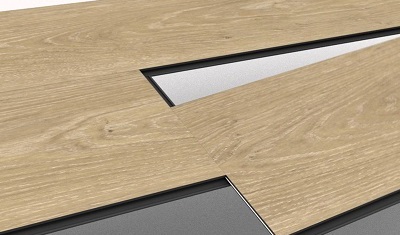
Why show this image? Many buyers start with a wood appearance and then choose the construction. Engineered hardwood uses real timber on top; the 3C-Floor SPC plank above uses a printed wood visual over a rigid resilient core.
Engineered hardwood is a real-wood flooring category, not a printed imitation. The surface is genuine hardwood; the stabilizing layers underneath are engineered to reduce the movement associated with a single solid timber board.
Real hardwood. Oak, walnut, maple, hickory and other species may be used depending on the product.
Layered construction. The core design is a major performance variable and must be stated in the specification.
Real wood with improved stability. It generally moves less than comparable solid hardwood when humidity changes.
Assuming all products are alike. Two floors can share the same species and color yet differ greatly in veneer, core, finish and installation limits.
If the brief says “real wood surface”, engineered hardwood belongs on the shortlist. If the brief says “waterproof, low-maintenance, repeatable wood look, fast click installation or private-label scalability”, compare resilient alternatives before locking the material. For a deeper material-definition page, see 3C-Floor's existing What Is Engineered Hardwood Flooring? guide.
A vague RFQ creates quotes that cannot be compared. A usable RFQ separates appearance, construction, installation and commercial controls so every supplier prices the same target.
State species, cut/visual direction, veneer thickness, grade, stain tone, texture, finish type and sheen.
State core material and architecture, total thickness, width, fixed or random length, edge treatment and joint profile.
State subfloor, above/below grade condition, glue/floating/mechanical method, radiant heat if relevant, moisture-control plan and room conditions.
State approved sample range, carton labeling, length distribution, packing, quantity, required documentation, destination and repeat-order reference standard.
| Specification line | What the buyer should define | What the supplier should confirm | Risk when left vague |
|---|---|---|---|
| Wood species | Exact species and appearance direction | Actual face material used in the approved product | Unexpected grain, color or hardness profile |
| Real-wood layer | Veneer/wear-layer thickness as its own line item | Nominal construction and tolerance | Total plank thickness is mistaken for refinishable wood reserve |
| Core | Required core concept or acceptable constructions | Cross-section and material description | Stability and installation behavior differ from expectation |
| Visual grade | Knot, sapwood, filler and color-variation rules | Representative range, not one “perfect” board | Claims caused by normal natural variation |
| Finish | Finish family, color, texture and sheen target | Approved control sample under comparable lighting | Color/gloss mismatch between samples and bulk order |
| Plank format | Width, overall thickness, fixed/random length policy | Length distribution and packing method | Installation waste and visual layout differ from budget |
| Installation | Subfloor and preferred method | Written compatibility for glue, float or mechanical fastening | Material is bought before the site method is validated |
| Moisture conditions | Project environment and substrate risk | Product-specific limits and preparation requirements | “More stable” is misread as “waterproof” |
| Packaging | Carton, labels, pallet protection and SKU reference | Final packing drawing / artwork approval | Damage, relabeling work or reorder confusion |
| Repeat orders | Reference sample and acceptable variation policy | Batch identification and reapproval procedure | Natural wood variation becomes a commercial dispute |
Do not request “14 mm oak engineered hardwood” as a complete quote specification. That line does not tell you how much real wood is on top, how the core is built, what grade is acceptable, how long boards are distributed, how the floor is installed or what the finished appearance should be.

The face of a showroom plank mainly tells you whether you like the species, stain and texture. The edge profile tells you far more about what you are buying. For engineered hardwood, the buyer should read the cross-section from top to bottom and separate the real-wood layer from the stabilizing core and balance layer.
Overall plank thickness and real-wood veneer thickness are not the same thing. A thick board can still have a relatively thin real-wood surface. B2B buyers should request both numbers separately and never infer refinishability from total thickness alone.
The best comparison starts with what the walking surface actually is. From there, compare moisture behavior, dimensional movement, maintenance, installation and the level of visual variation the buyer is willing to accept.
| Decision factor | Engineered hardwood | Solid hardwood | Laminate | SPC vinyl | WPC vinyl |
|---|---|---|---|---|---|
| Visible surface | Real hardwood | Real hardwood | Printed décor surface | Printed décor + wear surface | Printed décor + wear surface |
| Core concept | Layered engineered structure | Single timber piece | Typically fiberboard-based | Rigid mineral/polymer composite style core | More cushioned composite resilient core |
| Primary reason to choose | Authentic wood + improved stability | Traditional solid timber + large sanding reserve | Wood-look visual at a lower-cost dry-area position | Waterproof rigid core + easy maintenance | Waterproof wood look + softer underfoot feel |
| Water assumption | Moisture-sensitive unless the exact product says otherwise | Moisture-sensitive | Product dependent | Waterproof resilient category | Waterproof resilient category |
| Natural variation | Yes — expected | Yes — expected | Pattern-controlled | Pattern-controlled | Pattern-controlled |
| Private-label repeatability | Requires careful natural-material range control | Requires careful natural-material range control | Generally high design repeatability | High design/specification repeatability | High design/specification repeatability |
| Can be sanded like wood? | Sometimes, depending on the real-wood layer and manufacturer guidance | Typically more sanding reserve than engineered wood | No | No | No |
If yes, keep engineered or solid hardwood in the material specification. Printed wood-look flooring is not a substitute for a real-wood requirement.
If waterproof resilient performance is more important than a genuine timber face, compare SPC flooring first.
If repeatable décor, click installation, backing options and branded cartons matter, compare WPC flooring and LVT flooring.
Engineered hardwood is most compelling when the project values genuine timber, wider plank visuals and dimensional stability—but it is still a natural wood surface with site-condition limits.
Strong fit where buyers want real timber character in living rooms, bedrooms, corridors and open-plan spaces. Natural variation should be treated as part of the aesthetic and documented in the approval set.
Useful for hotel rooms, restaurants, lounges, offices and boutiques where a genuine wood story matters. The finish, traffic plan, maintenance schedule and replacement strategy should be specified before purchase.
Many engineered floors are designed for concrete installation, but the project still needs flatness, moisture evaluation, vapor control and an approved glue-down or floating system.
Some engineered products are suitable for heated subfloors. Approval must come from the selected flooring system, with species, board geometry and temperature/moisture limits considered together.
Reconsider real wood when the project expects repeated water exposure, wet cleaning or low maintenance. A waterproof resilient floor may match the operational brief better.
Natural wood can be managed at scale, but color/grain variation is inherent. If SKU-to-SKU visual repeatability is more important than natural variation, resilient printed décor may reduce commercial friction.
These are verified 3C-Floor images. They show resilient wood-look flooring options and are intentionally labeled so they are not confused with genuine engineered hardwood.


Engineered hardwood and high-quality wood-look vinyl can look similar in room photography, but they solve different procurement problems. A buyer who needs real wood should stay with engineered hardwood. A buyer who needs waterproof core behavior, consistent printed décor, easy cleaning, fast floating installation or scalable private-label control should compare 3C-Floor's resilient flooring categories.
Keep engineered hardwood when the selling story, architect's specification or customer expectation requires a genuine hardwood surface.
Compare SPC/WPC/LVT when the product brief emphasizes water resistance, maintenance simplicity, printed design repeatability, attached backing or private-label packaging.
Do not market one as the other. A wood-look vinyl plank can visually imitate oak, but it is not engineered hardwood and should never be labeled as real wood.
Natural wood varies by board. A single attractive plank is not a fair visual standard for a bulk engineered hardwood order.
Use a multi-board sample set that represents the intended color, grain, knot, sapwood and filler range. The point is to define acceptable variation, not to eliminate natural variation.
Gloss, stain depth and texture can look different under showroom LEDs,, daylight and project lighting. Approve the visual standard under conditions that resemble the final installation.
Keep a dated reference set with the final specification, carton label and batch/SKU identity so future orders have a common comparison point.
Natural wood does not behave like a printed film library. If a brand requires every batch to look visually identical, it should either define a very narrow approved natural range—with the associated sourcing implications—or consider a printed wood-look product where color and pattern control are inherently more repeatable.
These mistakes occur because buyers compare the visible face first and the system specification second. Reverse that order.
Total board thickness does not tell you the amount of usable real wood on top.
Improved stability does not remove the moisture sensitivity of a real-wood surface.
A single sample hides the natural variation that will appear across cartons and rooms.
Words such as “natural,” “rustic” or “select” need a visual reference and defect/variation rules.
Random-length distribution affects installation pattern, waste, carton planning and perceived product value.
Subfloor type, moisture conditions and fastening method should be part of the purchasing specification.
They may share a wood visual, but one prioritizes genuine timber and the other prioritizes resilient performance.
Write the project requirement first: real wood, waterproofing, maintenance, installation, acoustic needs, batch consistency and brand positioning.
A complete request lets suppliers quote the same target and makes sample approval more meaningful.
If your project ultimately shifts to SPC, WPC or LVT, you can use the same discipline: construction, dimensions, surface, installation, packaging, quantity, target market and required documentation should all be stated before price comparison.
3C-Floor's published product range centers on SPC flooring, WPC flooring, LVT flooring, PVC flooring rolls and related resilient-flooring systems. For buyers who began with “engineered hardwood” because they want a wood appearance, this creates a useful decision point: is real timber actually mandatory, or is the commercial goal a durable wood-look floor that is easier to standardize?
For resilient programs, buyers can discuss thickness, wear layer, plank format, surface embossing, backing, click installation, décor direction, private-label cartons and export packaging. The exact available specification should always be confirmed for the selected product rather than assumed from a category name.
Send: product type, target market, application, overall thickness, wear layer, plank/tile size, surface texture, backing, color direction, quantity, packaging, certification/document requirements and destination port.
The objective is to build a quotation around the use case—not simply match a photograph.
Request a Flooring Comparison QuoteShort, direct answers to the questions that most often change a product specification.
Yes. Engineered hardwood uses real hardwood as the visible walking surface. The difference from solid hardwood is the layered structure beneath that surface, so buyers should confirm both the veneer and the core construction.
The critical lines are wood species, real-wood veneer thickness, core construction, overall thickness, width and length mix, visual grade, finish, edge profile, installation method, moisture limits, packaging and the approved sample standard.
No blanket “waterproof” assumption should be made. Engineered hardwood is generally more dimensionally stable than comparable solid wood, but its surface is still real timber. Water exposure and moisture limits depend on the exact product and manufacturer instructions.
Many engineered hardwood products are designed for glue-down or floating installation over properly prepared concrete. The project still needs subfloor flatness, moisture testing, vapor control and a system that the selected manufacturer approves for concrete.
Some engineered hardwood can be refinished and some cannot. The answer depends mainly on the usable real-wood layer, floor condition, previous sanding history and the manufacturer's written refinishing guidance.
The surface is the key difference. Engineered hardwood has genuine wood on top. Laminate normally uses a printed decorative surface. Engineered hardwood can therefore deliver authentic grain and natural variation; laminate delivers printed visual consistency.
Engineered hardwood has a real wood surface over a layered core. SPC uses a printed wood or stone visual over a rigid resilient core. Choose engineered hardwood when authentic timber is mandatory; compare SPC when waterproof rigid-core performance, easier maintenance and repeatable décor are more important.
3C-Floor's published product range focuses on resilient flooring such as SPC, WPC, LVT and PVC flooring. If your project requires genuine engineered hardwood, keep real wood in the specification. If the goal is a wood-look floor with waterproof performance or scalable private-label control, 3C-Floor can help compare resilient alternatives.
Tell 3C-Floor your target market, application, thickness, wear layer, size, surface, backing, color direction, quantity, packaging, certification/document requirements and destination port. We can help you compare SPC, WPC and LVT wood-look structures. If genuine real wood is mandatory, keep engineered hardwood in your project specification.