01 · VAPOR CONTROL
Limit moisture migration
Polyethylene film can create a continuous separation layer above compatible mineral subfloors when the project or flooring instructions require vapor control.



Moisture Control · SPC Installation · PE Film Underlay
A flooring moisture barrier is a vapor-control layer placed between a prepared substrate and a compatible flooring system. For floating SPC over concrete or screed, many projects use polyethylene film or a moisture-control underlay to limit vapor movement from the slab. The key distinction is simple: waterproof SPC protects the plank from water exposure, while a vapor barrier under SPC manages moisture coming from below the floor.
3C-Floor supports SPC, WPC and vinyl flooring buyers with PE-film-faced underlayment options, attached backing choices and project-specific flooring specifications for distributors, contractors, private-label brands and commercial procurement teams.

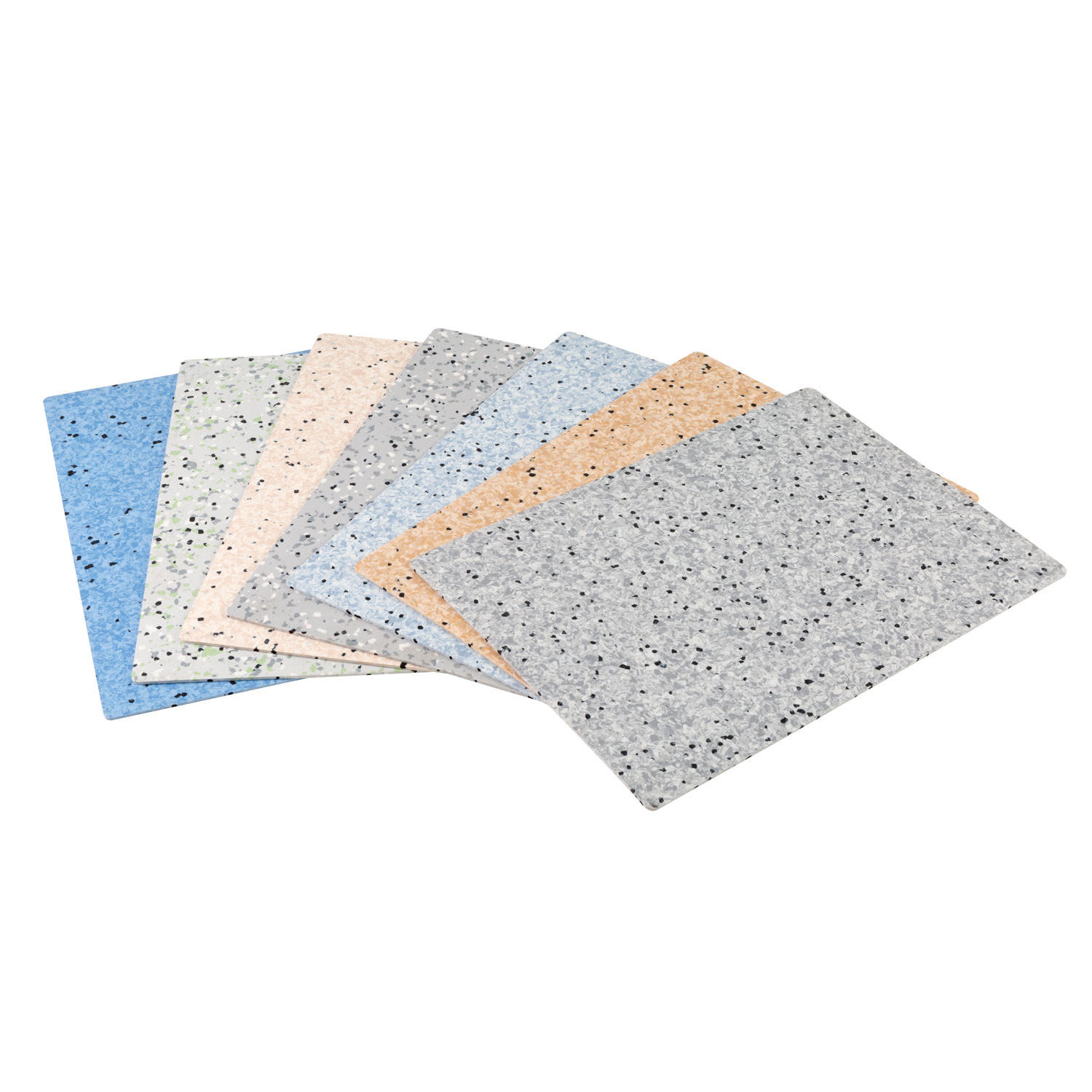
3C-Floor moisture-proof underlayment reference image. Final material and film structure should be confirmed for the approved floor system.
At a glance
A flooring moisture barrier reduces the movement of water vapor from a concrete, screed or other moisture-releasing substrate into the floor assembly above it. It is different from a soft acoustic underlay, and it is also different from the waterproof core of SPC flooring. A project can need all three functions—rigid waterproof flooring, acoustic backing and substrate vapor control—but they must be specified as a compatible system rather than assumed to be interchangeable.
Polyethylene film can create a continuous separation layer above compatible mineral subfloors when the project or flooring instructions require vapor control.
The goal is not only to protect the SPC core. Trims, backing, adhesives in adjacent areas, substrate surfaces and indoor conditions can all be affected by unmanaged moisture.
IXPE, EVA, EPE, cork and rubber underlayments may provide comfort or sound control. A PE film facing can add a moisture-control function, but only the approved construction should be treated as a vapor-control layer.
For B2B projects, the subfloor type, grade level, moisture test, membrane requirement and seam treatment should be documented before flooring is released to the jobsite.
Decision matrix
The best answer depends on the substrate and the exact SPC installation document. Concrete and screed can transmit vapor; wood assemblies behave differently; existing floors can conceal conditions below them. 3C-Floor therefore recommends treating moisture control as part of the approved installation system rather than applying one internet rule to every product.
| Subfloor / Condition | Moisture-Barrier Direction | What the Buyer or Installer Should Confirm | Common Mistake to Avoid |
|---|---|---|---|
| Concrete slab / screed | A separate PE vapor-control layer or an approved integrated system is commonly considered and may be required. | Grade level, slab condition, moisture-test method, membrane thickness, seam overlap/sealing, perimeter detail and product warranty instructions. | Assuming waterproof SPC means concrete moisture can be ignored. |
| SPC with attached IXPE or EVA | Attached padding does not automatically replace a vapor barrier. | Whether the exact backing is approved as a combined vapor-control system and whether a second soft layer is prohibited. | Stacking another compressible underlay beneath attached-pad SPC without approval. |
| Plywood / OSB | Do not automatically add an impermeable PE layer. | Wood moisture content, ventilation, crawl-space conditions, building-envelope design and flooring instructions. | Trapping wood between low-permeance layers without a building-appropriate moisture strategy. |
| Existing tile or resilient floor | Possible only after the underlying moisture condition is understood. | Bond, flatness, moisture history, hidden slab condition, finished floor height and compatibility. | Using the old floor as proof that no moisture problem exists. |
| Below-grade / moisture-prone area | Requires especially careful vapor-control planning. | Exact product manual, slab testing, wall/floor junctions, drainage history, humidity and local project requirements. | Treating a PE sheet as a repair for active water intrusion or drainage failure. |
For flatness, structural support, existing-floor compatibility and moisture testing, use the dedicated SPC subfloor requirements guide before finalizing the underlay build.
Three different layers
Main job: control vapor moving from the substrate toward the flooring system.
Main job: depending on material, improve acoustic behavior, cushion, support or create an installation interface.
See 3C-Floor's flooring underlayment range for existing product directions.
Main job: provide a dimensionally stable, water-resistant rigid flooring surface.
Compare current waterproof SPC flooring structures and backing options.
3C-Floor image pack
These images are hosted on 3C-Floor and show several underlayment constructions buyers may encounter when planning a moisture-control flooring system. The visual layer alone does not prove vapor performance; confirm the actual material build, film thickness and installation instructions.


PE film flooring underlay
A standalone PE sheet and a PE-film-faced underlayment solve different procurement problems. A standalone sheet is primarily a vapor-control component. Film-faced underlay combines a support or acoustic layer with a film surface, which can simplify the bill of materials when the complete construction is approved for the floor system.
Identify whether the SPC has no pad, a factory-attached IXPE/EVA/cork pad, or a separate approved underlayment requirement. This determines how much additional material can safely sit below the click joint.
Ask whether the project needs a dedicated vapor retarder, an integrated moisture-control underlay or a surface-applied system. Do not select the membrane only because it is the thickest option.
The membrane only works as intended when the seam overlap, sealing method, penetrations, perimeter detail and floor installation sequence match the product instructions and project specification.
When acoustics also matter, compare acoustic SPC flooring rather than adding an unapproved thick foam beneath a rigid click system.
Verified 3C-Floor reference constructions
3C-Floor's existing underlayment content shows several film-faced constructions. The table below should be used as a sourcing conversation starter, not as a universal specification. Confirm current availability, current test documentation and compatibility with the final flooring SKU before purchase.
| Reference Construction | Underlay Material | PE Film Reference | Procurement Use | Buyer Confirmation |
|---|---|---|---|---|
| 2 mm EPE foam + film | Polyethylene foam | 0.04 mm PE film shown on current 3C-Floor reference content | Entry-level film-faced flooring underlay programs | Confirm density, roll dimensions, seam method and floor-system approval. |
| 2 mm EVA foam + film | EVA foam | 0.04 mm PE film reference | Comfort-oriented or branded underlay collections | Confirm compression behavior, acoustic requirement and compatibility with attached-pad SPC. |
| 3 mm IXPE foam + film | Cross-linked polyethylene foam | 0.06 mm PE film reference | Higher-spec underlay programs where IXPE is preferred | Do not assume thicker is better; verify click-joint support and approved total underlay build. |
| 1 mm cork + film | Cork | 0.04 mm PE film reference | Natural-material underlay positioning | Confirm project moisture strategy, dimensional behavior and exact film continuity. |
If your primary purchase is the rigid floor rather than the underlay, review the 3C-Floor SPC flooring manufacturer page to coordinate plank thickness, wear layer, click system and backing with the moisture-control plan.
Installation sequence
Install the flooring moisture barrier only after the substrate is structurally sound, clean, sufficiently flat and evaluated for moisture. Lay the approved PE film or moisture-control underlay continuously over the prepared area, treat seams and perimeters exactly as the approved installation instructions require, then install only the SPC backing or additional underlay layers allowed by that flooring system. Do not use extra soft underlayment to hide dips or humps in the subfloor.
Identify concrete, screed, wood or existing hard flooring; check soundness, flatness, contamination and visible defects.
Use the method required by the project or product instructions. A slab that looks dry is not automatically proven dry.
Use the specified film thickness or integrated underlay. Follow the approved overlap, tape, seam and edge treatment.
Keep the total support system within the flooring instructions, especially when the plank already has attached IXPE, EVA or cork backing.
Common sourcing errors
A thicker PE layer is not automatically the right system. Substrate, flooring installation method, seam continuity and product approval matter more than one headline number.
Foam, cork and rubber may deliver acoustic or comfort benefits. Only treat them as moisture-control layers when the full construction and film surface are specified for that function.
An additional soft underlay can introduce vertical movement beneath a rigid click joint. Use only combinations approved for the chosen SPC.
Moisture-control film is part of a strategy, not proof that the substrate is ready. Keep test records, repair notes and installation instructions with project documentation.
Above-grade, on-grade and below-grade slabs can create different moisture risks. State grade level in RFQs and project handover documents.
A compressible layer cannot safely repair an uneven substrate. Correct high and low areas first, then use underlay for its approved acoustic or moisture function.
For a complete product specification beyond moisture control, use the SPC buying guide to coordinate thickness, wear layer, backing, click profile, surface, samples, packaging and repeat-order control.
B2B specification
A useful moisture-barrier RFQ should describe the floor system rather than asking only for “PE film price.” This makes it easier to match the underlay or film to the SPC construction and avoids quoting a roll that cannot be used with the intended click system.
3C-Floor's current underlayment supplier positioning supports customization around material, thickness, roll size, color, packaging, logo labels and carton design. For branded programs, approve the technical structure and the packaging artwork as separate checkpoints.
Exact test data, certification, MOQ and lead time should be confirmed for the current product and order rather than copied from a different underlayment program.
Questions buyers ask
Often over concrete or mineral subfloors, but not as a universal rule for every SPC product. The approved installation instructions, grade level, slab moisture condition and project specification should determine whether a separate polyethylene vapor barrier, integrated vapor-control underlay or another approved system is required.
No. Waterproof SPC describes the plank's resistance to water, while a flooring moisture barrier manages vapor or moisture moving from the substrate below. A waterproof rigid core does not automatically replace subfloor moisture planning.
Not automatically. IXPE and EVA are often chosen for acoustic comfort and support. They replace a separate vapor-control layer only when the specific tested or approved floor system states that the backing construction performs that function.
PE film flooring underlay combines a foam, cork or another compatible underlayment with a polyethylene film facing. The underlay can provide cushioning or acoustic benefits while the film adds a moisture-control surface. The exact vapor-control performance depends on the complete construction, seams and installation method.
No single thickness should be copied into every job. Many rigid-core systems specify 6 mil polyethylene over concrete, but requirements differ by manufacturer, product and market. Confirm membrane thickness, overlap, seam sealing and perimeter treatment in the approved installation document.
Not automatically. Wood subfloors require a moisture strategy that considers moisture content, ventilation, crawl-space conditions and the risk of trapping moisture between low-permeance layers. Follow the building design and exact flooring instructions.
Only when the flooring system explicitly allows it. Extra soft underlayment can create excessive movement under rigid click joints. If more sound control is needed, specify a floor system designed for the acoustic target instead of stacking generic cushioning.
Send the flooring type, subfloor, grade level, target underlay material and thickness, PE film requirement, roll dimensions, quantity, application, destination market, packaging, private-label needs and required technical documents. If you are buying SPC at the same time, also include plank thickness, wear layer, size, surface, backing and click-system direction.
Send 3C-Floor the substrate condition and the flooring construction together. We can help you organize an SPC or vinyl flooring program around the right backing direction, PE-film underlay option, sample approval and private-label requirements without treating moisture control as an afterthought.
For a faster quotation, include: flooring type, subfloor, grade level, thickness, wear layer, backing, film requirement, roll size, quantity, application, packaging, target market and destination port.
Suggested publishing URL: https://www.3c-floor.com/flooring-moisture-barrier.html
Technical note: flooring installation requirements vary by product, substrate, project and market. Final vapor-control thickness, seam treatment, moisture test limits and approved underlayment combination should follow the current 3C-Floor SKU documentation and project specification.