Welcome to 3C-Floor — Your Trusted Manufacturer of SPC Flooring, WPC Vinyl Flooring, LVT Flooring & PVC Flooring Rolls.
  • 0086 13321818576 (Steven Lee)
News
Current Location:Home > News

Heterogeneous PVC Flooring Supplier | Commercial Vinyl Rolls | 3C-Floor

Update:2026/9/1 7:43:02 Views:3
Commercial Vinyl Roll · B2B Supply

Heterogeneous PVC Flooring Supplier for Commercial Roll & OEM Programs

3C-Floor supplies heterogeneous PVC flooring for distributors, importers, contractors and project buyers who need multi-layer vinyl sheet with controlled wear layer, backing, roll size, design and repeat-order specifications. The product is especially useful where buyers want the large-area efficiency of sheet flooring together with printed design flexibility for offices, healthcare, education, retail, hospitality and public interiors.

Quick answer: a good heterogeneous vinyl flooring supplier should help you define the complete construction—not just send a color chart. Confirm overall thickness, wear layer, compact or foam backing, roll dimensions, surface treatment, seam strategy, project standards, packaging and batch repeatability before comparing quotations.

This sourcing page is built around the supplier decision: what to specify, which construction fits the project, what commonly goes wrong in bulk purchasing, and what information 3C-Floor needs to prepare an accurate commercial or private-label quotation. For a production-focused overview, see the existing heterogeneous vinyl flooring manufacturing page.

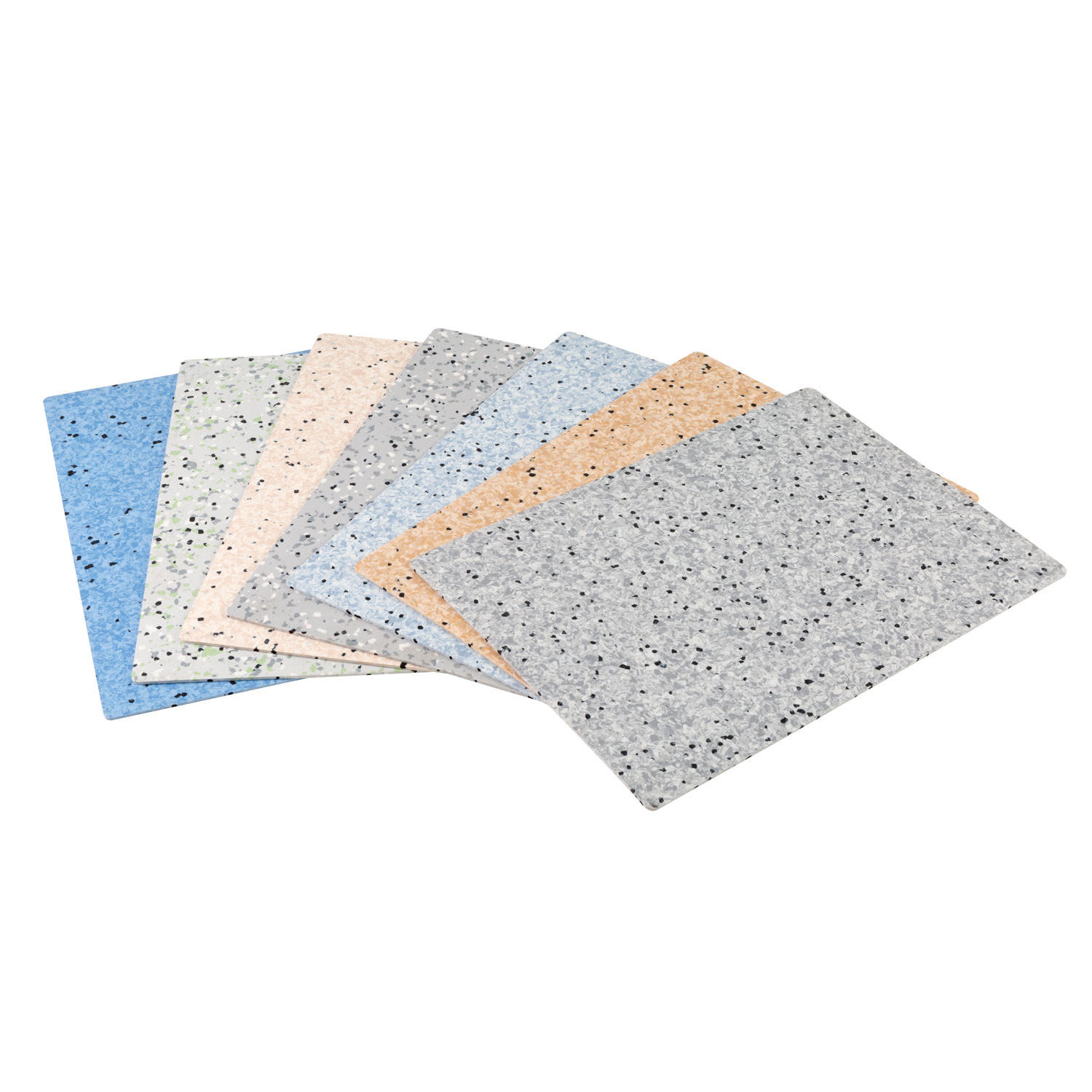
3C-Floor heterogeneous vinyl flooring rolls in commercial colors
Real 3C-Floor product image: commercial heterogeneous vinyl rolls.
2 mcommon roll width listed in the 3C-Floor heterogeneous roll program
20 mcommon roll length for commercial project planning
2.0–3.0 mmoverall thickness range shown on the current roll range
0.12–0.7 mmwear-layer options shown for heterogeneous vinyl rolls
At a Glance

What buyers are actually sourcing

Heterogeneous PVC flooring is not one universal product. The useful buying unit is a defined multi-layer sheet specification tied to a real application. A retail chain may prioritize visual repeatability and stain control; a school may prioritize wear layer, easy cleaning and seam planning; an office may prioritize comfort or acoustic backing; a clinic may require stricter installation details and project documentation.

  • Printed design flexibility for commercial interiors.
  • Compact or cushioned backing directions depending on load and comfort.
  • Commercial wear-layer options up to 0.7 mm in the current 3C-Floor roll range.
  • Large sheet format for fewer joints across wide areas.
  • OEM color, roll marking, label and packaging discussions for B2B programs.

Fast specification starting point

Item3C-Floor supply direction
ProductHeterogeneous PVC / vinyl sheet flooring
ConstructionMulti-layer with surface treatment, wear layer, printed layer, stability layer and backing
Roll format2 m × 20 m is a common commercial direction
Total thickness2.0–3.0 mm in the existing heterogeneous roll range
Wear layer0.12–0.7 mm options shown by 3C-Floor; choose by traffic and construction
BackingCompact / dense or comfort-oriented foam direction depending on product
InstallationTypically glue-down sheet; welded seams where the product/system requires them
Supply modelWholesale, project, OEM and private-label discussion

Browse the broader heterogeneous vinyl roll range before finalizing your RFQ.

Product Construction

Why a “heterogeneous” floor must be specified layer by layer

The defining difference is the layered construction. That gives heterogeneous sheet vinyl its design flexibility, but it also means procurement decisions must consider the wear surface, printed visual, stabilization and backing together.

Heterogeneous vinyl flooring layer structure with wear layer, printed layer and compact backing

1. Surface treatment

Supports everyday stain control and maintenance. The exact finish should be confirmed for the selected product.

2. Transparent wear layer

Protects the printed visual against routine traffic. Buyers should not treat total thickness as a substitute for wear-layer selection.

3. Printed design layer

Creates wood, stone, abstract or solid-color commercial visuals and is the main aesthetic advantage over a through-body floor.

4. Dimensional / reinforcement layer

Helps stabilize the sheet across a large glue-down installation and reduces unwanted dimensional movement.

5. Compact or cushioned backing

The backing changes pressure response, comfort and acoustic feel. This is one of the most important supplier questions to resolve before quotation.

For a ready-made commercial roll example, review 3C-Floor’s commercial heterogeneous vinyl roll page.

Choose the Right Backing

Compact vs foam-backed heterogeneous vinyl: do not buy by thickness alone

Two rolls can share the same overall thickness while behaving differently under furniture, rolling loads and foot traffic. The backing is a functional part of the specification, not a hidden cost line.

Firm commercial response

Compact / dense backing

Choose this direction when the project prioritizes a firmer sheet, controlled indentation response, rolling traffic and stable glue-down behavior.

  • Corridors and public circulation
  • Retail aisles and service areas
  • Office zones with caster chairs
  • Healthcare support areas
Comfort-led response

Foam / cushioned backing

Choose this direction where softer underfoot feel or acoustic comfort is more important than maximum firmness under concentrated loads.

  • Classrooms and learning spaces
  • Offices and meeting areas
  • Hospitality and residential-style interiors
  • Comfort-focused renovations
Different product family

Homogeneous PVC

Choose homogeneous vinyl when through-body wear behavior and institutional durability are more important than printed design and backing choice.

  • Heavy-use public interiors
  • Frequently cleaned institutional spaces
  • Projects requiring a through-body structure
  • Areas where decorative prints are not the priority

Common sourcing mistake

“2 mm flooring” is not a complete specification. A useful RFQ should say whether 2 mm refers to a compact or cushioned construction, the target wear layer, installation system, surface requirement and end-use traffic. Otherwise two suppliers can quote materially different floors under the same thickness description.

Supplier Qualification

How to evaluate a heterogeneous PVC flooring supplier before comparing price

For B2B buyers, supplier quality is easier to judge through specification discipline than through generic claims. Use the checklist below before you approve samples or negotiate a container order.

1

Construction is defined clearly

The quotation should identify product type, backing, total thickness, wear layer, roll format, surface and installation direction—not just “PVC floor roll.”

2

Sample equals the intended bulk spec

Approve color and structure against a reference that can be carried into production. Ask how sample references are recorded for repeat orders.

3

Batch control is part of the order

Large projects should define how color, thickness, backing and roll marking are kept consistent across one production batch and future replenishment.

4

Installation accessories are coordinated

When welded seams are required, confirm matching rod color and compatibility early. 3C-Floor also supplies vinyl floor welding rod.

5

Project tests are confirmed before order

Fire, slip, VOC, hygiene or other local requirements must be linked to the exact selected floor. Do not assume every color or construction carries the same documentation.

6

Export packing matches your channel

Roll labels, item codes, pallet marks, private-label information and destination requirements should be agreed before production, not added after the floor is finished.

Supplier Specification Matrix

What to confirm for wholesale and project quotations

The ranges below are grounded in current 3C-Floor roll information where stated. Project-specific items remain subject to the selected product, application and destination-market requirements.

Specification Typical / available direction Why it matters to the buyer
Flooring type Heterogeneous PVC / vinyl sheet Separates a layered printed floor from homogeneous through-body vinyl.
Overall thickness 2.0–3.0 mm shown in the existing 3C-Floor heterogeneous roll range Affects feel and construction, but should always be read together with backing and wear layer.
Wear layer 0.12–0.7 mm shown in the existing range Must be matched to expected traffic, cleaning and lifecycle target.
Roll width / length 2 m × 20 m is a common current direction Controls seam layout, waste, handling, packing and container planning.
Backing Compact / dense or cushioned / foam direction depending on product Influences pressure response, softness and acoustic behavior.
Surface treatment UV / easy-clean or functional direction by selected product Should match cleaning frequency, staining risk and local performance requirement.
Visual Commercial colors, abstract patterns and project design directions Printed layer allows broader visual positioning than homogeneous sheet.
Seams Heat-welded seams for compatible commercial sheet systems Important for healthcare, education and other projects where fewer open joints are preferred.
OEM / private label Color, pattern, label, roll mark, packaging and document discussions Supports distributors building repeatable market-specific collections.
Testing / certification Confirm by exact construction and target market before order Prevents a quotation from assuming performance documents that do not apply to the selected item.

If your project may use several resilient floor types, the broader PVC flooring roll sourcing guide helps compare homogeneous, heterogeneous, compact and foam-backed directions.

Image Pack

3C-Floor heterogeneous PVC flooring images for this page

These are real images hosted on 3C-Floor. The gallery combines product roll, construction, surface direction and installed application so the page can compete in both product search and Google Images without using third-party photos.

Application Matching

Where heterogeneous sheet vinyl makes the most sense

The strongest use case is not simply “commercial.” It is a project that needs a wide roll format plus decorative flexibility, with the construction matched to actual traffic, cleaning and comfort requirements.

Healthcare

Clinics, corridors & care interiors

Consider compact heterogeneous sheet when a project needs a decorative commercial floor, easy-clean surface direction and coordinated seam detailing. Confirm project hygiene, slip, fire and emissions requirements before approval.

Education

Schools, libraries & universities

Printed sheet vinyl gives specifiers broad color choice while roll format supports classrooms and corridors. Backing choice should reflect furniture pressure, acoustic goals and cleaning frequency.

Retail

Stores, aisles & chain rollouts

Use heterogeneous vinyl when a retail program needs coordinated design, wide-area installation and repeatable color across multiple locations. Wear layer and stain-control surface are key RFQ items.

Office

Open offices & circulation zones

Choose compact backing for a firmer response under chairs and furniture, or a comfort-oriented backing when acoustic feel is more important.

Hospitality

Hotels & serviced apartments

Heterogeneous sheet can be considered for corridors and service areas where buyers want a quieter visual, practical maintenance and project-scale coverage.

Public Interior

Administrative & community spaces

Useful for repeat rooms, corridors and shared facilities where the buyer needs a controlled commercial roll program rather than individual planks or tiles.

Product Selection

Heterogeneous PVC vs homogeneous vinyl vs LVT/SPC

The right floor depends on how the space will be installed and maintained. Use the comparison to reject the wrong product family early, before sample costs and project time are spent.

Decision Heterogeneous PVC sheet Homogeneous PVC sheet LVT / SPC plank or tile
Best reason to choose Printed design flexibility in a large sheet format Through-body structure for demanding institutional use Modular visuals, plank/tile replacement and click or glue-down formats
Construction logic Multiple layers including wear surface, print, reinforcement and backing More uniform through-body resilient construction Layered plank/tile; SPC adds rigid core
Joint strategy Few sheet seams; compatible systems may be heat welded Few sheet seams; welding common in institutional projects Many plank/tile joints; click or adhesive depending on type
Design range High, because a printed layer carries the visual Generally more material-driven visual language High, including wood and stone plank/tile visuals
Backing choice Compact or comfort/acoustic directions possible Typically dense sheet construction Varies; underlayment may be attached or separate
Choose another option when… You require through-body wear above all else or need a floating click renovation You need printed wood/stone design or a cushioned heterogeneous backing You need the wide-sheet, fewer-seam installation logic of roll flooring

The parent PVC flooring roll category is useful when your project is still deciding between homogeneous and heterogeneous sheet flooring.

Risk Reduction

Five sourcing mistakes that create avoidable project problems

The largest procurement failures usually come from incomplete specifications, not from the difference between two , color samples.

Quoting only by “2 mm”

Total thickness does not identify wear layer, backing or commercial classification. Define the construction first.

Approving color without batch logic

For multi-room and chain projects, agree how the approved reference will be carried into production and repeat orders.

Ignoring the subfloor

Sheet flooring requires a smooth, dry and compatible substrate. Surface defects can telegraph through a firm commercial sheet.

Leaving welding until installation

If welded seams are required, coordinate welding rod, groove method, installer practice and color before goods leave the factory.

Assuming all test reports apply

Documents should match the exact construction and destination requirement. Confirm before purchase instead of correcting paperwork after production.

RFQ Ready

Send a complete specification for a useful supplier quotation

A price request without construction details forces every supplier to make assumptions. Sending the information at right gives 3C-Floor enough context to compare the correct flooring structure, prepare samples and plan packaging.

For buyers that also need category-level planning, see the verified commercial PVC flooring roll manufacturer guide.

Project / application type
Estimated m² or order quantity
Overall thickness
Target wear layer
Compact or foam backing
Roll width and length
Color / pattern reference
Surface treatment requirement
Heat-welding requirement
Matching welding rod
Required test documents
Private-label packaging
Destination market / port
Repeat-order expectation
Commercial Supply Workflow

From sample request to repeat heterogeneous vinyl supply

A supplier program is more reliable when every stage has a clear approval point. The workflow below helps distributors and contractors preserve specification control across bulk and repeat orders.

1

Application review

Define traffic, room type, cleaning routine, furniture or rolling loads, installation method and local technical requirements.

2

Specification lock

Confirm total thickness, wear layer, backing, roll format, surface and seam direction before asking for final price.

3

Sample approval

Approve the representative color and construction, then record the reference for production and replenishment.

4

Bulk & repeat control

Coordinate roll marking, packaging, batch consistency, loading documents and repeat-order reference with the supplier.

When should you NOT choose heterogeneous PVC flooring?

  • If the primary requirement is through-body wear and surface restoration, compare homogeneous PVC flooring.
  • If the renovation requires a fast floating click system over an existing floor, SPC or click LVT may be a better starting point.
  • If the room has a specific wet-room or enhanced slip-safety requirement, specify a dedicated safety floor rather than assuming a standard heterogeneous sheet is suitable.
  • If subfloor preparation cannot meet sheet-vinyl requirements, resolve the substrate problem before selecting a dense glue-down roll.
Why 3C-Floor

A supplier model built around commercial roll production

3C-Floor’s current website states that the business has focused on PVC vinyl flooring manufacturing for more than 20 years. It also identifies the Shanghai factory as the site producing homogeneous and heterogeneous vinyl roll material and lists six heterogeneous production lines. Those details matter because a supplier page should connect the quotation to actual roll-floor manufacturing capability rather than generic trading claims.

Roll-floor category depth

3C-Floor supplies heterogeneous and homogeneous sheet flooring alongside SPC, WPC, LVT and accessories, helping buyers build mixed flooring programs from one broader resilient-floor platform.

Specification before price

The sourcing approach starts with construction, wear layer, backing, application, installation and documentation so commercial quotes can be compared on the same technical basis.

OEM and repeat-order planning

Color range, roll marking, labels, packaging, sample references and project documentation can be discussed as part of a repeat wholesale or private-label program.

Related Questions

Questions buyers commonly ask about heterogeneous PVC flooring

Direct answers are provided first so procurement teams—and search engines—can extract the decision without reading the whole page.

What is heterogeneous PVC flooring?

Heterogeneous PVC flooring is a multi-layer resilient sheet floor. A typical build combines a surface treatment and transparent wear layer with a printed design layer, reinforcement or dimensional layer, and compact or cushioned backing. The printed layer is what gives heterogeneous vinyl a wider range of commercial visuals.

What is the difference between heterogeneous and homogeneous PVC flooring?

Heterogeneous flooring is layered and uses a printed visual; homogeneous flooring has a more uniform through-body structure. Heterogeneous sheet is often selected for design flexibility and backing choice, while homogeneous vinyl is commonly evaluated where through-body wear and institutional durability are more important.

What thickness and wear layer should I choose?

Choose wear layer by traffic and construction, not by total thickness alone. 3C-Floor’s existing heterogeneous roll range lists 2.0–3.0 mm overall thickness and 0.12–0.7 mm wear-layer options. A distributor stock item, office, school corridor and retail aisle may need different combinations.

Is heterogeneous vinyl flooring suitable for hospitals and schools?

It can be suitable when the exact product and installation system meet the project requirements. For healthcare and education, buyers should review wear, cleaning, seam treatment, slip, fire, emissions, rolling load, acoustic need and any local specification before approval.

Can heterogeneous PVC flooring be heat welded?

Compatible commercial sheet vinyl can use heat-welded seams. The sheet, welding rod, adhesive, groove depth, welding method and subfloor need to be treated as one installation system. For matching seam material, see 3C-Floor’s welding rod product page linked above.

What affects heterogeneous PVC flooring price?

Price depends on the complete construction and order conditions. Important variables include overall thickness, wear-layer thickness, backing, surface treatment, design, quantity, roll packing, private-label requirements, project tests and destination. Send a complete RFQ to avoid comparing unlike products.

How do I choose a reliable heterogeneous vinyl flooring supplier?

Look for specification control, representative samples, repeat-batch management and project support. A supplier should be able to define construction clearly, link test documents to the exact product, coordinate welding accessories, prepare export packing and preserve approved color/specification references for repeat orders.

What information should I send to 3C-Floor for a quotation?

Send the application, quantity, thickness, wear layer, roll size, backing, color, surface requirement, welding requirement, private-label needs, required documents and destination port. If the order is project-based, room drawings or a material schedule can also help with roll and waste planning.

Useful Internal Resources

Continue the specification with related 3C-Floor pages

These verified pages support a different stage of the buyer journey, from product range to commercial roll planning and seam accessories.

Build the quotation around your project—not around a generic PVC floor price

Send 3C-Floor your target market or project, order quantity, thickness, wear layer, backing, roll size, color, surface, welding requirement, packing needs and destination port. The sales team can then discuss a heterogeneous PVC flooring specification that is suitable for wholesale, commercial projects or private-label supply.

Best information to include

  • Product structure: compact or cushioned heterogeneous vinyl
  • Overall thickness + target wear layer
  • 2 m roll requirement and preferred roll length
  • Application, traffic and cleaning routine
  • Color / sample reference and surface direction
  • Heat welding and matching rod requirements
  • Private-label packaging and destination port
  • Any fire, slip, VOC or project documentation requirement

Suggested URL: https://www.3c-floor.com/heterogeneous-pvc-flooring-supplier.html · Product specifications are subject to final 3C-Floor confirmation for the selected construction and target market.

Landlord hotline:
+86-021-54361792
Email:
info@3c-floor.com