Welcome to 3C-Floor — Your Trusted Manufacturer of SPC Flooring, WPC Vinyl Flooring, LVT Flooring & PVC Flooring Rolls.
  • 0086 13321818576 (Steven Lee)
News
Current Location:Home > News

Homogeneous Vinyl Flooring Supplier | Wholesale, OEM & Project Supply | 3C-Floor

Update:2026/9/1 7:45:04 Views:33

Commercial resilient flooring supply for importers, distributors, contractors and project buyers

info@3c-floor.com  ·  Request A Quote

Wholesale · OEM · Project Supply

Homogeneous Vinyl Flooring Supplier for Commercial & Institutional Projects

3C-Floor supplies homogeneous vinyl flooring for buyers who need a repeatable commercial sheet specification—not just a color sample. The range is built around through-body PVC construction, typical 2.0–3.0 mm thickness, 2 m roll width, project color coordination, glue-down installation and optional welded-seam planning. Importers, distributors, flooring contractors, private-label brands and institutional project teams can use this page to define the product, compare alternatives, prepare an RFQ and reduce avoidable sourcing changes before bulk ordering.

2.0–3.0 mmTypical total thickness range
2 mTypical commercial roll width
20–25 mTypical roll length range
OEM / BulkPrivate-label and project supply direction
Blue homogeneous vinyl sheet flooring installed in a healthcare operating room
Homogeneous vinyl sheet in a healthcare interior—an application where large-area coverage, cleanability and seam planning are part of the specification.
Supplier focus: specification continuity Define the room, roll format, color reference, surface, accessories, packaging and required documents before comparing quotations.
Through-body constructionColor and material continue through the compact sheet body.
Commercial roll formatLarge-area resilient flooring with fewer joints than plank or tile formats.
Welded-seam planningCompatible welding rod can be coordinated where the project calls for sealed joints.
Repeat-order disciplineColor, finish, roll format, label and project notes should be recorded for future phases.
Buyer definition

What Is Homogeneous Vinyl Flooring—and Why Source It as a System?

Homogeneous vinyl flooring is a compact resilient sheet in which the decorative character and material composition are carried through the body rather than built around a separate printed design film. That construction is one reason the category is widely evaluated for hospitals, schools, laboratories, public buildings, transport interiors and other spaces with persistent traffic and frequent cleaning.

Quick answer: choose homogeneous vinyl when your priority is a durable through-body commercial surface, large roll coverage, practical maintenance and a specification that can be repeated across project phases. Start with 3C-Floor’s PVC homogeneous flooring range to compare the core product direction before locking the supplier specification.

1

Product structure matters

Do not treat homogeneous vinyl as “sheet vinyl with fewer layers.” The key commercial distinction is the through-body visual and compact structure. Buyers should confirm construction, thickness, surface treatment and expected maintenance together.

2

Installation is part of performance

A correct roll product on a poorly prepared subfloor can still fail. Commercial projects should coordinate subfloor condition, adhesive compatibility, roll acclimation, seam treatment and room phasing with the installer.

3

Supply repeatability matters

For distributors and multi-phase projects, the approved sample should become a documented supply standard: product code, color reference, thickness, roll format, finish, welding rod, packing and required documentation.

Specification before price

Homogeneous Vinyl Flooring Supply Specification

The following values reflect current 3C-Floor homogeneous flooring information where a typical range is available. Requirements outside these ranges should be confirmed before quotation rather than assumed.

Specification Point 3C-Floor Supply Direction Why It Matters to the Buyer
Product type Homogeneous / through-body PVC sheet flooring Separates the program from multi-layer heterogeneous sheet, LVT and rigid-core SPC.
Total thickness Typical 2.0–3.0 mm Thickness affects product weight, handling, project specification and quotation. Do not assume thicker automatically means better for every room.
Roll width Typical 2.0 m Roll width drives seam count, cut planning and installation yield in corridors, wards and large rooms.
Roll length Typical 20–25 m Length should be coordinated with room dimensions, lifting access, storage, installation phasing and waste planning.
Surface treatment PUR / UV options shown in current 3C-Floor range Surface treatment affects cleaning expectations and stain-management planning; confirm the exact proposed product.
Pattern direction Directional and non-directional product directions available by program Direction changes room appearance, sheet orientation and offcut planning. Approve both color and installation direction.
Installation Full-spread glue-down; seam welding can be coordinated Adhesive, substrate preparation and welding method should be agreed before installation starts.
Color / visual Standard colors plus project/OEM coordination Healthcare, school and public projects may need zoning, contrast or repeat-order color control.
Packaging / labeling Project and private-label coordination Roll marks, label information, packing format and project references reduce sorting errors at warehouse or site.
Compliance documents Confirm against the exact proposed product and destination requirement Do not buy on generic certification claims. Send every mandatory fire, slip, VOC, chemical or local-market requirement before sample approval.

Buyer note: do not use “wear layer” the same way you would for heterogeneous vinyl.

Homogeneous flooring is evaluated as a through-body construction. Procurement teams accustomed to LVT or heterogeneous sheet often ask for a separate decorative wear layer value out of habit. The better RFQ is to specify total thickness, product standard or class required by the project, surface treatment, traffic conditions and mandatory test documents.

Image pack

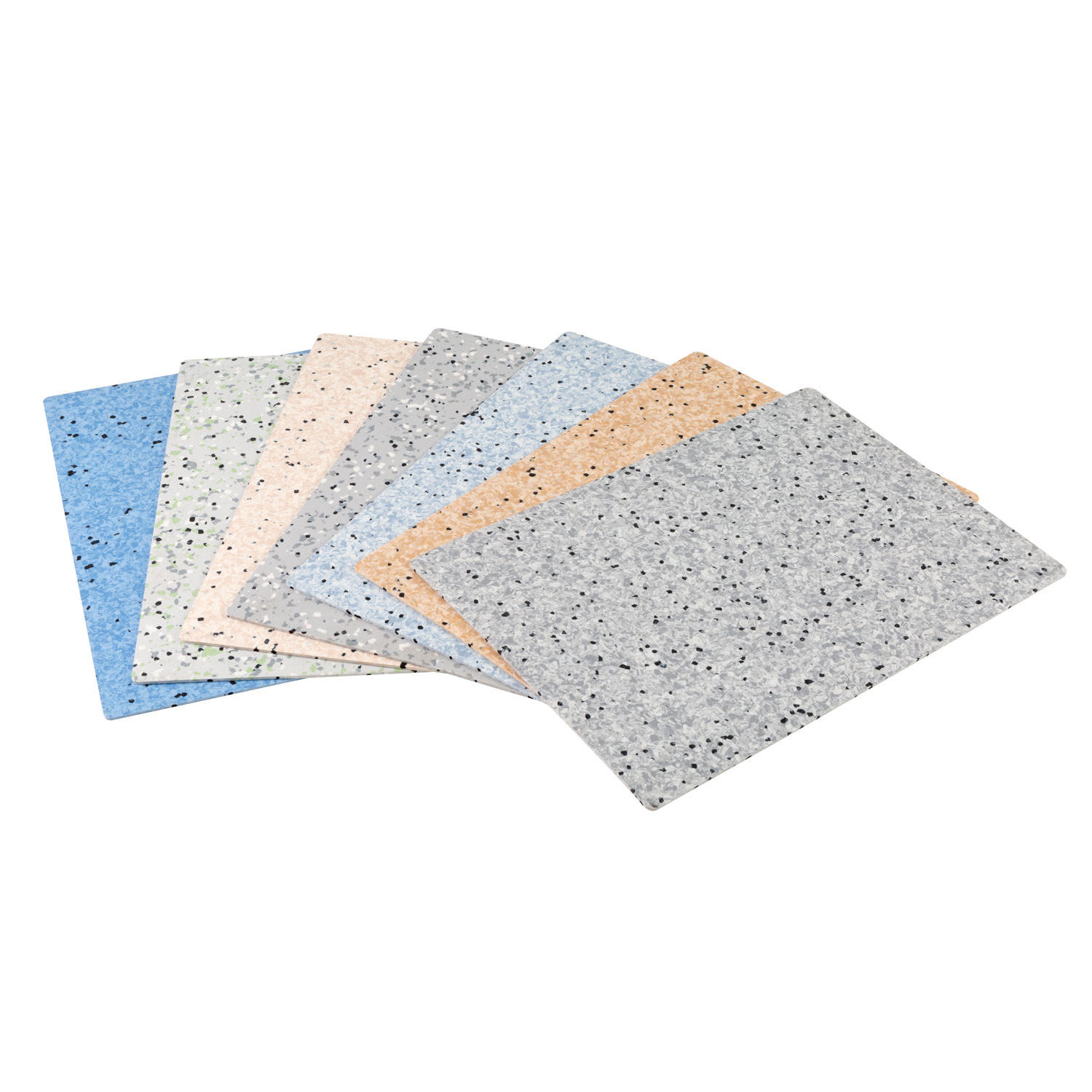
Homogeneous Vinyl Flooring Images: Application, Color & Surface Direction

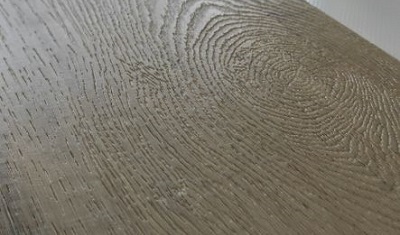
Product selection should be based on more than a small digital swatch. Review the installed environment, chip distribution, color family and directional behavior together before approving a commercial roll program.

Supplier fit

What Different B2B Buyers Need from a Homogeneous Vinyl Flooring Supplier

A supplier page should answer the buying workflow, not only describe the floor. The same roll can create different commercial risks for an importer, installer, hospital project team or private-label distributor.

Buyer Type
Primary Supply Priority
What to Lock Before Bulk Order
Importer / Distributor
Repeatable stock specification and clear product segmentation.
Color codes, thickness, roll format, label language, packing marks, sample reference and reorder records.
Commercial Flooring Contractor
Installation-ready roll plan with accessories and realistic site handling.
Subfloor condition, seam map, adhesive direction, welding rod, cove/detail requirements and installation phases.
Healthcare / Education Project Buyer
Room-by-room performance, cleaning practicality and project documentation.
Mandatory standards, chemical/cleaning regime, color zoning, slip/fire requirements and approved sample.
Private Label Brand
A sellable collection that can be repeated after launch.
Branding, product naming, color range, specification sheet, roll label, packaging and future SKU control.

If you need one supplier program covering several sheet constructions, compare the broader 3C-Floor PVC flooring roll category before finalizing the purchase. This helps separate homogeneous, heterogeneous and related commercial roll products by actual application.

Procurement workflow

From RFQ to Repeat Order: Five Supplier Control Points

A reliable homogeneous vinyl flooring supply program is built through confirmation points. Each stage should reduce ambiguity before the next stage starts.

Define the room

Application, traffic, rolling loads, cleaning method, project country and mandatory compliance requirements.

Lock the specification

Through-body construction, thickness, roll format, surface, direction, color and accessory requirements.

Approve a physical sample

Confirm visual, surface, thickness and relevant documents; record the exact sample or product code used for approval.

Control bulk consistency

Use the approved reference for production and retain order records that can support issue tracing and later phases.

Prepare the reorder file

Store color, thickness, finish, roll, label and document requirements so the next order does not restart from memory.

Installation coordination

Plan the Roll Layout, Subfloor and Welding Accessories Before Delivery

Homogeneous vinyl is normally treated as a commercial glue-down sheet system. The floor should arrive after the substrate, adhesive direction, seam layout and installer workflow have already been considered.

Quick answer: a properly specified roll is only one component. The substrate should be dry, smooth, structurally sound and prepared to the adhesive and flooring requirements. Where the project calls for sealed seams, coordinate compatible vinyl floor welding rod with the sheet color and seam design.

,

Subfloor condition

Identify moisture, flatness, contamination and old-floor removal issues before rolls are delivered. Correcting substrate problems after cutting begins creates waste and schedule pressure.

Roll direction

Directional patterns require a room orientation plan. Even non-directional products benefit from a seam map that considers entrances, corridors and high-visibility zones.

Welded joints

Where a sealed finish is specified, the installer normally grooves and heat welds joints with compatible rod after the adhesive and sheet have been installed according to system instructions.

Site phasing

Coordinate storage, cutting, room access, other trades and cleaning protection. Large roll flooring is efficient, but only when site logistics keep the material clean and manageable.

Application mapping

Where Homogeneous Vinyl Flooring Works Best

The strongest applications are spaces where traffic, cleaning and visual continuity matter for years after handover. For wider format comparisons across institutional and retail interiors, see 3C-Floor’s commercial vinyl flooring options.

Hospitals & Clinics

Corridors, wards, treatment support areas and circulation zones can benefit from continuous sheet coverage, practical cleaning and welded-seam options. Project-specific hygiene, chemical, slip and fire requirements must be confirmed.

Schools & Universities

Classrooms, corridors, libraries and common areas need predictable wear and maintainable surfaces. Color zoning can also help organize departments or circulation routes.

Public & Civic Buildings

Government offices, service centers and public corridors benefit from large-area coverage and specification continuity across repeated room types.

Transport Interiors

Stations and terminal circulation areas experience persistent foot traffic, rolling luggage and frequent cleaning. Check the exact project’s performance and regulatory requirements before approval.

Laboratories & Technical Rooms

Some laboratories prioritize welded seams and cleaning resistance. Chemical exposure varies widely, so the actual chemicals, concentration, contact time and cleaning procedures should be disclosed before product selection.

Commercial Corridors

Offices, retail circulation areas and service environments can use homogeneous sheet where maintenance simplicity and through-body appearance are more important than wood or stone realism.

Choose the right structure

Homogeneous vs Heterogeneous Vinyl, LVT and SPC

Homogeneous vinyl is not automatically the best choice for every room. A supplier should help the buyer compare floor structures based on traffic, visual requirements, installation method, replacement strategy and project constraints.

Decision Factor
Homogeneous Vinyl
Heterogeneous Sheet
Glue-Down LVT
SPC Click Flooring
Visual structure
Through-body color / pattern character
Printed décor over layered construction
Printed wood / stone / abstract plank or tile
Rigid-core plank / tile with printed décor
Typical project reason to choose
Heavy-use institutional sheet, frequent cleaning, repeatable through-body visual
Sheet coverage plus broader printed design and backing choices
Design flexibility and replaceable individual planks/tiles
Floating click installation and rigid-core renovation workflow
Joint strategy
Large sheets; welded seams can be specified
Many plank / tile joints
Many click joints
Best when...
Maintenance, continuous sheet format and through-body wear logic are priorities
Printed design flexibility matters more than homogeneous construction
Room design and selective replacement matter
Fast floating installation and dimensional rigidity matter

When not to choose standard homogeneous vinyl

If the room requires a specialist static-control system, do not assume a standard homogeneous sheet is suitable. Review 3C-Floor’s anti-static vinyl flooring and confirm the required electrical performance, installation system and testing criteria with the project specification.

OEM & wholesale planning

Build a Homogeneous Vinyl Program That Can Be Reordered

For distributors and private-label buyers, the product must work as a repeatable commercial SKU—not as a one-time factory sample. 3C-Floor can discuss project and OEM coordination around color direction, specification records, branding and packaging. Buyers developing broader custom programs can also review custom vinyl flooring options.

What can be standardized for repeat purchasing?

  • Product type and through-body construction
  • Total thickness and roll format
  • Directional or non-directional visual
  • Color / sample reference and surface treatment
  • Welding rod or related accessory requirements
  • Roll marks, labels and packaging references
  • Required project or market documentation

What changes the quotation without needing a fake “price per m²”?

  • Thickness and exact product construction
  • Color or project customization
  • Surface treatment and special requirements
  • Quantity, roll plan and accessory scope
  • Private-label packaging or marking
  • Testing / documentation required for the destination
  • Freight route, delivery terms and destination port
Reduce sourcing mistakes

Seven Common Homogeneous Vinyl Flooring Procurement Errors

Most avoidable sourcing problems begin with an incomplete RFQ or an approval process that records the color but not the full specification.

1. Buying by thickness alone

Thickness is only one variable. Application, traffic, surface treatment, installation and required standards can be more important than simply selecting the thickest option.

2. Treating a screen image as color approval

Lighting, monitors and photography shift color. Approve a physical sample and record the exact sample or product code.

3. Ignoring roll direction

Directional homogeneous vinyl must be planned across corridors, doorways and connected rooms. Orientation changes both appearance and waste.

4. Asking for “all certificates”

Send the specific standards and test requirements required by the project or destination market so the exact proposed product can be checked.

5. Quoting floor area without a roll plan

Net square meters are not the same as order quantity. Room dimensions, seam positions, cutting direction and waste should be considered.

6. Ordering sheet and welding rod separately

Where welded seams are specified, coordinate rod color and compatibility with the chosen sheet before shipping.

7. Failing to create a reorder record

For phased projects and distributors, keep a purchasing file with approved color, thickness, surface, roll format, labels, documentation and order reference.

RFQ checklist

What to Send a Homogeneous Vinyl Flooring Supplier for an Accurate Quote

A short but complete RFQ improves product matching and reduces later price changes caused by missing assumptions. Use the following checklist when requesting samples or bulk pricing.

Application & room type

Hospital corridor, classroom, laboratory, office, public building, terminal, stock program or another use.

Target specification

Thickness, roll width/length, directional preference, surface treatment and color/sample reference.

Traffic & maintenance

Foot traffic, rolling carts, cleaning equipment, disinfectants or chemicals, and any unusual operational condition.

Standards & documents

List every mandatory test, fire, slip, VOC, chemical or local-market requirement before sample approval.

Quantity & project phasing

Estimated square meters, room plan if available, required sample date, shipment timing and whether the order is one phase of a larger program.

OEM & packaging

Brand name, label language, roll marks, packaging references, SKU requirements and distributor-specific documentation.

Installation accessories

Welding rod color/quantity, seam requirements and any project-specific installation details that affect supply.

Delivery destination

Destination port or delivery location, trade terms requested and any known logistics constraints.

Related questions

Questions Buyers Commonly Ask Before Sourcing Homogeneous Vinyl Flooring

These questions are structured as concise answer topics so procurement teams can quickly identify the next detail to confirm.

Is homogeneous vinyl flooring better than heterogeneous vinyl?
What thickness is used for commercial homogeneous vinyl flooring?
Can homogeneous vinyl flooring be heat welded?
Is homogeneous vinyl suitable for hospitals and laboratories?
What is directional vs non-directional homogeneous vinyl?
What information does a supplier need for an OEM quotation?
How should roll quantity be calculated for large projects?
When should anti-static or conductive flooring be specified instead?
FAQ

Homogeneous Vinyl Flooring Supplier FAQ

Direct answers to purchasing and project questions from importers, distributors, contractors and institutional buyers.

What is homogeneous vinyl flooring?

Homogeneous vinyl flooring is resilient sheet flooring with a compact through-body construction. The color and material composition continue through the body rather than depending on a separate printed décor layer. This makes the category relevant for high-use commercial and institutional interiors where long-term wear, cleaning and visual continuity matter.

What thickness of homogeneous vinyl flooring does 3C-Floor supply?

3C-Floor currently lists a typical homogeneous vinyl flooring thickness range of 2.0–3.0 mm, normally with 2 m commercial roll width. The correct thickness should be confirmed against the project specification, traffic, rolling loads, installation conditions and budget—not selected by thickness alone.

Is homogeneous vinyl flooring suitable for hospitals and schools?

Yes, homogeneous vinyl sheet is frequently selected for hospitals, clinics, schools and other institutional interiors. Large roll coverage, glue-down installation, welded-seam potential and practical cleaning are common reasons. The exact proposed product must still be checked against project-specific fire, slip, chemical, hygiene and local regulatory requirements.

What is the difference between homogeneous and heterogeneous vinyl flooring?

Homogeneous vinyl uses a through-body construction; heterogeneous vinyl uses multiple functional layers. Heterogeneous flooring can include a printed design film, wear layer and backing, so it often offers broader wood, stone or decorative visuals. Homogeneous sheet is often considered when through-body visual consistency and institutional maintenance matter more than printed realism.

Can 3C-Floor supply OEM or private label homogeneous vinyl flooring?

Yes. 3C-Floor can discuss project-based color direction, specification records, private-label packaging, roll marks and repeat-order coordination. Send the target market, application, thickness, roll format, color reference, quantity and branding requirements so the program can be defined before sampling.

How is homogeneous vinyl sheet installed?

Commercial homogeneous vinyl sheet is normally installed by full-spread glue-down over a properly prepared substrate. Where a sealed joint is specified, installers can groove and heat weld seams with compatible vinyl welding rod. Installation should follow the selected flooring, adhesive and project technical instructions.

What information should I send for a homogeneous vinyl flooring quotation?

Send enough information to define the product and the project. Include the application, project country, required thickness, roll format, color or sample reference, surface treatment, estimated quantity, required standards or test documents, welding rod requirement, packaging/private-label needs, required delivery timing and destination port.

Get a Supplier Quote Based on the Real Project Specification

Send 3C-Floor the room type, thickness, roll format, color or sample reference, estimated square meters, standards required, accessory needs, packaging requirements and destination. The more complete the RFQ, the easier it is to compare a meaningful homogeneous vinyl flooring quotation.

Include these details for faster specification matching

  • Application and project country
  • Thickness, roll size and color reference
  • Estimated total square meters
  • Required standards / test documents
  • Welding rod or seam requirement
  • OEM label / packaging requirements
  • Required shipment timing and destination port
Landlord hotline:
+86-021-54361792
Email:
info@3c-floor.com