1
Board-to-board friction
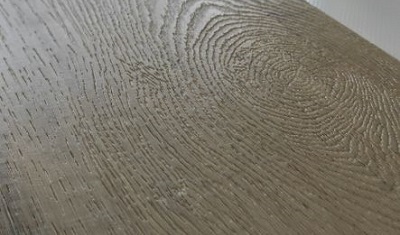
Wood strips can rub at their edges as humidity changes or gaps develop. The sound is often sharp and localized near a board seam.



A squeaky floor is usually a movement problem, not a “sound” problem. The noise can come from boards rubbing together, a loose fastener, a subfloor flexing against a joist, or a floating floor moving over an uneven or contaminated base. The lasting fix is to identify which layer moves, then stop that movement without creating a new installation problem.
To stop a squeaky floor, mark the exact noisy spot, determine whether the movement is in the finish floor, subfloor or joist connection, and choose a repair that fits the floor type. Hardwood and carpet may sometimes be re-secured from above or below. Floating SPC, LVP and laminate should not be screwed through the surface; their base, underlayment, expansion space and click joints should be inspected instead.

Squeaks happen when two parts of the floor assembly move against each other under load. Before reaching for screws, powder or adhesive, identify where the movement starts. A repair that is right for a nailed hardwood floor can be wrong for a floating click floor.
Wood strips can rub at their edges as humidity changes or gaps develop. The sound is often sharp and localized near a board seam.
A nail or screw no longer holds the board tightly, allowing the wood to move up and down around the fastener under foot traffic.
A small gap between plywood or OSB and a joist can flex every time someone walks over it, creating wood-on-wood or fastener friction.
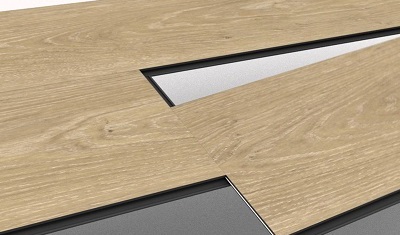
With SPC, LVP or laminate, clicking or squeaking can come from uneven support, debris, soft underlay, stressed click joints or restricted expansion.
| What you notice | Likely source | First check | Repair direction |
|---|---|---|---|
| Sharp squeak at one hardwood seam | Board-edge friction or a loose board | Watch the seam while someone steps nearby | Reduce friction if minor; re-secure movement if persistent |
| Squeak repeats directly over a joist line | Subfloor or finish floor moving at a fastener | Confirm joist location and access from below | Re-secure the moving layers with the correct fastener method |
| Squeak under carpet, no visible floorboards | Loose subfloor over joist is common | Map the noisy spot and joist below | Specialty breakaway screw system may work from above |
| New SPC/LVP clicks or creaks while walking | Subfloor flatness, debris, underlay or click-joint movement | Check for vertical deflection and perimeter restriction | Do not pin the floating floor; correct the support or installation issue |
| Large area feels bouncy or sagged | Possible structural or moisture-related problem | Inspect framing, subfloor condition and water history | Professional inspection recommended |
Have one person walk slowly across the floor while another listens from below, if basement or crawl-space access exists. Mark every noise location with painter’s tape. A squeak that seems “in the room” is often coming from one small moving connection.
The right repair depends on how the finished floor is installed. Use the smallest intervention that actually stops movement, and avoid driving fasteners until you know the location of joists, pipes, cables, radiant systems and the required screw depth.
If two wood boards rub, a dry lubricant that is approved for the floor can sometimes quiet a minor squeak. Persistent vertical movement generally needs mechanical re-securing rather than more lubricant.
For material differences, see what engineered hardwood flooring is and how it is constructed.
When carpet hides the subfloor, specialty scored or breakaway screws can sometimes pull a loose subfloor back to the joist without removing the carpet. Correct joist location is the key step.
A squeak under a bonded resilient floor may come from the wood subfloor or framing rather than from the vinyl surface. Surface fastening can damage the wear surface and is rarely the first choice.
Do not treat a floating click floor like nailed hardwood. Screwing through an SPC, LVP or laminate plank can lock the floating assembly to the subfloor, interfere with expansion and damage the click system. The correct fix is usually below or around the plank—not through it.
3C-Floor’s dedicated SPC subfloor requirements guide explains why a rigid plank still needs a flat, dry, clean and structurally sound base.

No—not if the root problem is structural movement or an out-of-tolerance substrate. Underlayment can provide controlled cushioning, acoustic support or moisture-related functions, but it is not a leveling compound. Adding a second soft layer under an attached-pad SPC product can make movement worse unless the flooring instructions specifically allow it.
For project design, compare IXPE flooring underlayment and attached SPC backing rather than selecting foam by thickness alone.
Typical response: lift affected planks as needed, correct high/low spots with the appropriate repair method, re-check flatness, then reinstall.
Typical response: remove and clean the affected area. Do not force a floating plank to conform over hard contamination.
Typical response: replace with the product-approved underlayment or use only the attached pad when specified.
Typical response: identify where the floor is pinched or fixed and restore the movement clearance required by the product manual.
Access from a basement or crawl space often makes diagnosis easier because you can see the joist-to-subfloor connection while someone walks above.
Watch for a gap opening and closing between the subfloor and joist as a helper steps on the squeaky spot.
A thin wood shim with compatible adhesive can stabilize a small gap. Do not hammer the shim so hard that it lifts the finished floor.
Where the construction allows it, screws or approved brackets can draw the subfloor firmly to the joist. Select length so the fastener cannot penetrate the finished floor or hidden services.
Fastener length depends on subfloor thickness, finish-floor construction, joist location and what may be hidden in the cavity. Plumbing, electrical wiring and radiant heating can all be damaged by blind fastening.
This sequence works better than trying random fixes because each step narrows the source before you alter the flooring.
Walk slowly and mark the smallest repeatable noisy zone.
Determine floor type, installation method and likely moving layer.
Check from below if possible; look for flex, gaps, loose panels and moisture.
Choose the least invasive method that actually stops movement.
Walk the full area again before patching, closing access or replacing trim.
A quiet floor is easier to build than to repair. For new SPC, WPC, LVT or other resilient flooring, most preventable noise risk is controlled before the first plank or sheet is laid.
For slab and wood assemblies, use the flooring moisture barrier guide to separate vapor control from acoustic underlayment.
For installation sequence and preparation, review the verified SPC click floor installation manual.

Flooring underlayment can help with acoustic comfort, moisture planning or installation support depending on its construction. It should not be used as a substitute for structural repair or subfloor leveling. A buyer specifying underlayment should match material, thickness and support to the exact floor system.
See the current 3C-Floor flooring underlayment range for product directions and existing specifications.
| Floor condition | Use powder / dry lubricant? | Fasten from above? | Repair from below? | Lift flooring? |
|---|---|---|---|---|
| Minor hardwood board-edge friction | Sometimes, if finish-compatible | Only if movement persists and construction is known | Not always needed | Usually no |
| Loose subfloor under carpet | No | Specialty system may work | Often effective if accessible | Usually no |
| Subfloor gap over joist | No | Possible in some assemblies | Preferred when accessible | Usually no |
| Floating SPC/LVP over uneven base | No | Do not pin floating floor | Only if structural subfloor needs repair | Often required to correct the base |
| Widespread bounce, sag or water damage | No | Not before inspection | Professional inspection | Depends on findings |
These are verified images hosted on 3C-Floor. They help Google Images and buyers connect flooring noise prevention with the actual floor structure, click profile and underlayment.


For a new SPC, WPC or LVT program, “quiet floor” is not a single product feature. It is the result of plank construction, backing, substrate preparation, installation instructions and site conditions working together.
State whether installation is over concrete, plywood, OSB or an existing hard floor. Include grade level, moisture-control plan and project flatness requirement.
Record core thickness, total finished thickness, wear layer, click profile, attached backing and whether separate underlayment is permitted.
Carton labels and installation sheets should clearly tell installers what not to add beneath the product, how to prepare the base and what movement gaps are required.
Direct answers to the questions homeowners, installers and flooring buyers ask most often.
Most floor squeaks are caused by movement and friction. A finish board may rub against another board, a fastener may move in its hole, or a subfloor may flex against a joist. The correct repair depends on which layer is moving.
First locate the exact moving area. Minor board-edge friction may respond to a dry lubricant approved for the floor, while persistent movement usually requires re-securing the loose board or subfloor with an appropriate concealed fastening method. Avoid using fasteners until you know what is below the floor.
Yes, some wood and carpeted floors can be repaired from above with concealed or breakaway fastening systems. Floating SPC, LVP or laminate should generally not be screwed through the surface because the floor needs to move as a floating assembly.
If the squeak comes from a loose subfloor over a joist, a specialty breakaway screw system can sometimes re-secure the subfloor through the carpet without removing the carpet. Correct joist location and screw depth are essential.
Underlayment can reduce footfall noise and provide controlled cushioning, but it does not repair a loose or uneven structural subfloor. Excessively soft or doubled underlayment can create additional movement under click-lock flooring.
Common causes include an uneven substrate, grit below the planks, an incompatible or overly soft underlayment, vertical movement at click joints, insufficient perimeter movement space, or damaged locking profiles. The floor may need to be lifted so the base can be corrected.
A localized squeak is often a movement or fastening issue, but widespread squeaking combined with noticeable bounce, sagging, water damage, rot or cracked structural members deserves professional inspection.
Specify the floor construction and site conditions together: subfloor type and flatness, core and click profile, attached backing or approved separate underlayment, finished thickness, moisture strategy, perimeter movement requirements and the acoustic documentation required by the project. Product and installation assumptions should be locked before bulk ordering.
Send 3C-Floor your floor type, subfloor, thickness, wear layer, backing, size, application, quantity, packaging requirements and destination. We can help organize a project-ready specification that addresses the floor system—not only the surface décor.