Acoustic comfort
IXPE can reduce the sharp underfoot sound associated with dense rigid-core planks and can help control footfall noise. For a specified acoustic target, ask for test evidence for the complete floor assembly.



IXPE flooring underlayment is a closed-cell cross-linked polyethylene foam used as a separate underlay or as a factory-attached pad beneath SPC flooring. For importers, distributors, private-label brands and project buyers, the key decision is not simply “IXPE or no IXPE.” The pad must match the rigid core, click joint, finished thickness, acoustic target, subfloor condition and installation method. 3C-Floor can supply SPC with IXPE backing and help buyers define the complete construction before sample approval and bulk production.

IXPE is irradiation cross-linked polyethylene foam with a closed-cell structure. In flooring, it is used to create a thin resilient layer below a floating floor or as a pre-attached backing on SPC planks. The cross-linked foam structure is selected because flooring buyers need a pad that can add comfort and sound control without making a rigid click floor excessively soft. The complete flooring system—not the foam name alone—determines whether the construction is suitable for a home, apartment, hotel, office, retail project or private-label collection.
IXPE can reduce the sharp underfoot sound associated with dense rigid-core planks and can help control footfall noise. For a specified acoustic target, ask for test evidence for the complete floor assembly.
A properly selected pad can make SPC feel less hard underfoot while retaining enough support for the locking joint. “Softer” is not automatically better for a click floor.
Factory-attached IXPE simplifies installation and keeps the backing specification tied to the plank SKU, which helps distributors and brands reduce job-site material mismatch.
If your goal is simply to add “foam” beneath SPC, you are specifying too little. Define the pad together with core thickness, click profile, total finished height, subfloor and the acoustic or moisture requirement.
For a broader material overview, see the existing 3C-Floor flooring underlayment range. For a legacy example of the integrated structure, review SPC core flooring with IXPE backing.
A useful RFQ separates the foam specification from the finished flooring specification. This prevents a common sourcing mistake: comparing two quotations that both say “6 mm SPC with IXPE” even though one includes the pad in the 6 mm total and another adds the pad on top of a 6 mm rigid board.
| Specification Point | Practical Buyer Direction | Why It Matters | What to Put in the RFQ |
|---|---|---|---|
| Use format | Attached IXPE backing or separate underlay | Changes installation steps, SKU structure, carton positioning and compatibility checks. | “Attached pad” or “separate roll underlay,” plus the intended floor type. |
| Attached pad thickness | 1.0 mm, 1.5 mm and 2.0 mm are common 3C-Floor directions for SPC backing. | Changes finished height, cushioning and how much vertical movement reaches the click joint. | State pad thickness separately from rigid-board and total thickness. |
| Foam support / density | Confirm by project specification and approved sample. | Low-support foam can compress too much; very firm constructions may change comfort and acoustic behavior. | Ask supplier to state the pad density/support specification and compression-related test method if required. |
| SPC core | Match IXPE to the core and milling profile. | The rigid board and locking joint must remain stable under traffic, furniture and repeated loading. | State rigid-core thickness before the pad and the click profile. |
| Finished thickness | Record the complete plank height. | Controls transitions, door clearances, sample comparison and product labeling. | “Total finished thickness = board + attached backing.” |
| Acoustic requirement | Use project-specific test requirements instead of generic “soundproof” claims. | Acoustic performance depends on the full assembly, subfloor and test method. | Provide the required test method or target from the architect/project specification. |
| Moisture / vapor control | Do not assume IXPE automatically equals a slab vapor barrier. | Closed-cell foam can resist moisture, but vapor control may require a dedicated film or system. | State subfloor type, grade level, moisture condition and membrane requirement. |
| Packaging / label | Make attached-pad details visible in the product specification. | Prevents distributors and installers from adding an incompatible second pad. | Show total thickness, pad type and installation instruction on carton/spec sheet where required. |
Numerical performance values should be confirmed against the actual product, test method and approved sample. 3C-Floor does not recommend treating a generic IXPE foam number as proof of project acoustic performance.
For apartments, hotels, offices, schools and multi-level interiors, buyers often search for acoustic IXPE foam because impact noise matters. The correct sourcing approach is to treat IXPE as one component in the acoustic system. An attached pad can improve underfoot sound and comfort, but a project result also depends on plank construction, slab or wood subfloor, ceiling assembly, room geometry and the test method used.
Ask whether the project requires IIC, STC, ΔLw, Ln,w or another local acoustic criterion, then request evidence that actually matches the required assembly and method.
Prioritize repeatable attached-pad specification, documentation and instructions that prevent installers from double-padding the floor.
Balance footfall comfort, trolley/furniture loads, room-to-room replacement planning and the project acoustic requirement.
Review rolling chairs, concentrated loads and traffic patterns; acoustic comfort must not come at the expense of joint stability.
Attached IXPE can strengthen the product story, but carton claims should stay aligned with verified data for the exact SKU.
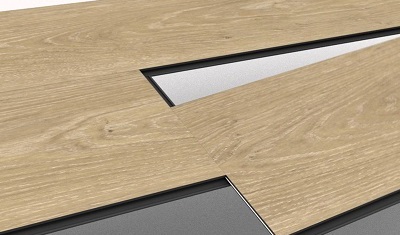
SPC flooring is a multi-layer rigid product. The decorative and wear layers protect the visual surface, the rigid core carries most of the structural load, the click profile joins planks, and the IXPE backing sits underneath the rigid board. Because the backing is below the lock, it affects the way the whole plank responds to pressure and small vertical movement.
3C-Floor's current SPC ranges include products with optional IXPE, EVA or cork backing. Buyers comparing a basic board and an attached-pad board should compare the entire construction, not only the selling price per square meter.
For current SPC structures and OEM options, use the SPC vinyl plank manufacturer page. For a broader category view, see 3C-Floor SPC flooring.


These thicknesses are common attached-backing options referenced in 3C-Floor's existing SPC underlayment guidance. The thickness should be selected with the rigid board and click system. A thicker pad is not automatically quieter, more durable or more premium.
A practical starting direction where the buyer wants an attached pad but needs to control total floor height and avoid excessive cushioning. Confirm density/support and acoustic data for the exact SKU.
Often considered when a brand wants a more visible acoustic/comfort story while keeping a relatively compact rigid-core construction. Joint support remains a primary check.
Use only when the complete SPC product and project requirement justify it. Validate finished height, click support, load response and installation instructions before release.
Finished total thickness, rigid-board thickness, wear-layer thickness and IXPE thickness should all appear separately in the product specification.
Use the SPC flooring thickness guide when the backing decision is part of a 4 mm, 5 mm, 6 mm or thicker SPC program.
All three can be used as flooring backing directions, but they create different cost, feel and sourcing questions. The table below is a buyer selection framework rather than a substitute for testing the actual SKU.
| Backing | Common Buying Direction | Strength in a Product Program | Main Check Before Approval |
|---|---|---|---|
| IXPE | Premium or acoustic-positioned SPC, apartments, hotels, offices, private-label collections | Closed-cell foam, clean attached-pad presentation, controlled cushioning and acoustic comfort | Thickness, support/density, compression behavior, full-system acoustic evidence and click compatibility |
| EVA | Residential and value-to-mainstream attached backing programs | Cost-performance balance and softer underfoot feel | Odor, density/support, long-term compression behavior and system compatibility |
| Cork | Selected comfort / natural-material positioning and specialty products | Different tactile and material story for niche or higher-value collections | Moisture conditions, thickness consistency, compatibility and the actual project requirement |
For WPC buyers comparing the same backing materials on a different rigid-core platform, see WPC backing: EVA, IXPE and cork.
One of the most important ways to reduce claims is to separate “minor interface cushioning” from “subfloor correction.” IXPE is not a leveling compound. It should not be used to hide significant dips, high spots, loose tiles, structural movement or a moisture problem in the slab.
SPC itself may be water-resistant, and IXPE is a closed-cell foam, but moisture moving from a concrete slab is a separate building-assembly issue. A project may require PE film, a film-faced underlay or another specified vapor-control method.
Review flooring moisture barrier planning for SPC before finalizing concrete-floor projects.
Apartment and rental programs where underfoot sound, rapid floating installation and consistent product labeling matter across many units.
Guest rooms and serviced apartments where buyer teams need a balanced combination of cleanability, walking comfort and acoustic planning.
Dealer and retail ranges that benefit from a “pad-attached” construction and simpler installation message for homeowners and installers.
Projects where acoustic comfort is useful but rolling chairs, concentrated loads and repeated traffic still require firm structural support.
For an OEM flooring program, attached backing is part of the product identity. The approved sample should lock the pad material, thickness and surface together with the SPC board, décor, wear layer, click profile and carton text. That makes repeat orders easier to control and reduces installer confusion in the destination market.
3C-Floor supports SPC, WPC, LVT and related flooring solutions for international B2B buyers. For an IXPE-backed SPC collection, the specification can be coordinated with color, embossing, plank size, wear layer, click system, packaging and project documentation requirements.
A good RFQ lets the supplier price the same product you intend to approve. Avoid sending only “5 mm SPC with IXPE.” Use the checklist below so the quotation, sample and purchase order describe the same construction.
IXPE flooring underlayment is a closed-cell cross-linked polyethylene foam used beneath compatible floating floors or attached to the back of SPC planks. Its main flooring roles are controlled cushioning, acoustic comfort, installation support and a more complete attached-pad product structure.
Yes, IXPE is a common attached backing choice for SPC flooring when the pad is matched to the rigid core and click system. Buyers should confirm IXPE thickness, support/density, total finished thickness, compression behavior and any project acoustic requirement before approving the SKU.
No single foam label proves that a floor is soundproof. IXPE can improve underfoot and impact-sound behavior, but project acoustic performance depends on the complete flooring assembly, substrate, building construction and test method. Ask for evidence that matches the actual product and project requirement.
3C-Floor's existing underlayment guidance references 1.0 mm, 1.5 mm and 2.0 mm as common attached backing thicknesses. The correct choice depends on rigid-board thickness, click geometry, finished floor height, market position, acoustic target and load conditions.
Not automatically. Adding another soft layer can increase vertical movement and may stress the click joints. Follow the flooring system specification and add a separate layer only when the selected SPC construction and project requirement explicitly allow it.
No. IXPE is a closed-cell foam and can resist moisture, but a dedicated vapor barrier has a different job: controlling vapor migration from substrates such as concrete. When a slab requires vapor control, use the approved membrane or PE-film system specified for the project.
Neither is universally better. IXPE is often chosen for premium or acoustic-positioned SPC lines, while EVA can suit cost-sensitive and mainstream programs. The better option is the one whose thickness, support, odor characteristics, compression behavior, cost and test documentation fit your target market.
Send the flooring type, rigid-core thickness, total thickness, wear layer, IXPE thickness, pad support/density direction, acoustic requirement, plank size, click system, surface, color direction, application, quantity, packaging, destination market and any required testing or documentation.
Send the complete construction you want to sell—or send your target use and let 3C-Floor help you compare practical backing directions. The goal is to approve one clear specification before bulk production: board, wear layer, click, IXPE, décor and package working as one product.