Low VOC SPC Flooring
Describes low emissions from the finished floor. The claim is strongest when backed by a recognized emissions program or product-specific chamber test.
Source low VOC SPC flooring for homes, apartments, schools, offices, hospitality and private-label collections. 3C-Floor helps buyers align the complete plank with the required FloorScore SPC flooring documentation, phthalate free SPC formulation and formaldehyde free SPC claim—without sacrificing design, click precision or commercial durability.
Low VOC SPC is a rigid-core vinyl floor whose complete finished construction is selected and verified to limit volatile organic compound emissions for indoor use. For professional sourcing, “low VOC” should refer to the exact plank—including coating, wear layer, décor, core, backing and lamination—not only the stone-polymer core.
Four claims, four proof routes
Leading flooring pages often group these terms together. A stronger buying page explains what each claim covers, what evidence should support it and where buyers can make the wrong assumption.
Describes low emissions from the finished floor. The claim is strongest when backed by a recognized emissions program or product-specific chamber test.
FloorScore is an indoor-air-quality certification for hard-surface flooring. It evaluates VOC emissions from the finished product under defined criteria.
This is a chemical-content claim rather than a general VOC claim. It should be confirmed through applicable material declarations, content testing or a certification that includes ortho-phthalate requirements.
SPC has no wood-fiber core, which helps avoid the resin concerns associated with composite-wood floors. Still, professional buyers should verify the finished flooring claim and relevant test method.
Whole-product verification
SPC flooring is a multi-layer system. Changing the coating, printed film, backing or lamination can create a different finished construction, even when the core thickness looks the same.
Supports stain resistance, cleaning and gloss control. Confirm that the selected finish belongs to the documented product program.
Defines residential or commercial positioning. Common purchasing choices include 0.3 mm, 0.5 mm and 0.7 mm.
Wood, stone, concrete and custom visuals should stay connected to the approved collection and sample reference.
A dense calcium-carbonate and polymer core provides waterproof stability and click support without a wood-fiber substrate.
IXPE or EVA can improve acoustic positioning and comfort. Once attached, the pad and lamination become part of the finished product to verify.
Specification framework
The ranges below are practical starting points for quotations and sample selection. Final specifications, test reports and certificate scope must be confirmed for the exact collection, construction and destination market.
| Specification | Typical Options | Buying Guidance | Verification Point |
|---|---|---|---|
| Total Thickness | 4.0–8.0 mm, including attached-pad constructions | Choose around click strength, room transitions, price position and required feel. | Match the tested or certified construction—not only the décor name. |
| Wear Layer | 0.3 mm / 0.5 mm / 0.7 mm | 0.3 mm for residential and light use; 0.5 mm for mainstream dealer, rental and commercial programs; 0.7 mm for heavier traffic positioning. | Confirm the wear-layer thickness on sample label, quotation and carton. |
| Surface | Matte, embossed, deep embossed, EIR, wood grain, stone or concrete texture | Balance realism, cleanability, slip expectations and target channel. | Keep coating and embossing consistent with the approved product family. |
| Formats | Common plank, wide plank, tile and herringbone directions | Popular plank sizes can include 1220 × 180 mm and 1524 × 228 mm; custom formats are project-dependent. | Confirm format-specific test coverage when product construction changes. |
| Click System | Unilin-type, Välinge-type or project-specific profile | Select around licensing, installer familiarity, milling tolerances and regional market expectations. | Approve click engagement with several planks, not a single edge sample. |
| Backing | No pad, IXPE or EVA | Choose density and thickness for acoustic position, comfort, price and system compatibility. | Include the exact backing and lamination in VOC documentation review. |
| Environmental Brief | Low VOC, FloorScore, phthalate-free, formaldehyde-free or destination-specific requirements | Write every requested claim in the RFQ before sample selection. | Check certificate owner, report date, test method, SKU reference and intended marketing language. |
| OEM Package | Custom décor names, cartons, labels, barcodes, inserts and sample boards | Develop retail-ready good/better/best collections with consistent product identity. | Do not print certification marks or chemical claims before scope is confirmed. |

Application-led selection
Indoor-air requirements matter most when they are integrated with traffic, acoustic, cleaning, fire, slip and installation needs. The right specification is not simply the product with the most badges.
Combine low-emission documentation with waterproof maintenance, warm wood visuals and optional attached backing for family homes, rentals and multi-family upgrades.
Coordinate VOC requirements with commercial wear layers, cleaning procedures, fire documentation, slip expectations and calm, practical color palettes.
Use easy-care surfaces and low-glare visuals in offices, waiting spaces, consultation rooms and suitable resident-facing interiors, subject to project codes.
Specify repeatable décor, acoustic backing, efficient click installation and a wear layer that suits room turnover, corridors and public-area traffic.
Pair a document-ready low VOC story with stable click joints, chair-zone planning, practical cleaning and commercial wood, concrete or stone visuals.
Build a credible health-conscious range with controlled product names, verified claims, coordinated cartons, sample boards and repeat-order references.
From RFQ to shipment
This workflow reduces the risk of using a generic certificate, approving an unrepresentative sample or printing environmental claims that do not match the final SKU.
Share destination country, application, traffic, required VOC standard, chemical-content requirements and estimated order quantity.
Confirm thickness, wear layer, décor, surface, click profile, plank format and attached backing as one finished item.
Check the current certificate or report against the manufacturer, product family, test scope, date and proposed SKU.
Inspect several planks and synchronize product name, carton claims, labels, barcodes and technical information.
Use the written order specification and approved sample as references for QC, shipment records and future repeat orders.
Why 3C-Floor
3C-Floor is a professional manufacturer and exporter of SPC, WPC, LVT and PVC flooring. The value for low VOC programs comes from coordinating the product, evidence, sample, packaging and bulk-order specification—not from placing a generic green logo on a carton.
Discuss total thickness, wear layer, core, surface, click profile, backing, plank size and target market with one coordinated flooring supplier.
Evaluate visual consistency, embossing, flatness, click engagement, backing adhesion and label information before bulk production.
Customize colors, product names, cartons, labels, barcodes, instruction sheets and sample materials for distributor or brand programs.
State the required FloorScore, VOC, phthalate or formaldehyde criteria so the available evidence can be checked against the exact proposed construction.
Maintain written references for dimensions, wear layer, visual, click machining, backing, packing and approved product identity.
Coordinate cartons, pallets, loading information, destination requirements and repeat-SKU records for wholesale and project supply.
Product image review
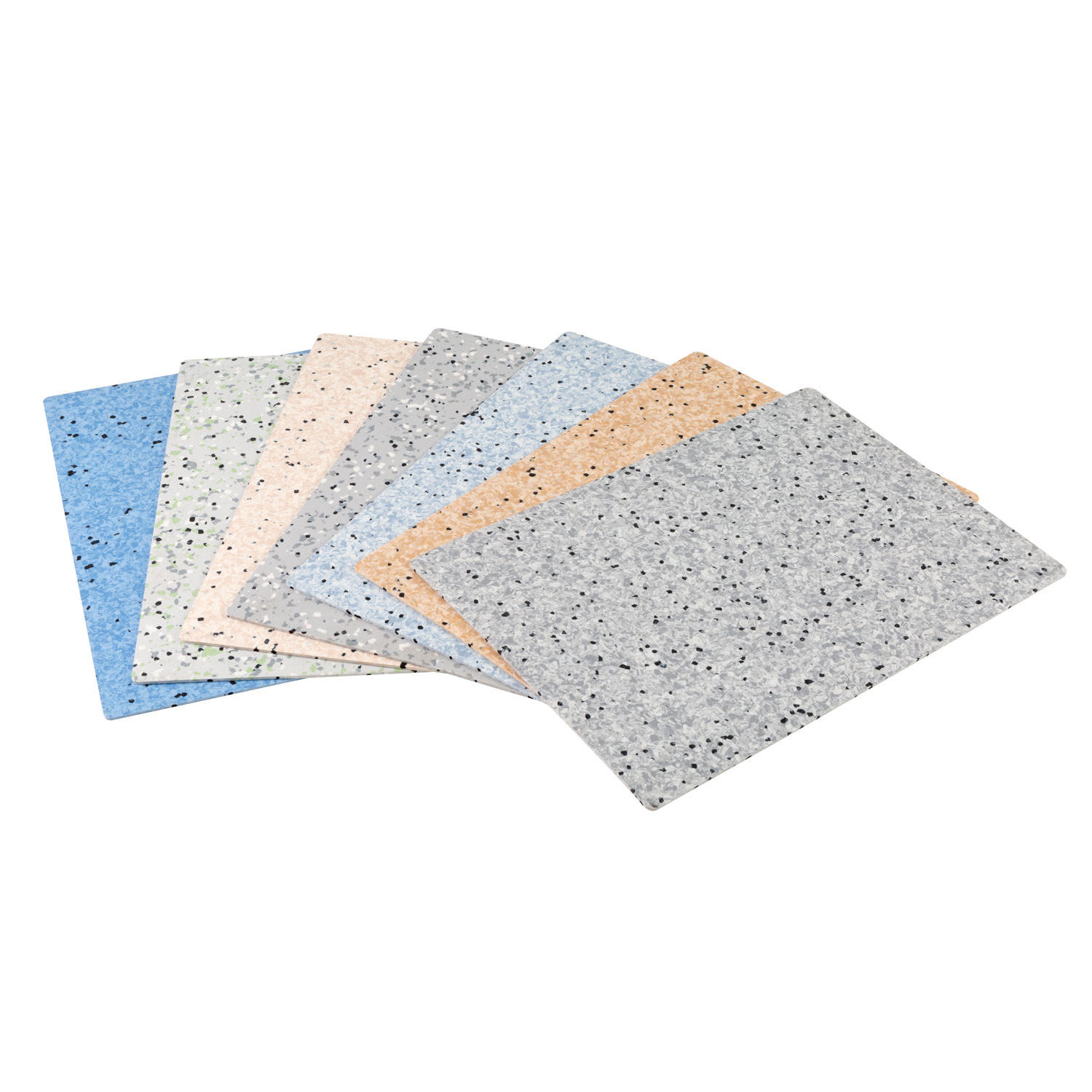
Environmental documentation does not replace physical product evaluation. A professional sample review should include multiple planks, edge machining, surface direction, total thickness, backing uniformity and finished appearance.
Related 3C-Floor resources
These six internal pages support product construction, backing, durability, sample approval and OEM planning around a low VOC SPC program.
Review rigid-core construction, waterproof performance and available product directions.
Backing optionsCompare IXPE and EVA attached-pad constructions and installation considerations.
Surface durabilityMatch wear layer, UV finish and texture to residential, rental or commercial traffic.
Commercial usePlan heavier-duty constructions for retail, hospitality, office and public interiors.
Approval controlEvaluate décor, embossing, edges, backing and specification labels before ordering.
Private labelDevelop custom décor, surface, backing, cartons, labels and export-ready collections.
Frequently asked questions
Clear answers for importers, distributors, contractors, designers, project buyers and private-label flooring brands.
No claim should be assumed from the core name alone. SPC uses a mineral-and-polymer core rather than a wood-fiber core, but the finished plank also includes coatings, wear layers, décor film, optional backing and lamination materials. Verify low-VOC performance for the complete product and exact SKU.
No. FloorScore focuses on VOC emissions and indoor air quality. Phthalate content is outside the standard FloorScore scope, so a phthalate-free claim should be supported by separate content testing, material declarations or another applicable rigid-core certification.
Selected SPC programs may be available with FloorScore documentation. State the destination market, exact construction, backing and certification requirement in your inquiry so the current certificate scope can be confirmed before sample or bulk approval.
It normally refers to an SPC construction without a wood-fiber core and with finished-product documentation supporting the stated formaldehyde requirement. For tender, retail or private-label use, tie the claim to the final plank and applicable test method rather than relying only on a raw-core statement.
Yes. Once the pad is laminated to the plank, it becomes part of the finished flooring. The backing material, density, thickness and lamination should match the product covered by the relevant emissions documentation.
Send the destination country, project or sales channel, required VOC or certification standard, phthalate or formaldehyde requirement, total thickness, wear layer, surface, décor, plank size, backing, click profile, quantity, destination port and OEM packaging needs.
Tell 3C-Floor where the flooring will be sold or installed, which indoor-air or chemical-content requirements apply, and how the product must perform. We will help connect the evidence request to a practical SPC construction, sample and OEM quotation.