- 0086 13321818576 (Steven Lee)
- info@3c-floor.com
The right LVT flooring is the construction that fits the actual traffic, subfloor, installation plan, maintenance routine and sales position—not simply the thickest plank or the lowest price. This LVT buying guide helps distributors, importers, contractors, developers and private-label brands compare LVT flooring types, wear layers, installation systems and commercial project requirements in the correct order.
Use the guide to narrow click LVT, dry back LVT and loose lay LVT, then convert your choice into a purchase-ready specification that 3C-Floor can sample, quote and repeat for bulk supply.

Commercial flooring projects should be specified around traffic, installation and repeatability—not décor alone.
Start with the workload and installation conditions, not with a color board. This sequence prevents two common buying errors: paying for thickness that does not solve the actual risk, or selecting an attractive product whose installation system does not fit the site.
To choose LVT flooring, first define whether the floor is residential, rental, hospitality, office, retail or another commercial use. Next evaluate the subfloor, moisture conditions, rolling loads and installation window. Then select click, glue-down/dry back or loose lay LVT, match the wear layer to the traffic, confirm the surface and design, and request the product-specific test documents required by your market or project. Finally, approve the physical sample and lock the complete specification before production.
Traffic, wheels, furniture movement, cleaning frequency, room type and target lifecycle.
Subfloor material, flatness, moisture, transitions, sunlight, floor height and downtime.
Installation format, wear layer, total construction, dimensions, surface, edge and décor.
Required test evidence, samples, packaging, labels, product code and repeat-order controls.
The installation format changes the risk profile of the whole floor. 3C-Floor currently publishes click, dry back and loose lay LVT product directions, so buyers can choose the system first and then refine the wear layer, size, surface and packaging around it.
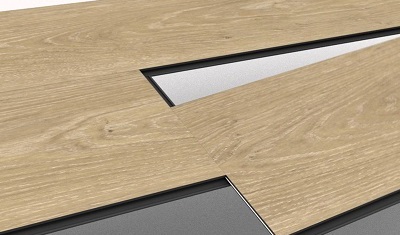
Click LVT uses a locking profile to connect boards as a floating floor. It is useful for renovation programs, residential collections and projects where faster installation and reduced full-spread adhesive work have value.
Dry back LVT is bonded directly to a properly prepared subfloor. It is often attractive for permanent commercial interiors because the finished floor can stay low-profile while the bonded system controls movement across large areas.
Loose lay LVT uses a stable vinyl construction and high-friction backing. Depending on room size, traffic and local requirements, installation may use loose lay, perimeter fixing, pressure-sensitive adhesive or another approved fixing method.
A commercial LVT guide should translate real operating conditions into a starting product direction. Use this matrix for RFQ planning, then confirm the exact product classification, test data and installation instructions before final approval.
| Application | Strong starting format | Wear-layer direction | Why it can fit | Critical buyer check |
|---|---|---|---|---|
| Bedrooms / light-use residential | Click or dry back | 0.2–0.3 mm starting range | Cost control and broad décor choice for controlled traffic. | Surface finish, warranty language, household use and subfloor. |
| Apartments / rentals | Click, dry back or loose lay | 0.3 mm common residential direction | Balances price, turnover requirements and everyday durability. | Tenant turnover, furniture movement, replacement plan and floor height. |
| Hotel guestrooms | Dry back, click or loose lay | 0.3–0.5 mm depending on program | Allows different balances of downtime, comfort and replacement control. | Luggage movement, acoustics, cleaning, shade continuity and spare stock. |
| Offices | Dry back or selected loose lay/click | 0.5 mm common commercial starting point | Commercial wear reserve with options for rolling-chair and renovation planning. | Chair casters, concentrated loads, floor flatness, entrance soil and maintenance. |
| Retail / boutiques | Dry back; selected loose lay for refits | 0.5–0.7 mm depending on traffic | Supports repeated public traffic, visual design and phased replacement. | Entrance grit, fixture loads, carts, sunlight, adhesive/fixing and replacement stock. |
| Busy corridors / demanding commercial | Usually bonded commercial LVT | 0.7 mm may be considered | Adds more surface-wear reserve where repeated traffic and cleaning justify it. | Exact use classification, rolling load, fire/slip/VOC documents and substrate conditions. |
Selection ranges are procurement starting points rather than universal performance claims. Final suitability depends on the exact SKU, complete construction, installation system, test method, local requirements and project conditions.
The wear layer and total thickness solve different problems. Treating them as interchangeable is one of the easiest ways to mis-specify LVT.
The transparent protective layer above the décor. It contributes directly to surface-wear reserve and is a major traffic-positioning variable.
The complete plank or tile build. It can affect floor height, click geometry, handling, comfort and installation profile, but does not by itself define surface durability.
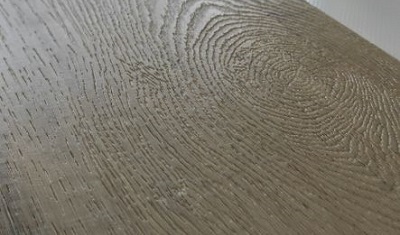
Top-coat chemistry and finish influence scuff visibility, stain response and maintenance, so two products with the same wear layer can behave differently.
Indentation, dimensional behavior and response to concentrated loads depend on more than the transparent wear layer.
For a dedicated breakdown of 0.2, 0.3, 0.5 and 0.7 mm programs, see the 3C-Floor LVT wear layer guide.
Ask for the full construction, surface treatment, installation requirements and product-specific evidence that supports the intended use.
“Commercial LVT” should describe a product that matches a real non-residential workload. A boutique, office, hotel corridor and food retail entrance can all have commercial traffic, but they create different wear, rolling-load, soil, cleaning and replacement demands.
Chair casters, luggage wheels, housekeeping carts, display fixtures and frequent furniture changes can be more damaging than pedestrian count alone.
Fine sand and grit behave as abrasives. Entrance matting and a realistic cleaning plan protect the surface and should be part of lifecycle planning.
If a tender requires fire, slip, emissions, acoustic or use-class evidence, request the reports for the construction being quoted rather than assuming the product name guarantees compliance.
Glue-down LVT is often a strong starting point when a project is large, permanent, low-profile and exposed to repeated commercial traffic. A bonded floor can offer better movement control than a floating system, but it also places more responsibility on subfloor preparation, moisture management, adhesive selection and installer execution. Click or loose lay can be the better commercial choice when speed, local replacement or access has greater value.
For broader project-flooring comparisons, review 3C-Floor commercial vinyl flooring options across LVT, rigid-core and sheet formats.
LVT performance is a flooring-system decision. Water-resistant vinyl material does not correct an uneven floor, trapped slab moisture, contamination, moving joints or a wrong adhesive. The subfloor should therefore be evaluated before the final product format is approved.
Click and loose lay systems depend on a suitable flat surface, while thin dry back LVT can telegraph substrate defects. Ask the installer to verify the exact flatness tolerance in the product instructions.
Concrete moisture or hydrostatic problems can affect adhesives and the installed system even when the LVT plank itself is vinyl-based. Use the moisture test and mitigation method required for the site and adhesive.
Door clearances, adjacent finishes, stair details and accessibility transitions can favor a thin glue-down product or change the acceptable floating-floor build-up.
Rolling chairs, carts, sunlight, large open areas and concentrated loads should influence both the product construction and fixing method.
A sample board can confirm color, but it cannot confirm repeat-order control by itself. B2B buyers should evaluate the physical floor, written specification and factory-order controls together.
| Check | What to inspect | Why it matters | Procurement action |
|---|---|---|---|
| Surface | Gloss, embossing, coating uniformity, scuff appearance and décor alignment. | The surface is what the end customer sees and maintains. | Approve under the lighting and viewing angle used in the target market. |
| Dimensions | Length, width, thickness, squareness and edge condition. | Variation can create installation gaps, lippage or inconsistent carton yield. | Write tolerances or reference the approved technical sheet. |
| Click profile | Joint fit, short-side engagement, edge damage and repeated assembly. | The locking system is a structural part of a floating floor. | Assemble multiple planks from more than one carton. |
| Backing / bond side | Grip backing condition or dry-back bonding surface, depending on format. | The installation interface affects movement and adhesive behavior. | Match the product to the intended fixing system and substrate. |
| Shade control | Color consistency across multiple samples or production references. | Multi-phase projects and repeat orders need predictable visual continuity. | Lock décor code, approved sample and batch/reorder identification. |
| Documentation | Product-specific technical and test documents required by the destination market. | Generic claims can fail tender or import requirements. | List the required evidence in the RFQ before sampling. |
| Packaging | Carton labels, quantity, barcodes, pallet marks and SKU identification. | Warehouse errors and mixed specifications can become expensive after shipment. | Approve packaging artwork and product coding with the same sample set. |
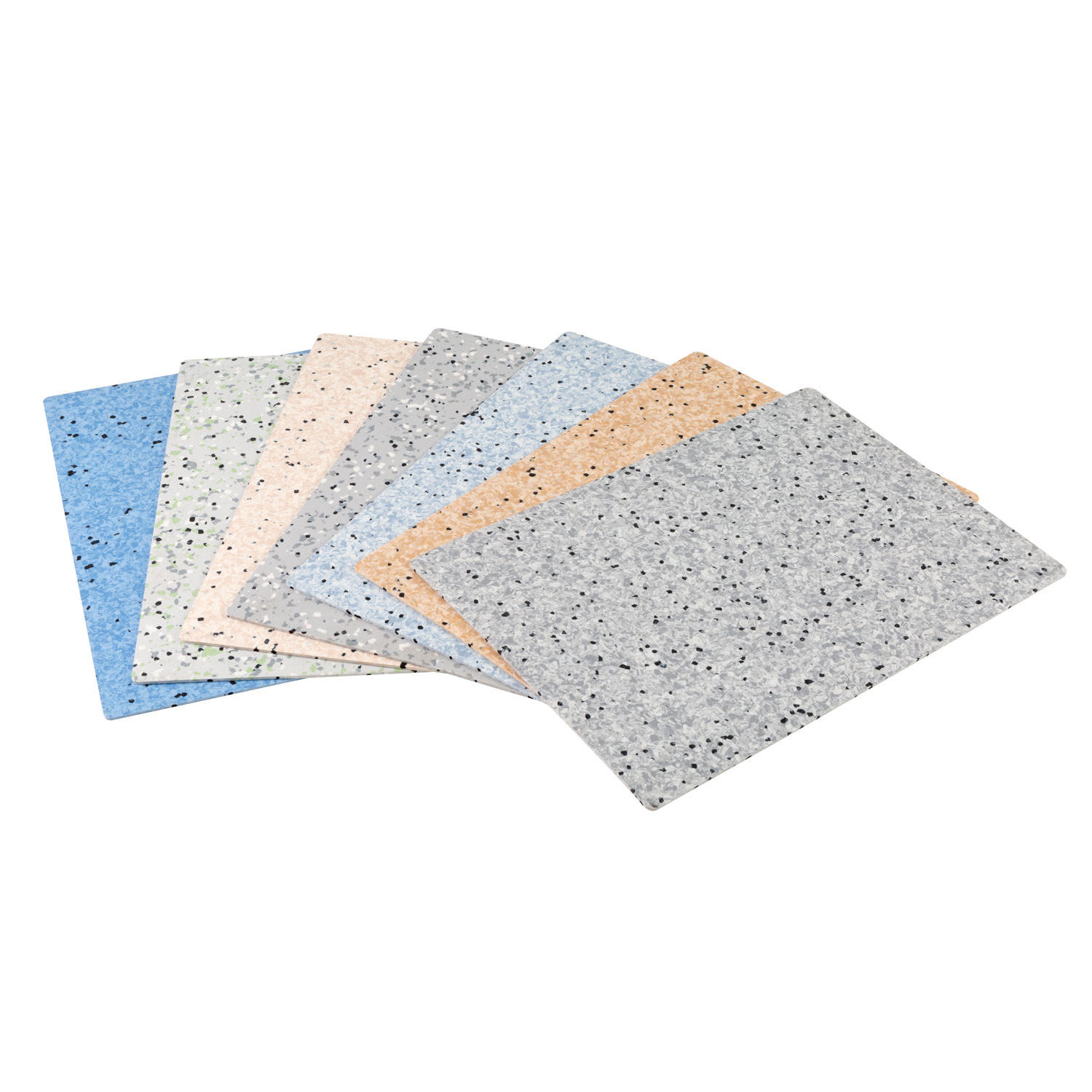
The following images are sourced from the 3C-Floor website and can support the hero, LVT type explanation, construction detail and commercial-application sections. Descriptive ALT text is written for image understanding rather than keyword stuffing.


A thicker plank does not automatically have a stronger wear surface, better locking profile or the correct installation system.
The wear layer is important, but the exact commercial claim should be supported by the complete construction and relevant product evidence.
A quotation without subfloor type, moisture condition and project installation constraints can recommend the wrong format.
Color approval without confirming thickness, surface, edge, backing, click profile and package code leaves too many variables open.
Hotels, retail chains and multi-site programs should plan spare material, product coding and repeat-order identification before the first shipment.
Fire, slip, emissions, acoustic or tender documentation should be listed before sampling so the selected construction can be checked early.
The fastest quotation is not always the shortest RFQ. A clear specification lets the factory compare realistic constructions instead of pricing different products under the same vague description.
Send the product type, total thickness, wear layer, plank or tile size, surface, edge, backing, installation method, color or décor direction, target application, quantity, target market, packaging requirement, required test documents and destination port/city. If replacing an existing SKU, include its technical sheet, carton label and physical sample where possible.
For the full LVT product family, use the 3C-Floor LVT Flooring category to compare published product directions before sending your RFQ.
3C-Floor supplies LVT alongside SPC, WPC and other vinyl flooring systems, allowing B2B buyers to compare product formats instead of forcing every project into one construction. Current 3C-Floor pages publish click, dry back and loose lay LVT directions together with OEM/private-label support, sample approval, packaging customization and export-order coordination.
Connect the use case, installation route, wear layer, surface and documentation into one order-ready description.
Coordinate décor direction, dimensions, surface, packaging, labels and product coding around the target sales channel.
Use approved samples, clear product codes and written specifications to reduce the risk of construction drift between initial and repeat orders.
Continue the specification with these verified 3C-Floor pages. The links cover product format, wear-layer selection and commercial project direction without duplicating the role of this buying guide.
These questions address the decision points buyers commonly need before comparing samples, commercial specifications or factory quotations.
Choose LVT by application first: define traffic, rolling loads, moisture and subfloor condition, then select the installation system, wear layer, total construction, surface, design and required test documents. Approve a complete written specification and physical sample before bulk ordering.
The main sourcing formats are click LVT, dry back or glue-down LVT, and loose lay LVT. Click is a floating system, dry back is bonded to the subfloor, and loose lay uses a stable backing system with fixing requirements determined by project conditions.
A 0.5 mm wear layer is a common commercial starting point and 0.7 mm is often considered for more demanding traffic, but commercial suitability must be confirmed from the complete product construction and the test or use-class evidence for the exact SKU.
No. Total thickness affects floor build-up, handling, click geometry and sometimes comfort, while the wear layer protects the printed surface. A thicker plank can still be the wrong choice if the installation system, wear surface or subfloor conditions do not fit the project.
Glue-down LVT is often a strong choice for large permanent commercial areas because a bonded installation can control movement and maintain a low floor profile. Click or loose lay can be better where renovation speed or replacement flexibility is more important. The correct system depends on site conditions.
Confirm product format, total thickness, wear layer, size, surface, edge, backing, décor reference, installation method, target application, required test documents, quantity, packaging, destination and repeat-order identification. The approved sample and written specification should match the purchase order.
3C-Floor supports OEM and private-label LVT sourcing, including product specification planning, color and surface directions, dimensions, backing options, carton and label requirements, sample approval and export-order coordination. Available combinations should be confirmed for the specific program.
3C-Floor can compare click, dry back and loose lay LVT around the actual workload, installation route and sales position, then prepare a quotation based on a complete product specification rather than a single headline number.
Request an LVT Quote & Sample PlanSpecification note: Product ranges and use guidance on this page are purchasing starting points. Final product performance, classification, installation and compliance depend on the exact SKU, complete construction, test method, substrate, installer method and local/project requirements. Verified related resources: 3C-Floor · Request A Quote.