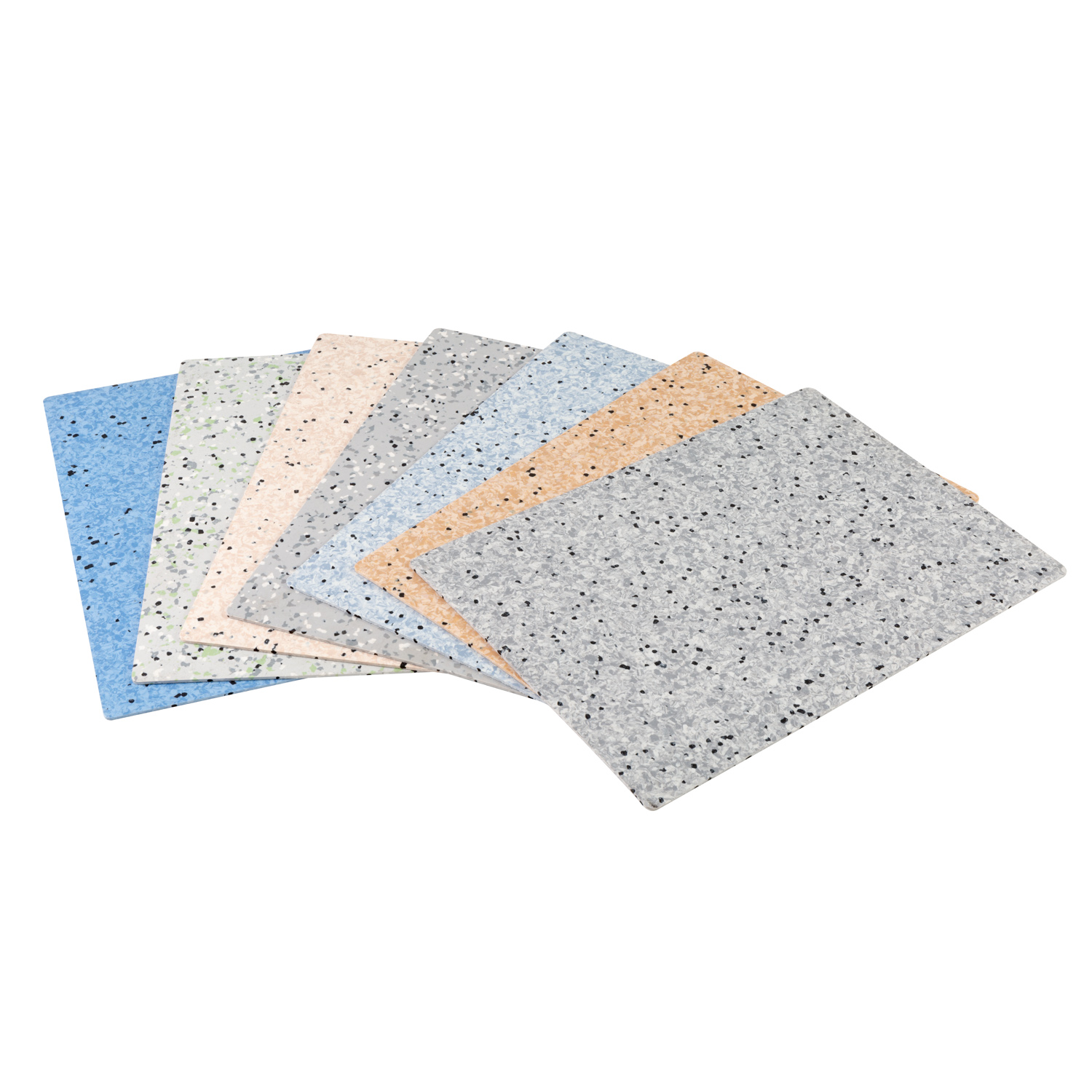
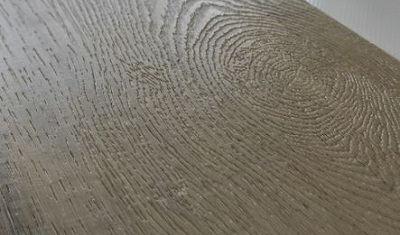
Dry Back LVT
Often a lower-complexity flooring product, but floor preparation, moisture suitability, adhesive and curing can increase site costs. Useful to assess for low-profile commercial installations.
Explore published dry-back product details.
The same “LVT flooring price per m²” label may describe three materially different installation systems. For importers, distributors and project buyers, the relevant comparison is product construction plus adhesive or restraint, subfloor readiness, labor and lifecycle access. Use verified 3C-Floor family specifications to build an honest price request for dry-back, click or loose-lay LVT.

Dry back, click and loose lay LVT carry different cost structures because they are installed differently. Dry back generally uses a low-profile bonded plank or tile, so adhesive and substrate preparation must be included in the installed budget. Click LVT requires precision interlocking construction and a suitable floating-floor installation. Loose lay uses a specific backing and restraint approach, and “loose” does not guarantee that no adhesive or tackifier is needed. A fair LVT price per square meter therefore identifies the construction, specification and installation scope before discussing a number.
3C-Floor offers the three systems within its LVT flooring family. This page focuses on comparing the construction-level price logic; for technical datasheets consult the LVT product specification reference and request current supplier quotations for the proposed build.

Often a lower-complexity flooring product, but floor preparation, moisture suitability, adhesive and curing can increase site costs. Useful to assess for low-profile commercial installations.
Explore published dry-back product details.

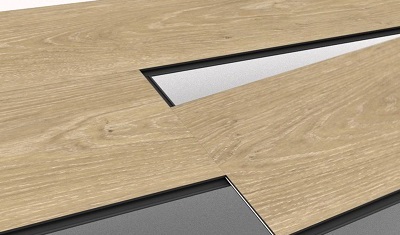
Interlocking edges add product complexity and place a premium on joint accuracy. A floating installation may reduce adhesive use where approved, but needs an acceptable substrate and expansion design.
Explore published click LVT specifications.

Backing, plank flatness and required perimeter or tackifier fixing determine the system. It can suit phased access or replacement strategies when the application and installation method are approved.
| Product family | 3C-Floor published reference | Installation basis | Quote variable to isolate |
|---|---|---|---|
| Dry Back LVT | 2.0 / 3.0 mm overall; listed 0.2 mm wear layer; plank 152 × 914 mm / tile 600 × 600 mm | Glue-down with approved adhesive | Product price versus adhesive, smooth subfloor and curing scope |
| Click LVT | 3.5–7.5 mm overall; 0.3–0.7 mm wear-layer family range; exact format by SKU | Interlocking, suitable floating system | Joint profile, backing allowance, tolerances and laying time |
| Loose Lay LVT | 2.0 / 3.0 mm overall; listed 0.2 mm wear layer; plank 152 × 914 mm / tile 600 × 600 mm | Backing-defined, restrained as required | Backing performance, perimeter/tackifier cost, changeover strategy |
These are different published 3C-Floor family references, not a universal made-to-order menu. The individual quotation and technical sheet control each available combination. The multi-family construction matrix also separates SPC and WPC from LVT, helping avoid click-system mislabeling.
For a large smooth commercial area, the price of dry back LVT may be favorable in the material column. Yet a project involving substrate repair, moisture treatment and tight installation timing could spend much more on adhesive work and labor than a simple material quote suggests. Click flooring can trade a higher manufacturing cost for a different installation process, but only on a floor that satisfies the specific product's requirements.
Loose lay LVT can offer access advantages, yet it is not automatically adhesive-free. Room dimensions, rolling loads, sunlight, backing design and perimeter restraint can move the total budget in either direction. Compare a full installed-system bill of quantities and test whether replacement or downtime matters to the customer.
For project cost modeling, refer to the 3C-Floor flooring cost framework as an example of separating product cost and installation. Do not reuse the SPC labor assumptions unchanged for flexible LVT.

| Cost item | Dry back LVT | Click LVT | Loose lay LVT |
|---|---|---|---|
| Flooring material | Vinyl body, wear layer, surface, film | Interlocking profile plus complete plank build | Vinyl plank and engineered backing |
| Substrate | Bond-ready surface; adhesive limits | Flat and stable within floating-system limits | Flat, suitable surface to support backing friction |
| Bonding / restraint | Adhesive, primer or preparation where specified | Generally no full-spread glue if approved; appropriate trims | May need tackifier or perimeter restraint |
| Labor and program | Adhesive application, layout, cure and site management | Click assembly, cuts, transitions, expansion plan | Plank layout, restraint method, edge and area management |
| Operational repair | Localized removal and re-bonding | Product-specific disassembly or replacement method | Individual-piece replacement may be practical with approved system |
| Documentation | Adhesive compatibility and substrate criteria | Approved joint, backing and installation manuals | Backing performance and restraint instructions |
Pricing takeaway: A factory quotation by itself does not identify the winning system. For distributors selling to contractors, request a material quote and a sample installation instruction for each format before building a landed margin. For developers, ask the contractor to add the corresponding labor, preparation and accessories to the same net project area.
Record total thickness and wear layer as distinct numbers; a thick body does not guarantee higher wear protection.
Click profiling, locking tolerances and rigid versus flexible construction must be described explicitly.
Loose lay depends on the backing design; dry back needs a bond interface; attached foams cannot simply be transferred between them.
Embossing, EIR feasibility, colors and low-volume custom prints can change the factory quote.
A large total order split among many designs may need separate minimums, more changeovers and custom labels.
Code every approved décor, finish, gauge and package. Reports and repeated production must refer to the quoted SKU.
| Project or channel | Candidate system | Cost questions before choosing |
|---|---|---|
| Apartments / renovation stores | Click LVT or suitable dry back | Floor height, substrate condition, move-in timing, noise and replacement stock |
| Large retail fit-out | Dry back or approved loose lay | Rolling loads, commercial traffic, floor repair, cleaning and changeover frequency |
| Hotel rooms and corridors | Dry back, click or loose lay based on zone | Luggage loads, acoustic scope, downtime, room access and matching décor |
| Office / access-floor spaces | Loose lay or approved bonded installation | Perimeter restraint, rolling chairs, access frequency and expected layout change |
| Private-label retail collections | Construction chosen for local buyer behavior | Market price position, installation manual, carton messaging and reorder control |
For high-traffic work, wear-layer numbers are a discussion starting point, not a substitute for verified performance. Use actual sample boards and the LVT technical sheet to confirm whether the specified product meets the tender. A general “waterproof” label does not authorize permanently wet areas or uncontrolled substrate moisture.
State dry back / click / loose lay. Identify whether any click variant is rigid core and avoid calling it SPC without proof.
List overall thickness, wear layer, plank dimensions, décor, gloss, surface finish and edge or backing.
Request ex-factory / FOB material pricing and a separate installation-system bill for glue, prep, trims and labor.
Specify private-label cartons, m² per carton, quantity per décor and required pallet construction.
Verify the quoted family against the physical sample, use classification, relevant test reports and installation manual.
Store SKU code, décor master, sample approval, quote date, carton label and any changed installation guidance.

Retail brands and flooring importers need more than one attractive price. A repeatable LVT collection identifies its installation system on the carton, carries a documented wear-layer and construction code, includes a suitable installation instruction and preserves an approved décor reference. If an importer mixes dry back and click ranges under one label, the distributor risks incompatible installation advice and costly returns.
3C-Floor publishes the LVT product categories, click product range and dry-back details and can discuss available specification and packaging options in a project quotation. The precise availability of special wear layers, custom sizes, labels and order quantities must be confirmed for the intended SKU.
No figure on this page is a standing factory sales price. Construction-level comparison is the right first step; a product-specific supplier offer and local contractor scope are the right second step.
Dry back LVT often has a simpler product construction, but its installed price must include compatible adhesive and substrate preparation. Click products may have higher material cost and different installation labor. Loose lay relies on its backing and restraint design. No category is universally cheapest for every project.
Usually the LVT product quote should be treated as a flooring-material quote unless it expressly lists adhesive and accessories. Dry-back adhesive, primer, leveling and floor preparation should be a separate installation scope.
The current 3C-Floor LVT overview lists dry-back 2.0 mm and 3.0 mm options, with a listed 0.2 mm wear layer for that product family. Confirm the exact quoted item and any requested OEM variation.
3C-Floor lists a click LVT family of approximately 3.5–7.5 mm and 0.3–0.7 mm wear-layer options. Those are published family ranges, not proof that every combination is in stock.
No. Depending on the tested backing, room size, temperature, rolling loads and manufacturer installation plan, loose lay may still require tackifier, perimeter restraint or other fixing. Confirm the specified system before costing it.
Not automatically. “Click” describes a joint method, while SPC identifies a particular rigid-core construction. The quotation must state whether the product is flexible click LVT, SPC rigid core or another engineered type.
They may differ in total gauge, structural layers, embossing, surface finish, locking profile, backing, dimensions, décor, testing, packaging and order quantity. Compare the approved complete construction.
Specify dry back, click or loose lay; end use; total thickness; wear layer; dimensions; décor and texture; backing or joint; quantity per design; packaging and label scope; destination and target Incoterm; and needed technical documentation.

Send 3C-Floor the LVT system, required wear layer and thickness, décor, project application, order quantity, packaging and destination. Request matching technical data and samples with the quotation.
Send target market, m² per décor, thickness, wear layer, installation method, finish, packaging and delivery port.