LVT Flooring for Commercial and Residential Procurement
Source luxury vinyl tile and plank flooring against the actual project or sales-channel brief. 3C-Floor supports flooring importers, distributors, developers, contractors and private label buyers selecting dry back, click and loose lay LVT for residential collections and commercial interiors. Procurement starts with the installation system, then locks the wear layer, total thickness, size, décor, sample, documentation and order plan.
Use this sourcing framework to compare commercial and residential requirements without treating every LVT construction as interchangeable. Published 3C-Floor specifications differ by product family; final suitability, optional structures, lead time and pricing are confirmed against the proposed SKU.

How should you buy LVT for two different markets?
Separate the performance requirements from the marketing range. A residential catalogue and a commercial project can share a décor direction without necessarily sharing the same construction.
For commercial LVT flooring, approve expected foot traffic, wheeled loads, cleaning, floor preparation and supporting test evidence before selecting a product code. For residential LVT flooring, define room use, installation method, acoustic and comfort needs, décor range, carton presentation and price tier. For either channel, compare quotes only after the product build and order basis are identical.
Commercial LVT flooring procurement
Procurement managers, flooring contractors, hotel operators, retail fit-out teams and specifiers need flooring that fits a documented room schedule. Submittals may need verified classification, indentation, slip behavior, fire response and emissions information for the exact offered construction.
- Define high-traffic zones, entrance conditions and wheeled loads.
- Agree glue-down, loose lay or floating installation with the installer.
- Check cleaning agents, downtime, moisture and replacement strategy.
- Secure shipment staging, batch IDs and spare stock for the project.
See the broader commercial vinyl flooring manufacturing and project supply overview.
Residential LVT flooring procurement
Importers, residential developers, dealers and private label brands need a coordinated range that is easy for installers and end customers to understand. Design continuity, plank size, finish, packaging and service instructions are part of the product—not afterthoughts.
- Build a wood-look and stone-look décor story by market tier.
- Choose click or dry back around installer skill and subfloor conditions.
- Confirm wear layer and product thickness separately for each SKU.
- Review carton coverage, barcode content and future décor replenishment.
Browse the 3C-Floor luxury vinyl tile product collection for installation families.
Compare the published LVT construction before requesting a price.
These figures are published on 3C-Floor product-family pages. They are selection references—not a universal product specification or a promise that every optional combination is available.
| Product / installation | Published overall thickness | Published wear layer | Published format | Procurement decision to confirm |
|---|---|---|---|---|
| Dry back LVT Full-spread glue-down | 2.0 mm / 3.0 mm | 0.2 mm in the listed product | 152 × 914 mm 600 × 600 mm | Adhesive, substrate, permitted use and a commercial-grade alternative if needed |
| Click LVT Interlocking floating system | 3.5–7.5 mm | 0.3–0.7 mm in the listed family | Exact plank dimensions require confirmation | Lock profile, underlay rules, expansion details and suitability for rolling loads |
| Loose lay LVT Backing-dependent restraint | 2.0 mm / 3.0 mm | 0.2 mm in the listed product | 152 × 914 mm 600 × 600 mm | Backing, perimeter restraint, approved traffic and replacement procedure |
| Peel-and-stick vinyl Self-adhesive format | 1.5 / 1.8 / 2.0 / 3.0 mm | 0.07 / 0.10 mm in listed products | 152.4 × 914.4 mm; 304.8 × 304.8 mm; 457.2 × 457.2 mm | Light-duty use, substrate and adhesive compatibility; not a default heavy-commercial substitute |
Source: currently published 3C-Floor product-family listings. 3C-Floor also discusses other OEM wear-layer options according to construction and order. Request the actual model-specific LVT flooring specification sheet and written quotation before committing.
Wear layer ≠ total thickness
Overall thickness sets part of the finished floor height. Wear-layer thickness describes protection above the décor. 1 mil equals 0.0254 mm; a nominal 0.5 mm wear layer is approximately 20 mil. Neither value alone establishes traffic classification.
Backing and substrate
Dry back requires an approved bonding system; loose lay depends on backing and restraint; click LVT requires appropriate flatness, locking and movement conditions. Ask for the fitting instructions before treating one installation system as a substitute for another.
Evidence linked to a SKU
Where relevant, request the product-code technical file and applicable test results for dimensional stability, indentation, slip, fire performance, emissions and rolling loads. Do not transfer a report from another product family to the proposed purchase.
Which LVT supply route fits your rooms and channel?
Use the following matrix as a shortlist, not an installation approval. Confirm traffic, performance and conditions with the chosen supplier and installer.
| Procurement scenario | Construction to evaluate | Most important approval questions | Commercial purchasing note |
|---|---|---|---|
| Residential apartments & developer housing | Click or dry back LVT | Floor height, substrate flatness, décor consistency, maintenance, sound transmission where specified | Coordinate quantity by unit type and retain spare cartons from compatible batches. |
| Home retail & installer distribution | Click LVT or approved self-adhesive ranges for light-duty use | Installation instructions, visual range, packaging language and retail claims | Use clear SKU naming, barcode data, carton coverage and sample boards. |
| Hotel guestrooms & serviced apartments | Dry back or approved click LVT | Furniture loads, acoustics, suitcase movement, cleaning, repair access | Schedule room-by-room deliveries and reserve maintenance stock. |
| Offices & retail fit-outs | Dry back; loose lay where approved | Castor-chair wear, rolling loads, traffic class, substrate moisture and downtime | Keep records linking every submittal, sample and delivered product batch. |
| Kitchens, washrooms & moisture-exposed interiors | Only a separately approved LVT system | Subfloor moisture, waterproofing outside the flooring, slip and joint details | Vinyl's spill resistance does not make the installed floor a waterproof membrane. |
| Specialist healthcare, ESD or continuously wet zones | Project-specific flooring assessment; conventional LVT may be unsuitable | Joint hygiene, chemicals, static control, moisture and compliance evidence | Do not infer specialist properties from an ordinary luxury vinyl tile listing. |
For precise performance documentation, use the LVT technical data and test-document guidance. For fixed installations, compare dry back and glue-down LVT.
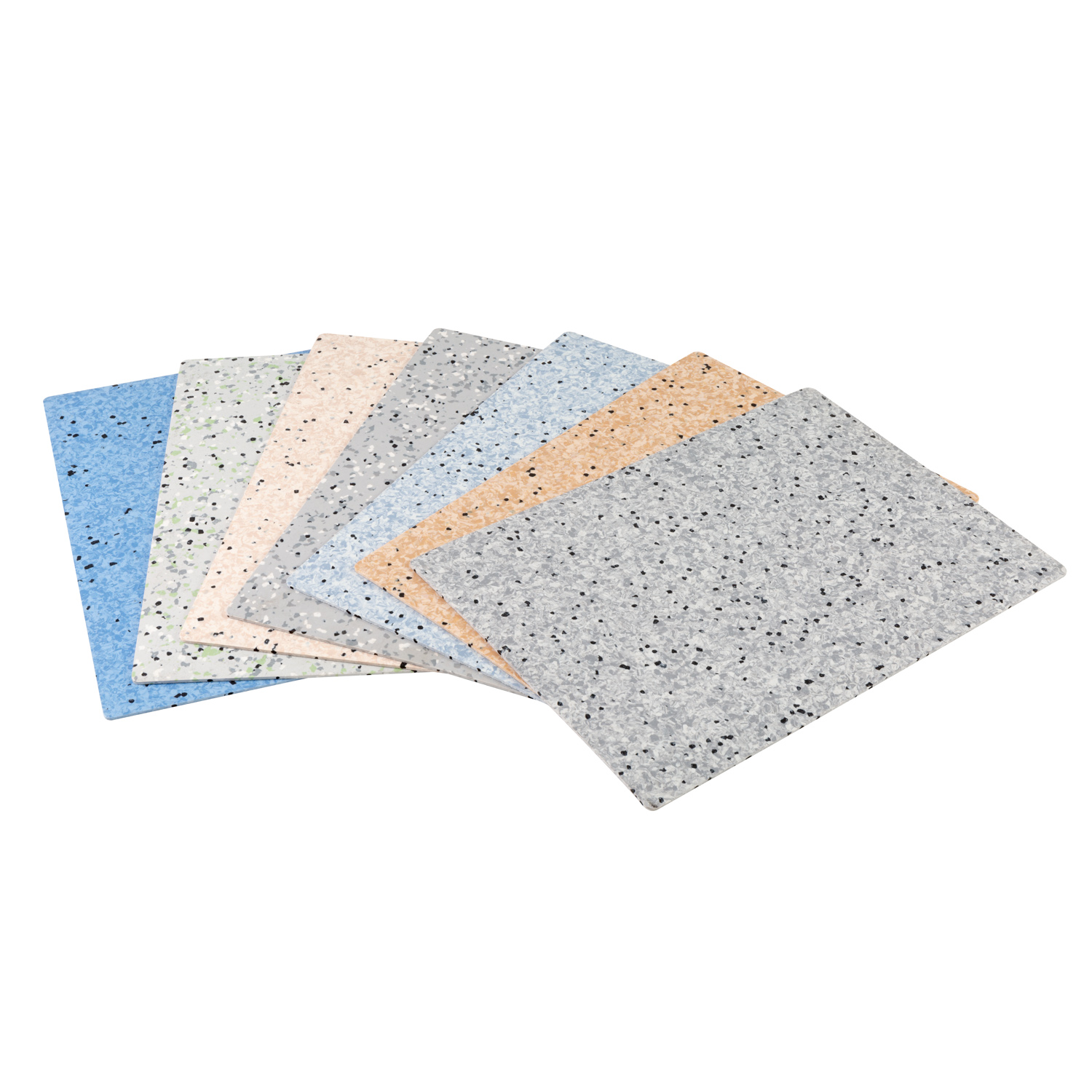
LVT surfaces, installation details and finished appearance.
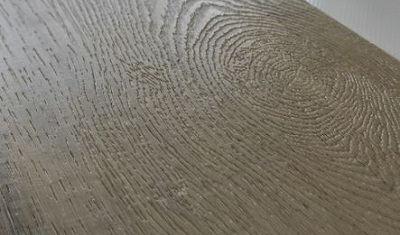
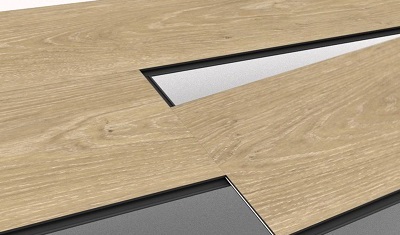
Four 3C-Floor website images show what sample approval needs to distinguish. Photographs illustrate product families; color and construction are approved using real samples and product codes.
Inspect locking geometry and decorative face on the real product.

Check tile format, finish and the actual approved stone pattern.

Backing selection affects the installation and restraint strategy.

Use room visuals to select a décor, then approve physical samples.
One décor. Two procurement specifications.
A buyer can present the same visual style to an apartment developer and an office contractor, but the bill of materials, evidence, installation plan and stock reservation may need to be different.
Commercial floor coverings should be selected using expected service conditions and a documented performance basis; residential procurement often involves wider décor variety and consumer-facing carton requirements. Both still depend on substrate suitability and correct installation.
For distributors developing branded ranges, the 3C-Floor OEM and private label LVT program covers design, specifications and packaging.
| Decision | Residential sourcing brief | Commercial project brief |
|---|---|---|
| Success measure | Saleable décor range, clear installation instructions, user satisfaction | Specified suitability, installation control and maintenance access |
| Wear performance | Match room traffic and published SKU construction | Match footfall and loads to documented performance and use class where required |
| Site data | Floor height, heating, condition and sound requirements | Moisture, flatness, castors, chemicals, zones and phasing |
| Approvals | Sample, artwork, carton data and care guide | Sample, specification, submittal, test documentation and mock-up if requested |
| Reorder method | SKU and décor continuation strategy | Project batch/lot record, reserved stock and replacement compatibility |
Five purchasing gates that reduce LVT sourcing risk.
A procurement workflow should show what gets approved and when. Written checkpoints prevent a sample from being accepted under one construction and delivered under another.
Map end use
Provide rooms, traffic, target market, construction type and estimated m² by décor.
Freeze the build
Record thickness, wear layer, size, surface, backing, installation and packaging.
Approve a reference
Sign off décor, texture, edge, physical sample and model-specific technical file.
Inspect & reconcile
Agree inspection criteria, labels, batch IDs, cartons, loading and delivery terms.
Control change
Use a revision-controlled specification, retained sample and agreed substitution process.
Quality-control points to write into the order
Define dimensional and thickness tolerances, decorative appearance reference, surface defects, wear-layer method, carton count, carton area, edge condition, pallet markings and inspection procedure. Ask what documentation can accompany the actual batch; a generic website range is not an acceptance standard.
Do not compare factory price alone
Use a like-for-like landed-cost basis. Include substrate repairs, adhesive or underlay, floor-laying labor, waste allowance, carton area, freight terms, taxes where applicable, spare stock and potential replacement downtime. Quoted unit prices are meaningful only after the configuration and trade terms match.
What to send an LVT flooring supplier for a comparable quote.
Supply the same brief to every shortlisted vendor. Ask for a separate line for each construction, décor and approved option. The final quote should identify deviations from your specification explicitly.
Request the quote in a way that can be audited.
Ask 3C-Floor to identify the exact recommended construction, available décor references and product-code technical information. State whether the order is a one-off fit-out, a multi-phase development or a distributor program with recurring orders. Those distinctions change sample approval, packing and replenishment requirements.
- Samples: confirm whether submitted samples match the proposed production build.
- Evidence: list the target country and required report types; verify each document applies to the final product.
- Quantity: distinguish overall area from m² per color and project reserve stock.
- Commercial terms: request MOQ, lead time, packing, load plan and shipment basis in writing rather than assuming standard figures.
Six gaps that cause problems after the purchase order.
Most costly procurement errors are not visual. They occur when specification, installation, evidence and delivery records do not describe the same product.
Calling every click floor “SPC”
Click describes a joining method, not the core material. Specify flexible LVT or a separately identified rigid-core type, and verify the locking section.
Using thickness as a traffic rating
A thick product is not automatically fit for heavy traffic. Confirm wear layer, surface finish, loads and supporting test information.
Ignoring installation conditions
Moisture, unevenness, sunlight and adhesive compatibility can defeat an otherwise suitable flooring selection.
Accepting reports for another SKU
Match available fire, slip, emissions or other test documents to the construction being quoted and the rules of the destination market.
Missing carton coverage and weights
Verify coverage per box, pieces per carton, weight, label code and pallet plan. These drive freight, stock counts and installation allocations.
Ordering by color name only
Preserve décor code, printed reference, approved sample, batch data and technical-sheet revision for future top-up purchases.
Commercial and residential LVT procurement: FAQs.
Answers for importers, distributors, project buyers and specifiers comparing construction, cost, suitability and supplier documents.
What is the difference between commercial and residential LVT flooring procurement?
Commercial LVT procurement usually needs room-specific traffic and load requirements, installation planning and documented performance evidence. Residential LVT procurement may put more weight on décor, comfort, finished height, cleaning and channel packaging. Both require a confirmed product code, samples and written specifications.
Can one LVT flooring specification be used for both apartments and busy retail spaces?
Only if the exact LVT product and installation system are approved for both environments. Apartment suitability does not establish high-traffic retail performance. Check wear layer, documented use classification, indentation, rolling loads, cleaning and subfloor requirements for each use.
Which LVT flooring installation type is suitable for a commercial order?
Glue-down or dry back LVT is often evaluated for fixed commercial installations. Loose lay may suit controlled replacement plans, and click LVT can suit certain renovations. The final selection depends on the project loads, substrate, floor height, fixing method and approved product documentation.
What wear layer should be specified for commercial LVT flooring?
Choose the wear layer with the required traffic and performance evidence rather than selecting on thickness alone. The 3C-Floor dry back and loose lay product listings currently reference 0.2 mm wear layers, while its click LVT listing references 0.3–0.7 mm. Heavy commercial use requires a separately approved specification and applicable test data.
How should importers compare wholesale LVT flooring quotations?
Compare quotes using the same installation family, overall thickness, wear layer, dimensions, finish, packaging, quantity, test documents, Incoterms and destination. For installed projects, compare substrate preparation, adhesive or underlay, waste, installation labor and reserve stock as well as material price.
Can 3C-Floor supply OEM or private label LVT flooring for distributors?
3C-Floor publishes OEM and private label LVT options covering specification discussions, décor selection, branded cartons and export-order planning. Confirm each custom construction, artwork, sample reference, minimum order quantity, documents and lead time in the final written quotation.
Which documents should accompany a commercial LVT flooring purchase order?
A commercial LVT purchase order should reference an approved product code, technical sheet, installation instructions, physical sample, required test reports, acceptance tolerances, packaging artwork, carton labels, quantities, delivery basis and agreed inspection and claim procedures.
Is LVT flooring waterproof for kitchens, bathrooms or commercial wet areas?
The vinyl material can resist everyday spills, but an LVT floor is not a waterproofing membrane. Moisture can reach joints, edges, adhesive or the substrate. Select an approved installation system, test the subfloor and separately evaluate continuously wet or specialist environments.
Continue from procurement to product approval.
These verified pages cover individual product families, specifications, test records and factory cooperation in more detail.
Move from a flooring brief to an approved purchase specification.
Share your market, room schedule, installation choice, target wear layer, décor, dimensions and estimated m². 3C-Floor can discuss suitable product-family options, sample requests, OEM cartons and project or wholesale supply requirements.
Send these six details
- Residential or commercial end use
- Installation system and thickness
- Wear layer and requested test documents
- Décor, surface and plank/tile size
- Volume by SKU and future reorder plan
- Packaging needs and destination port
Email: info@3c-floor.com