Construction & identification
Product ID, polymer and layer construction, coating, decorative film, flexible or rigid-core status, edge profile, backing, and whether any attached pad is included in overall gauge.
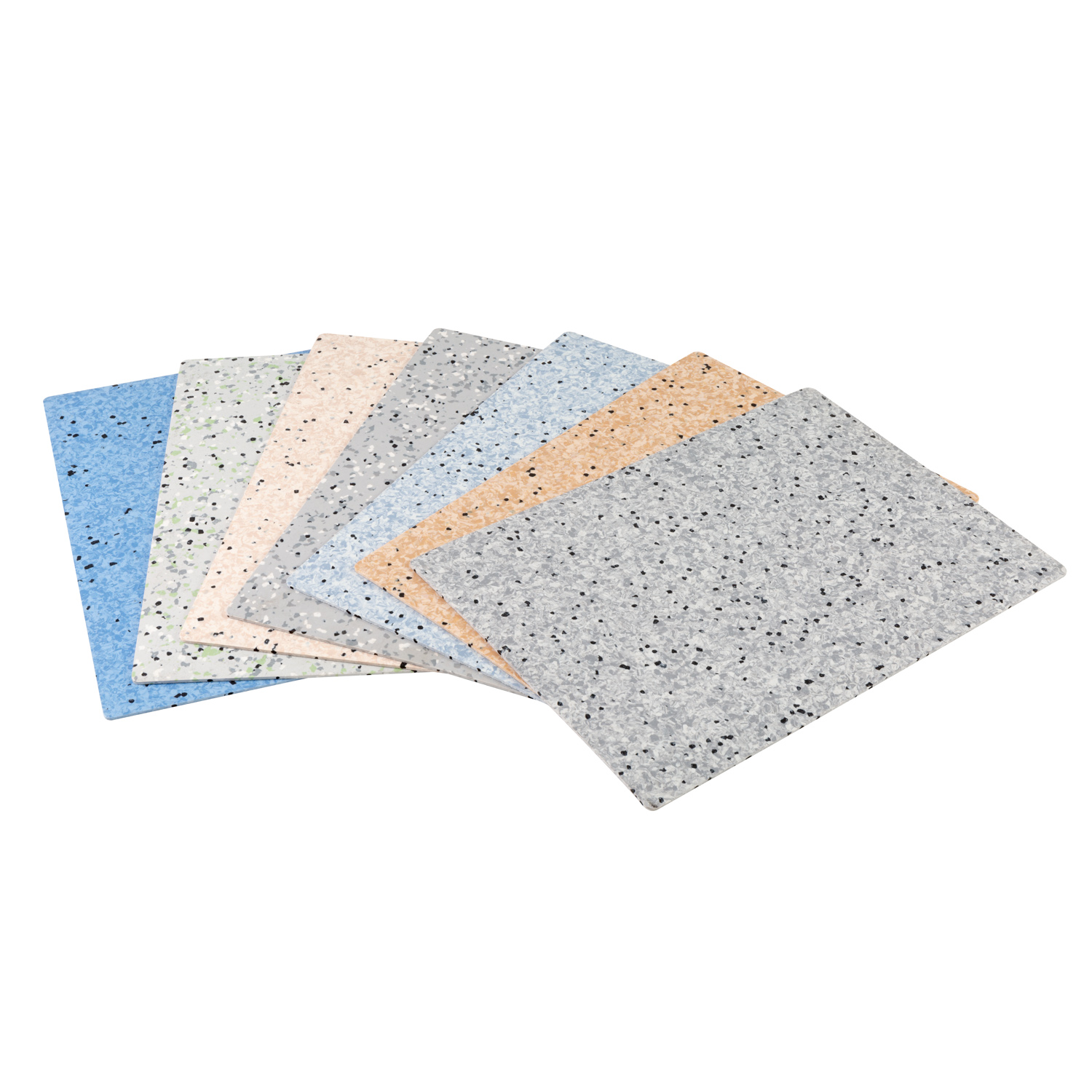
Luxury vinyl tile · Dry back / Click / Loose lay · OEM supply
An LVT technical data sheet (TDS) is the controlled record used to verify a luxury vinyl tile's construction, declared dimensions, test methods, measurable performance and approval status. For flooring importers, architects, private label brands and commercial contractors, it links the proposed LVT product to test evidence and to the exact version that will be manufactured.
3C-Floor supplies multiple LVT constructions for project and wholesale procurement. This technical reference shows what information a useful TDS must contain, which tests buyers may request and how to prevent a sample, test report and production order from referring to different products. Actual performance values and conformity claims require a confirmed product-specific document.

Every claimed property needs a stated result, criteria and evidence tied to the selected product build-up.
A manufacturer can offer several LVT families under one brand. The TDS must clearly identify the single construction being quoted or tested. This is especially important when a wholesale range combines flexible glue-down products, floating click products and specialist backings.
Record the manufacturer or brand, product code, revision date, installation family, overall thickness, wear layer, width and length, surface finish, backing, nominal mass where applicable, test method and edition, declared result, units, applicable acceptance criteria and reference reports. Installation instructions and packaging documents should refer to the same product code.
Product ID, polymer and layer construction, coating, decorative film, flexible or rigid-core status, edge profile, backing, and whether any attached pad is included in overall gauge.
Nominal plank or tile size; thickness; wear-layer thickness; mass per area, if declared; manufacturing tolerances; squareness; and orientation-dependent dimensional stability.
Reference test methods, standard editions, measured or classified outcomes, installation assembly, laboratory report identification, certificate scope and result date.
Document status: This page is an LVT technical-data reference and procurement checklist, not a laboratory-issued certificate. It does not assert unverified 3C-Floor values for fire reaction, slip, acoustic performance, VOC emissions, dimensional stability or indentation.
These selection values come from 3C-Floor's existing product listings. They help narrow the request, but they must not be treated as a single universal LVT technical data sheet. Confirm the chosen model, options, measured tolerances and reports in writing.
| Construction | Published total thickness | Published wear layer | Published size | Technical file priority |
|---|---|---|---|---|
| Dry back / glue down | 2.0 mm / 3.0 mm | 0.2 mm in current listing | 152 × 914 mm; 600 × 600 mm | Adhesive compatibility, substrate, indentation and dimensional stability. |
| Click LVT | 3.5–7.5 mm | 0.3–0.7 mm range | Exact dimension to confirm* | Locking geometry, permitted underlay, movement and use conditions. |
| Loose lay LVT | 2.0 mm / 3.0 mm in listed item | 0.2 mm in listed item | 152 × 914 mm; 600 × 600 mm | Backing, fixing strategy, wheeled traffic and layout stability. |
*The published click LVT dimension field is incomplete; do not quote a precise plank size without confirmation. Other OEM programs may have different constructions. For a broad comparison of product family specifications, see the LVT flooring specification worksheet.
The 3C-Floor LVT flooring collection shows the available installation families and the product-level selection context.
For a tender, factory audit or private-label product launch, choose the testing schedule from the actual product structure and destination market. The methods below are useful reference points; whether a requirement applies, and what result is acceptable, must be checked against the selected standard and the project specification.
| Property | Common reference | What the report or technical data should state | Approval status |
|---|---|---|---|
| Group A — Dimensions & product construction | |||
| Overall thickness | ISO 24346 | Nominal value, measured result, tolerance; inclusion or exclusion of attached backing. | Confirm for selected product code. |
| Wear layer thickness | ISO 24340 | Measured transparent wear layer, units and tolerance; avoid replacing the result with overall gauge. | Confirm tested wear layer. |
| Length, width, squareness | ISO 24342 | Actual dimensions, variation, edge geometry and declared acceptance requirement. | Confirm by size / product. |
| Mass per unit area | ISO 23997 | Measured mass in g/m² and whether the selected backing is included. | Request if required. |
| Group B — Mechanical and service behavior | |||
| Dimensional stability & curling | ISO 23999:2025 or required edition | Test exposure, directional dimensional change (%), curling (mm), conditioning and acceptance criteria. | Request full test context. |
| Residual indentation | ISO 24343-1 | Indentation in mm after the specified loading and recovery procedure. | Confirm result and limit. |
| Castor-chair effect | ISO 4918, where applicable | Cycle count, wheel arrangement, tested construction and observed damage or result. | Project-dependent. |
| Staining / chemicals | ISO 26987 | Named reagents, exposure procedure and change/appearance grading. | Request for relevant cleaning regime. |
| Light fastness | ISO 105-B02, where applicable | Test procedure and reported colorfastness grade, not only a marketing claim. | Request for sunlit applications. |
| Group C — Market, building and installation evidence | |||
| Use classification | ISO 10874 / applicable product specification | Declared use class and the product standard supporting the classification. | Never infer from wear layer alone. |
| Reaction to fire | EN 13501-1, when required | Classification and tested substrate / fixing / flooring assembly, with report and validity. | No blanket class asserted. |
| Slip behavior | EN 13893, DIN 51130 or specified market test | Actual classification and test surface/conditions; wet and dry claims are not interchangeable. | Specify regional requirement. |
| Indoor emissions | Applicable regional VOC scheme / chamber method | Report date, product identity, chamber conditions and scope of certification, if any. | No generic certification claim. |
| Impact sound | Applicable assembly test + ISO 717-2 rating | Reported ΔLw or specified acoustic metric with substrate, backing and complete assembly. | Assembly-specific result required. |
| Product specification | ISO 10582 or ASTM F1700 where in scope | Correct standard and edition, product definition, test evidence and any declared class. | Confirm product scope. |

Important: These are reference test methods, not a representation that every test has been run on every 3C-Floor product. A claim requires the actual model-specific report and the purchaser's agreed acceptance level. ISO 10582 concerns non-cushioned heterogeneous PVC coverings; ASTM F1700 covers solid modular vinyl within its scope. Rigid polymeric-core products may fall under ASTM F3261 instead of F1700.
Property → Method / edition → Specimen ID → Test conditions → Measured result + unit → Acceptance limit → Report ID + date → Applicable product code. A table that only says “ISO 23999 — Pass” leaves too much information for technical approval unless a matching report and pass criterion are available.
The same nominal flooring thickness can appear on products with different backings, edges, finishes and installation methods. A defensible procurement decision verifies both the numerical result and the conditions that produced it.
Match tested name, code, thickness, wear layer, backing and finish. If an OEM change is proposed, ask which previous evidence still applies and why.
Record the standard edition, conditioning, loading or exposure details, test direction and complete assembly where relevant. A method name without context is incomplete.
Distinguish a measured result from a supplier target, specification threshold or marketing claim. Write down the project limit before approval.
For example, a flooring fire classification is tied to the scope and setup of its report; impact-sound performance belongs to the tested floor assembly. Request a report-specific explanation before carrying a value to a different backing, underlay or substrate.
Different test results can look comparable in sales tables even when their scope is different. Before approving a commercial LVT technical specification, resolve these distinctions.
A 3.0 mm LVT plank does not automatically outlast a 2.0 mm plank. Wear behavior depends on the protective layer, surface finish, product classification and the actual service conditions.
A nominal 0.5 mm or 20 mil wear layer is a construction description. Ask for the complete product's use classification and project-relevant results rather than converting layer thickness directly into a commercial rating.
Flexible click LVT and rigid-core flooring are not identical constructions. When specifying a click product, identify the actual core before deciding which product specification or testing requirements apply. For product build-ups, consult the 3C-Floor click LVT product information.


Most avoidable documentation problems occur when the sampled décor, approved performance file and mass-produced goods no longer identify the same configuration. Treat technical data as an active purchase-order control rather than a brochure attachment.
Issue the room schedule, performance criteria, market requirements and test evidence required for approval.
Lock the physical sample, colour and gloss, construction and exact technical document revision.
Agree measurable CTQs: dimensions, gauge, surface, edge, packing and batch sampling.
Maintain the same item reference or obtain written approval before a material, backing or finish change.
Private label projects should align artwork, carton declaration, product code, test scope and technical specification before printing or production. A décor rename must not make the underlying tested construction ambiguous.
3C-Floor discusses custom structure and packaging programs for brand owners and distributors. Review its OEM LVT flooring supply and private label options and confirm feasibility for the selected program.
A precise request lets the factory confirm what data already exist and what may require separate testing. Fill in your intended product and requested documents, then download a plain-text brief to attach to your inquiry.
1) Product-code TDS; 2) applicable test report package; 3) installation, quality and packaging details matching the proposed order. Unverified requests should remain pending, not silently marked compliant.
For product choice before technical approval, the LVT selection and buying guide compares traffic, site conditions and installation systems.
These answers are intended for product engineers, procurement teams, flooring importers and specification writers comparing technical files.
An LVT technical data sheet is a product-code-specific technical record describing construction, dimensions, tolerances, applicable test methods, declared performance results and the revision controlling the supply. It should be supported by matching reports when proof of a performance claim is required.
No. A method explains how a property can be measured. Compliance requires the result, applicable limit, method edition, defined specimen and evidence relevant to the ordered LVT product. A standard number without those elements is not proof of approval.
Commercial LVT buyers often request dimensional stability, curling, residual indentation, wear-layer thickness, castor-chair performance, stain resistance and a supported use classification. Fire, slip, VOC or acoustic evidence may also be mandatory according to the destination market and building application.
No. ASTM F1700 covers modular solid vinyl flooring within its scope. A product containing a rigid polymeric core may instead need evaluation against ASTM F3261. Verify the actual construction and the applicable edition before choosing a product specification.
Not automatically. Reaction-to-fire classification and acoustic performance can depend on the product build-up and the installed assembly. Check the report's permitted scope, specimen, substrate, backing, fixing and any permitted variations before reusing a result.
Use the same approved pr, oduct code, technical revision, décor and construction record across the golden sample, purchase order, cartons and inspection results. Agree dimensional tolerances, sampling, traceability and change approval before production so that later lots can be checked against the original approval.
3C-Floor discusses OEM and private label LVT configurations. Buyers can request a technical sheet for their selected construction together with available supporting documents. Confirm the available test reports, customization, MOQ, timing and destination-market requirements before placing the order.
Share the installation type, proposed thickness, wear layer, dimensions, surface, backing, intended traffic, country, quantity, décor, packaging and required testing. 3C-Floor can review an LVT product direction and discuss the relevant documentation, sample and quotation.