FLOORING · OEM · COLLECTIONS
Everyday residential
Establish a few commercially useful oak, warm natural and neutral stone looks. Keep installation and the construction specification clear for each item.



OEM LVT flooring collection development brings together the construction, décor, samples, technical specification and branded packaging needed to launch a coherent luxury vinyl tile or plank range. 3C-Floor supports flooring importers, private label brands, wholesalers and distributors planning dry back, click or loose lay LVT programs for their target markets. Buyers can discuss wood and stone visuals, finishes, product dimensions, wear layers, carton labeling and export supply—then approve each proposed SKU before bulk ordering.

Custom packaging is part of an OEM program, but a repeatable flooring range requires more than a brand logo on a standard box.
A private label LVT flooring collection is a coordinated group of luxury vinyl tile or plank SKUs sold under a buyer’s brand, with agreed designs, installation systems, constructions, labels and ordering records. The most reliable development process assigns each décor and construction a unique code, approves a physical sample and technical specification, finalizes branded cartons and preserves those references for repeat orders. 3C-Floor can discuss product and packaging options; availability, exclusivity, quantities, timing and test documentation are confirmed for each project.
OEM LVT flooring normally follows buyer-defined choices for construction, appearance or packaging. ODM luxury vinyl flooring can begin with an existing supplier design and adapt agreed elements for the buyer’s market. Private label LVT describes how the finished product is marketed under a customer brand; it can be based on either approach.
For a brand starting with a small launch range, selecting feasible existing constructions and customizing the brand presentation may reduce development complexity. Buyers seeking a distinctive visual identity should ask separately about new décor feasibility, print tooling, design rights and potential exclusivity.
At minimum, lock the installation family, finished thickness, protective wear layer, plank or tile dimensions, surface finish, décor code, packing unit and technical file. A color name on its own cannot identify a manufacturing-ready SKU.
See the existing OEM LVT manufacturer and supply overview for a broader explanation of factory partnership; this page focuses on collection architecture and approvals.
Build the assortment around the people who will buy and install it. A focused range is easier to sample, forecast, document and replenish than a catalog of unstructured colors.
Establish a few commercially useful oak, warm natural and neutral stone looks. Keep installation and the construction specification clear for each item.
Use coordinated grain, gloss, texture and size to differentiate the collection. Request physical layout boards rather than relying on small web photos.
Begin with traffic, loads, installation and required evidence, then choose approved visuals. A decorative match does not prove identical use performance.
Prioritize stable SKU identification, reserved reference samples, carton data and any agreed change-notice process for repeat purchasing.
Consider a small visual family with 2–3 warm woods, one cooler neutral and one stone direction, then choose only the constructions your sales channel can support. Final number of designs, each décor’s minimum order and any exclusive pattern development must be quoted.
Dry back, click and loose lay are distinct product families. The table below preserves published 3C-Floor references without combining separate family figures into a fictional universal SKU.
| Construction / channel | Published thickness | Published wear layer | Example format | OEM approval focus |
|---|---|---|---|---|
| Dry back / glue down LVT Fixed floor, bonded installation | 2.0 / 3.0 mm | 0.2 mm in listed base product | 152 × 914 mm plank; 600 × 600 mm tile | Adhesive, substrate smoothness, proposed use and any upgrade request |
| Click LVT Floating plank program | 3.5–7.5 mm | 0.3–0.7 mm | Confirm selected plank dimension | Locking profile, core construction, total thickness, underlay limits |
| Loose lay LVT Modular / planned replacement | 2.0 / 3.0 mm | 0.2 mm in listed base product | 152 × 914 mm plank; 600 × 600 mm tile | Backing type, layout restraint, replacement and traffic requirements |
Sources: the current LVT product-family overview and LVT specification sheet. Figures are published family examples, not a statement that all combinations are available. Confirm product code, tolerances, actual supplied construction, technical records, MOQ and pricing in writing. Compare the original dry back LVT product listing with the separately specified loose lay LVT product listing before selecting a construction.
Finished gauge influences height and transitions. The transparent wear layer protects the decorative print. Specify both values, plus any surface treatment and relevant performance evidence.
Glue-down needs compatible adhesive and prepared substrate; click needs an approved profile and movement allowances; loose lay needs the specified restraint plan.
Do not transfer an IXPE/EVA underlay assumption from rigid-core click flooring into flexible glue-down or loose lay LVT. Confirm every optional backing against the actual SKU.
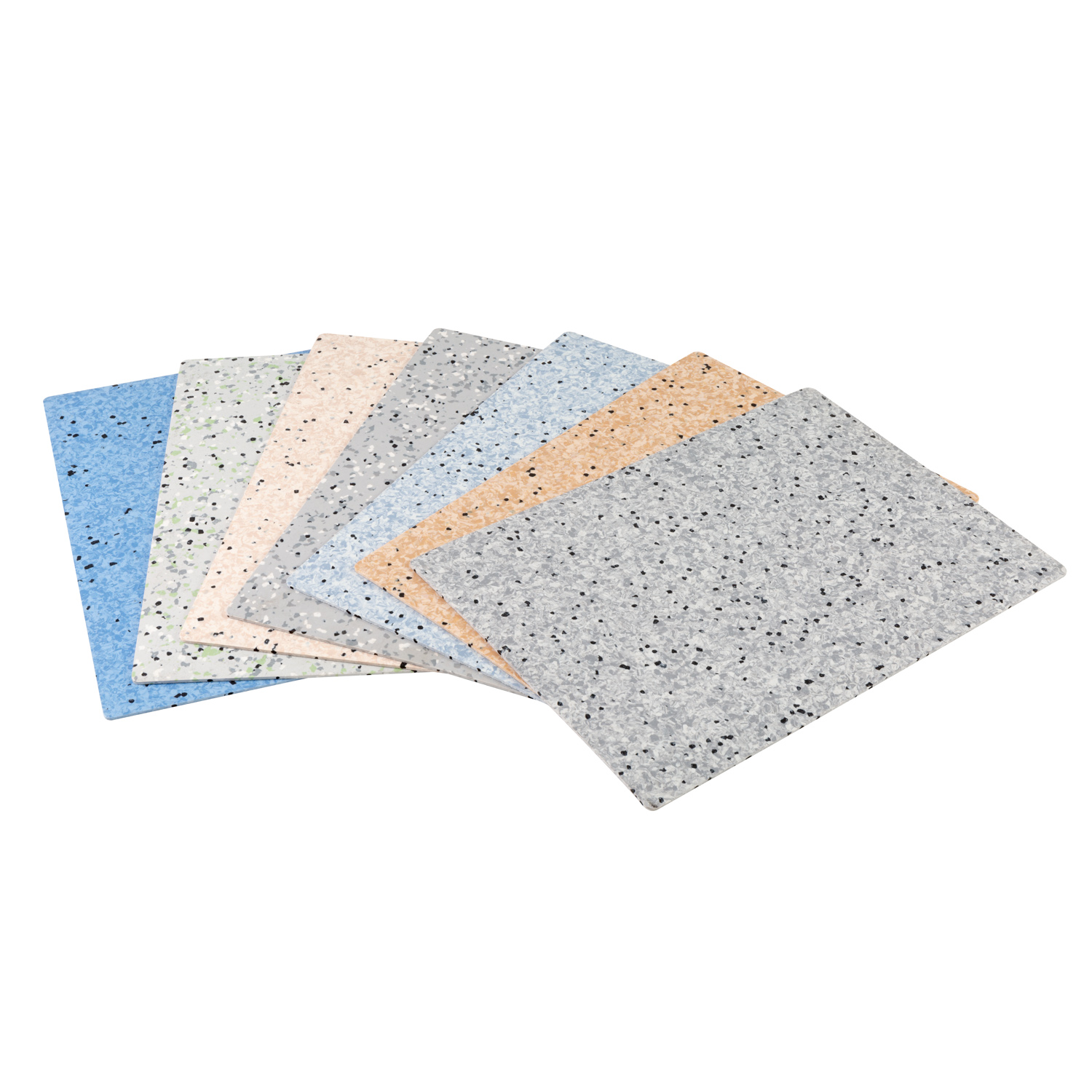
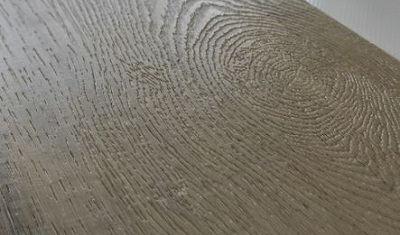
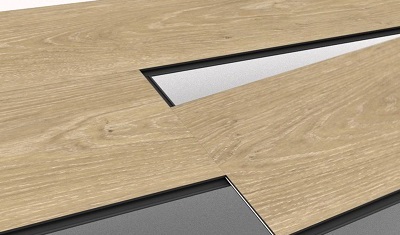
These photographs link to actual 3C-Floor website image files. Website pictures are useful for shortlisting, but branded OEM approvals should use identified physical samples inspected under the intended lighting.


Images are hosted at 3c-floor.com/up/pic/ and were checked against the source website. The photos represent different product families, not one combined product specification.
Coherent naming and packaging connect product design to retail, specification and customer service. Agree what 3C-Floor can supply and which artwork or data the buyer provides.
Use coordinated light oak, natural brown, dark wood and stone directions where relevant to your market. Approve a full-size physical reference, including acceptable design variation and gloss appearance. Confirm whether a proposed pattern is a catalog selection, modification or new-development request.
Specify matte versus higher-gloss appearance, texture, edge shape and any embossed-in-register request. EIR alignment or custom embossing is not automatic for every LVT construction; confirm feasibility on a sample.
Record approved logo use, brand colors, product naming, barcode format, installation language, pieces and nominal square meters per carton, pallet marks and importer information required by the destination market.
Ask about individual swatches, multi-plank display panels, labeled sample folders and the matching SKU master. Product photography and merchandising files should identify the approved design without implying unverified test properties.
| Collection | Buyer-defined range name |
| Decor ID | Approved print / color reference |
| Construction ID | Dry back, click or loose lay + approved build |
| Surface & edge | Finish, texture, gloss, profile |
| Measured specification | Overall thickness, wear layer, size & tolerance |
| Approval IDs | Sample version, TDS revision, required reports |
| Pack identity | Barcode, carton artwork version, m² / carton |
| Commercial | Quantity / décor, destination, approved quote |
A suggested buyer control register, not a statement that 3C-Floor uses a particular ERP naming scheme.
A clear approval sequence reduces disagreements about what was sampled, what was quoted and what is ultimately shipped. These stages are a proposed collaborative workflow; actual project milestones are agreed with the supplier.
Target country, sales channel, application, collection tiers, budget direction and forecast volume per décor.
Choose LVT construction, wear layer, dimensions, finish, backing and proposed décor combinations.
Inspect color in room light, grain repeat, texture, edge, dimensions and installation fit.
Approve identified product TDS, application limits, required evidence and technical revisions.
Lock carton artwork, label accuracy, barcode, square-meter coverage and pallet instructions.
Confirm quantities, shipment basis, inspection records, retained samples and change notifications.
Record a buyer approval for the actual face and construction. An attractive image without a linked product code, measured specification and documented installation conditions does not sufficiently define a repeatable OEM LVT flooring order.
For the documentation stage, use the LVT technical data sheet and buyer evidence guide to identify reports and measurement fields relevant to the specified product and destination market. A listed test method is not proof that a particular SKU has passed a test.
For a brand owner, repeatability is a commercial feature. Reorders should reference the same approved product identity rather than a broad color name or old photograph.
For every design, retain the agreed sample identity, construction revision, carton specification, supplier quote and labeling master. Discuss how color variation, material substitutions, décor-film changes and discontinued patterns will be communicated before replenishment. If a showroom needs long-term appearance matching, reserve replacement stock where practical.
Quantity should be expressed by design and build. “One container of mixed colors” is not enough for production planning. Specify the required square meters per SKU, carton count when known, planned replenishment windows and the desired shipping basis. All minimum order quantities, mixability and lead times require confirmation in the actual quotation.
For full cost comparisons and project versus residential channel considerations, review 3C-Floor’s LVT procurement framework.
These are recommended verification checks for buyer and supplier to agree, not a claim of a particular guaranteed QC acceptance rate.
Using a click-LVT wear layer with a dry-back thickness listing can create a configuration that has never been approved. Request one actual product-code technical sheet.
A custom label, a catalog décor and an exclusive film are different matters. Request a written definition of design rights, tooling and any exclusivity terms.
Lighting, screen calibration, plank repeat and embossing change the visual result. Use real samples, preferably a multi-plank layout, to confirm the customer-facing appearance.
Do not print performance, fire, acoustic, emissions or use-class claims on cartons until evidence for the exact construction and intended destination supports them.
When OEM LVT may not be the right choice: if the project requires a different rigid-core system, continuous wet-room waterproofing, specialist ESD performance or an unapproved exposure condition, assess another flooring construction. LVT installation and suitability must be determined for the specific project, not assumed from its name.
Send one row per planned décor and installation construction. Mark undecided items as “please propose” so the manufacturer can identify the options that require feasibility checks or samples.
A request is not a confirmed production order. Product options, sample charges, artwork support, actual MOQ, test evidence, delivery timing and price are reviewed against the agreed project.
Practical questions from importers, distributors, new flooring brands and commercial buyers.
OEM LVT flooring collection development is the process of defining a coordinated range of luxury vinyl tile or plank products for a buyer’s brand. It covers installation type, product build, décor, sample approval, technical documents, SKU identification, branded packaging and repeat-order requirements—not merely selecting a logo for the carton.
3C-Floor publishes OEM and private label LVT flooring support, including décor selection, product specification discussions, cartons and labels. The buyer should confirm the proposed installation construction, feasible custom options, physical samples, order quantities and delivery terms through a product-specific quotation.
The best system depends on the sales channel, installer preference and project conditions. Dry back LVT is evaluated for bonded installation; click LVT for approved floating floors; loose lay LVT where a defined restraint and replacement strategy is suitable. Compare subfloor requirements, wear performance and installation cost for the exact product.
You can ask 3C-Floor to assess custom décor and surface directions, but exclusivity is not automatic. Separate existing catalog patterns from new printing development, confirm technical feasibility and artwork ownership, and document any exclusive-market or design-use terms before making a commercial claim.
Choose overall thickness and wear layer separately for each construction and intended use. 3C-Floor currently publishes dry back examples at 2.0 or 3.0 mm with a 0.2 mm wear layer, while click LVT is listed at 3.5–7.5 mm with 0.3–0.7 mm wear layers. Further OEM combinations require confirmation rather than assuming every option exists.
A mixed-décor order can be discussed, but the allowed mix and minimum quantity depend on the construction, color, production plan and packing. Provide total square meters and the volume of every proposed SKU; ask the supplier to confirm MOQ per décor, packing units, availability and shipment timing in writing.
Approve carton artwork together with the underlying product master: brand and model names, décor and construction codes, barcode, pieces per box, nominal m² per box, destination-language instructions and pallet identification. Performance or regulatory claims must have appropriate supporting evidence for the exact SKU.
Maintain a signed reference sample and a version-controlled record of décor film, surface, construction, dimensions, packaging and inspection criteria. Every reorder should identify the approved SKU and revision; discuss color-variation limits, batch records, production changes and spare stock before confirming the repeat purchase.
3C-Floor supports OEM and private label flooring discussions for importers, distributors and brands developing wood-look and stone-look luxury vinyl flooring. Start with your market, target construction and proposed assortment. Confirm available options and the production-ready specifications before bulk ordering.