Welcome to 3C-Floor — Your Trusted Manufacturer of SPC Flooring, WPC Vinyl Flooring, LVT Flooring & PVC Flooring Rolls.
  • 0086 13321818576 (Steven Lee)
News
Current Location:Home > News

SPC Buying Guide: How to Choose the Best Specification | 3C-Floor

Update:2026/8/3 18:31:36 Views:0
Specification support for distributors, flooring brands, contractors and project buyers info@3c-floor.com
Home  /  SPC Flooring  /  SPC Buying Guide
Specification-led sourcing guide

SPC Buying Guide: Choose the Right Floor, Not Just a Bigger Number

The best SPC specification is the construction that fits your traffic, subfloor, acoustic target, compliance needs and sales position. Use this guide to turn thickness, wear layer, click system, backing and test documents into one purchase-ready specification.

20+ yearsFlooring manufacturing and export experience
30,000㎡+Factory scale supporting OEM programs
32 stepsQuality-control process for stable batches
60+ marketsDistributor and project supply experience
Modern living room installed with light wood-look SPC flooring from 3C-Floor
Buyer principle Specify the complete plank.

Traffic + wear layer + core + locking profile + backing + surface + documents + approved sample.

Direct answer

How to Choose SPC Flooring in the Correct Order

Start with the room and risk profile, then select the construction. Reversing that order often leads buyers to overpay for thickness while missing the specifications that actually control wear, joint integrity, sound, installation and compliance.

The best SPC floor is a matched system.

No single thickness or wear-layer number is automatically “best.” A quiet apartment program, an entry-level residential line and a retail renovation may all require different constructions.

Choose by use → verify by sample → protect the order with written specifications.
1

Define the traffic

Residential, rental, hospitality, retail and heavy commercial use create different surface and joint demands.

2

Confirm the subfloor

Flatness, moisture, existing finishes and transition heights affect thickness, backing and installation method.

3

Build the construction

Match wear layer, core, click profile, format, surface, bevel and attached pad as one SKU.

4

Verify the evidence

Review product-specific testing, samples, labels and production controls before approving bulk supply.

Fast specification selector

Choose a Starting Specification by Application

These are practical planning ranges for RFQ preparation—not universal declarations. Final choices should be confirmed against the exact product, traffic pattern, local code, installation system and approved sample.

Residential value

Bedrooms & General Living

For normal household traffic where price, design and straightforward installation matter most.

  • 4.0–5.0 mm totalCheck core and click strength, not thickness alone.
  • 0.3 mm wear layerCommon residential positioning.
  • Optional attached padUse when sound and installation convenience add value.
Commercial standard

Offices, Hotels & Retail

For repeat cleaning, luggage, chairs, customer traffic and faster renovation programs.

  • 5.0–6.5 mm totalCoordinate transitions and subfloor tolerances.
  • 0.5 mm wear layerA common baseline for standard commercial collections.
  • Project documentationConfirm slip, VOC, fire and warranty requirements by market.
Heavy-use program

Busy Public Interiors

For corridors, large stores and selected high-use areas where traffic and approval risk are higher.

  • 6.0–8.0 mm totalOnly when the full construction supports the project.
  • 0.7 mm wear layerFor heavier commercial positioning and longer wear expectations.
  • SKU-specific testingMatch the report, backing, substrate and installation setup.
Important: a waterproof plank does not make the entire room a waterproof system. Perimeters, penetrations, subfloor moisture, expansion gaps and installation details still require proper control.
Best SPC specification matrix

Compare the Numbers Buyers Actually Need

Use this table to move from a broad product request to a quotation that manufacturers can price, sample and reproduce accurately.

Application Planning thickness Wear layer Backing Surface & format Priority checks
Bedrooms / low-traffic homes 4.0–5.0 , mm 0.3 mm No pad or IXPE Matte wood look; standard plank Flatness, click fit, décor repeat, basic emissions documents
Busy homes / pets / rentals 5.0–6.5 mm 0.5 mm preferred 1.0–1.5 mm IXPE or EVA Embossed or EIR; micro-bevel Scratch positioning, joint strength, stain cleaning, repeat batch color
Apartments / hospitality rooms 5.5–8.0 mm 0.5 mm Acoustic IXPE, EVA or selected cork Quiet wood visuals; wider planks optional Impact sound target, backing density, transition height, low-VOC evidence
Offices / standard retail 5.0–6.5 mm 0.5 mm By acoustic and installation plan Matte, cleanable texture; commercial colors Rolling chairs, entrance protection, slip needs, cleaning chemistry, warranty scope
Hotels / busy corridors 5.5–8.0 mm 0.5–0.7 mm Acoustic backing matched to project Low-gloss surface; controlled bevel Sound, luggage traffic, fire class, replacement SKU continuity
Heavy commercial / public projects 6.0–8.0 mm 0.7 mm where justified Exact tested construction Slip-conscious texture; project format Reaction to fire, slip, dimensional stability, rolling load, approved installation system
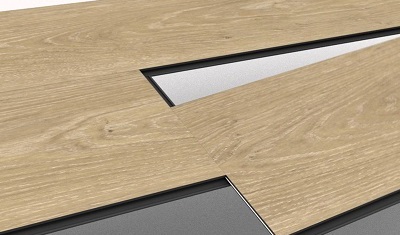
The wear layer protects the visual surface, while the rigid core and milled joint control much of the plank's structural behavior. A premium specification must balance both.
SPC click-lock flooring plank joint and layered construction
Layer-by-layer buying guide

Understand What Each Layer Is Supposed to Do

Good SPC flooring is not one material. It is a laminated, milled and finished system whose layers must remain compatible through production, shipping, installation and daily use.

01

UV surface finish

Influences stain resistance, gloss consistency, cleanability and the surface's first response to fine scratches.

02

Transparent wear layer

Protects the printed décor from traffic. Select it by use and warranty position, not by the assumption that thicker is always necessary.

03

Décor film and embossing

Controls visual realism, pattern repeat and collection identity. EIR aligns texture with the printed grain for a more premium surface.

04

Rigid SPC core

Provides dimensional stability and supports the locking profile. Ask about formulation consistency, density, flatness and production control.

05

Click-lock joint

Accurate milling and suitable joint geometry help create tight seams and efficient installation. Inspect assembled samples, not loose planks only.

06

Attached underlayment

IXPE or EVA can improve acoustic positioning and installation convenience, but cannot correct an uneven subfloor or replace required moisture control.

Ten buying decisions

What to Check Before You Call an SPC Floor “High Quality”

A reliable SPC flooring buying guide should help you reject weak offers—not merely describe product advantages. Use the checks below during supplier comparison, sample approval and pre-shipment inspection.

Traffic before thickness

Write down who will use the floor, footwear, pets, carts, chairs, luggage, cleaning frequency and expected replacement cycle before selecting construction.

Wear layer by duty

Compare 0.3, 0.5 and 0.7 mm options by intended traffic and warranty. Also verify the UV system, because surface performance is not determined by wear-layer thickness alone.

Core quality and flatness

Inspect cross-sections, plank flatness, edge integrity and dimensional consistency. A thick but unstable core is not a premium floor.

Locking precision

Install several planks from different cartons. Check engagement force, seam tightness, short-side strength, damaged profiles and whether joints remain flat.

Backing fit

Confirm material, thickness, density, lamination quality and whether the pad is included in total thickness. Match it to acoustic, fire and installation requirements.

Surface realism

View full boards under project lighting. Evaluate pattern repeat, color balance, gloss, texture depth, bevel color and the appearance of multiple cartons together.

Slip and cleaning behavior

Select texture with the actual application in mind. A deeper emboss can improve tactile grip but may change cleaning effort and visual sheen.

Documents tied to the SKU

Low-VOC, reaction-to-fire, slip and other claims should connect to the exact construction being quoted, including thickness, backing and relevant test conditions.

Subfloor compatibility

Confirm flatness tolerance, moisture plan, existing-floor condition, expansion spacing, temperature limits and transition profiles before shipment.

Repeat-order control

Record the approved décor, gloss, texture, core, backing, click system, carton label and test reference so future orders do not drift from the original sample.

Specification deep dive

Thickness, Wear Layer and Density: What the Numbers Do—and Do Not—Tell You

Total Thickness vs Core Thickness

Total thickness may include the wear layer, décor, rigid core and attached backing. Two products described as “6 mm SPC” can therefore have different core thicknesses and different joint geometry.

Ask the supplier to separate:

  • Total finished thickness
  • Rigid core thickness
  • Wear-layer thickness
  • Attached-pad thickness and density
  • Click profile and edge treatment

A thicker board can feel more substantial and permit a stronger profile, but the benefit only exists when core formulation, milling accuracy and dimensional stability are also controlled.

Wear Layer vs Scratch Resistance

The wear layer is the transparent layer above the print film. It affects how long the décor remains protected under traffic, yet it should not be treated as a guarantee against every scratch or dent.

A practical positioning framework:

  • 0.3 mm: common residential programs
  • 0.5 mm: demanding residential and standard commercial positioning
  • 0.7 mm: heavier commercial collections where the traffic justifies it
  • Use entrance mats, furniture protectors and suitable cleaning practices regardless of wear layer
  • Approve the UV finish, gloss and surface texture together with the wear layer
The “best SPC specification” test

Score the Whole Offer, Not the Headline Specification

A strong commercial decision balances performance, evidence, installability, market fit and supply repeatability. Cheap flooring can become expensive when claims, samples and production are not aligned.

25%Application fit: traffic, room, moisture, rolling load and expected life
25%Construction quality: core, wear layer, locking, backing and surface
20%Evidence: test reports, technical data and SKU traceability
15%Installation fit: subfloor, transitions, expansion and accessories
15%Supply control: approved sample, batch consistency, packing and repeat orders
3C-Floor product image display

Inspect the Profile, Joint and Surface Before Bulk Approval

Photos help narrow a collection, but physical samples remain essential. Review planks from multiple cartons under the lighting, viewing distance and installation pattern expected in the final market.

Avoid expensive specification mistakes

Eight Common SPC Buying Errors

Errors at Product Selection

  • Buying the thickest plank without comparing core thickness or click quality
  • Choosing the wear layer without defining traffic and warranty position
  • Assuming attached backing fixes an uneven or moisture-sensitive subfloor
  • Approving one small color chip without checking pattern repeat and full-board variation

Errors at Procurement Approval

  • Accepting generic certificates that are not tied to the quoted SKU
  • Failing to record whether total thickness includes the attached pad
  • Approving a sample without linking its code to the purchase order and carton label
  • Comparing only FOB unit price instead of waste, accessories, freight, claims risk and repeat-order stability
From shortlist to shipment

Use a Procurement Process That Preserves the Approved Specification

The buying decision is not complete when a sample looks good. It is complete when the quotation, approved sample, production record, labels, inspection and shipping documents all describe the same product.

1

Issue a detailed RFQ

State market, application, quantity, construction, documents, packing and target delivery—not only “best price for 5 mm SPC.”

2

Approve a coded physical sample

Record décor, surface, bevel, gloss, dimensions, core, wear layer, click system and backing.

3

Confirm product-specific documents

Check test scope, product identity, dates, construction and destination requirements before printing claims on packaging.

4

Inspect production and packing

Verify dimensions, appearance, locking fit, flatness, carton labels, pallet marks and quantities against the approved specification.

5

Retain repeat-order references

Keep a sealed reference sample, décor and batch records, packing artwork and document list for future purchase orders.

Why source with 3C-Floor

A Buying Guide Is More Useful When the Factory Can Build the Specification

3C-Floor supports buyers who need more than a generic stock plank: the construction, design, documentation, sample, packaging and export plan can be coordinated around the target market.

01

Specification matching

Configure thickness, wear layer, plank size, surface, bevel, locking profile and backing around the actual application.

02

OEM & private label

Develop collection names, décor selections, side labels, cartons, barcodes, manuals and sample boards for distributor programs.

03

Sample-led approval

Use approved physical samples and written SKU details to reduce gaps between quotation, production and repeat orders.

04

Export coordination

Support wholesale, project, LCL and container supply with packing, documentation and shipment planning for global buyers.

SPC buying guide FAQ

Questions Buyers Ask Before Choosing SPC Flooring

What is the best SPC specification for a home?

For many homes, a practical starting point is 4.0–5.5 mm total thickness with a 0.3 mm wear layer. Busy families, pets, rental turnover or stronger warranty positioning may justify a 0.5 mm wear layer. The final choice should also account for core quality, click strength, attached backing, subfloor condition and installation requirements.

Is thicker SPC flooring always better?

No. Extra thickness can support a more substantial profile and different underfoot feel, but it cannot compensate for unstable core formulation, inaccurate milling, unsuitable wear layer or poor subfloor preparation. Ask for total thickness, core thickness and backing thickness separately.

Should I choose a 0.3 mm, 0.5 mm or 0.7 mm wear layer?

Use 0.3 mm as a common residential reference, 0.5 mm for demanding residential and standard commercial programs, and 0.7 mm for heavier commercial positioning where traffic and project requirements justify it. Confirm the UV finish and warranty scope at the same time.

Do I need SPC flooring with attached underlayment?

Attached IXPE or EVA can simplify installation, support quieter marketing and add slight comfort. It does not level the subfloor and should not be assumed to satisfy every acoustic, moisture or fire requirement. Confirm pad material, density, thickness and inclusion in the tested construction.

How can an importer verify SPC flooring quality before a bulk order?

Approve a coded physical sample and written specification; install multiple planks; inspect dimensions, flatness, color, gloss, texture, click fit and backing; review product-specific reports; and connect the sample code to the purchase order, carton labels and pre-shipment inspection checklist.

Can 3C-Floor customize SPC flooring for private labels and projects?

Yes. 3C-Floor supports décor and surface selection, wear-layer and backing options, click systems, custom sizes, private-label cartons, labels, samples, quality control and export coordination for flooring distributors, brands, contractors and developers.

Turn the guide into a quotation

Tell Us Where the Floor Will Be Used. We Will Help Build the Specification.

Send the destination market, application, quantity, target thickness, wear layer, design direction, backing, required documents, packaging and delivery port. 3C-Floor will prepare a practical SPC option for sample and price review.

Landlord hotline:
+86-021-54361792
Email:
info@3c-floor.com