Powder rooms
Handwashing, occasional splashes and normal dry-floor cleaning. Confirm the chosen rigid-core product and substrate meet installation instructions.



SPC flooring for bathrooms combines a water-resistant rigid vinyl core with practical wood- or stone-look surfaces for suitable interior washroom floors. For distributors, renovation contractors and hospitality buyers, the real specification goes beyond the plank: choose an approved wet-area application, appropriate surface traction, a reliable click joint and a sound moisture-control detail. 3C-Floor supports SPC plank specifications, sample evaluation and OEM/private-label supply.
Application-specific guidance • Product approval required for the actual SKU

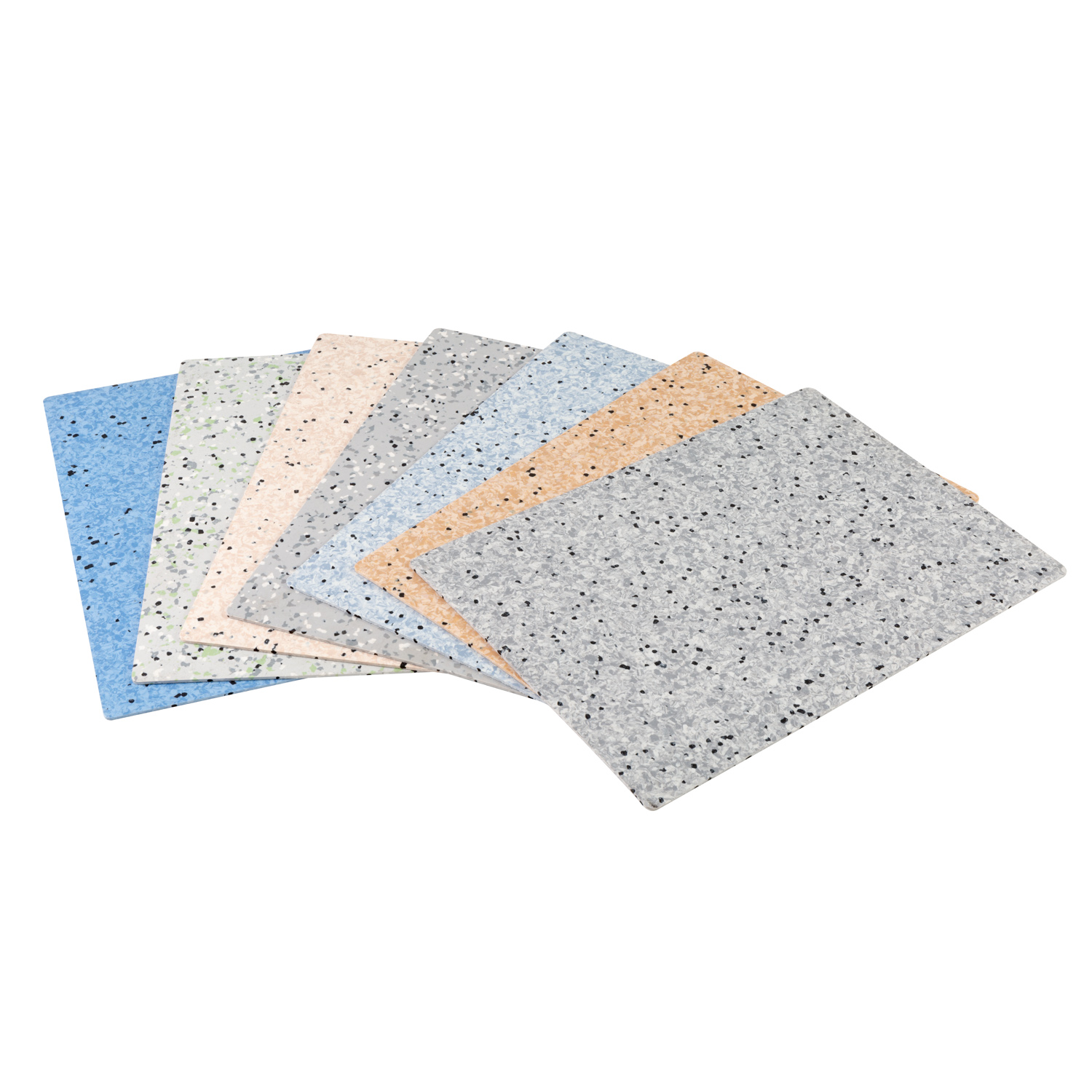
A real 3C-Floor product image. Confirm the exact plank, finish and wet-area installation eligibility before a bathroom order.
Yes—in the right location and with the right details. Waterproof-core SPC vinyl planks can be suitable for bathroom floors outside the shower when the specific flooring product is approved for the application and installed over a compliant substrate. A waterproof plank is not the same as a waterproof floor assembly. Water can still pass through joints or edges and affect the structure below. Standard floating planks should not be assumed suitable inside a shower, at floor drains or in constantly wet rooms.
Need a broader introduction to moisture-prone interior flooring? See the existing SPC guide for kitchens and bathrooms. This page focuses specifically on bathroom room types, specification and procurement details.
Start with the water exposure, not the product brochure. A small powder room and a walk-in shower floor are fundamentally different specifications.
Handwashing, occasional splashes and normal dry-floor cleaning. Confirm the chosen rigid-core product and substrate meet installation instructions.
Outside the bath or enclosed shower: consider splash patterns, drying routines, perimeter details, surface grip and the exact product approval.
Higher turnover and repeated cleaning increase wear, slip and maintenance demands. Validate the specific surface, joint and documentation.
Floor drains, standing water and continuously wet spaces require a purpose-designed waterproof assembly. Do not assume click SPC qualifies.
Bathroom flooring is not merely about resisting water absorption. The completed installation must work with moisture, movement and daily cleaning.
Agree the edge and sealant detail with the approved installation instructions; keep any required movement accommodation.
Plan plumbing penetrations, flange clearances and any water sealing without trapping a floating floor.
Manage finished height, edge exposure, water migration into adjacent rooms and profile compatibility.
Confirm dryness, structural soundness and allowable variation; an SPC core does not protect a damp substrate.
Request applicable wet-condition slip data for the exact texture, not an unqualified “anti-slip” label.

These are procurement-planning choices, not a single certified SKU or a promise that every combination is available. Confirm exact construction and evidence with 3C-Floor.
| Specification | Planning direction | What to confirm for a bathroom |
|---|---|---|
| Material / core | Stone plastic composite rigid-core vinyl | Specific SKU approval for interior bathroom use and applicable written conditions. |
| Finished thickness | Typical published 3C-Floor SPC options around 4–8 mm; availability is model-specific | Clearly separate plank-body, rigid-core, attached-pad and finished overall thickness. |
| Wear layer | 0.3 mm as common residential planning direction; 0.5 mm for increased use; higher options by project | Wear layer is not a wet-slip test or waterproof-system rating. |
| Décor & surface | Wood look, stone look, matte, embossed or EIR options | Approve visual sample and request project-relevant surface / wet slip evidence. |
| Plank / tile format | Published formats include 1220 × 180 mm and 1524 × 228 mm; custom directions by inquiry | Door clearance, toilet cuts, offcuts, transition lengths and installed coverage. |
| Click profile | Click-lock floating flooring, where the selected product permits it | Joint fit, wet-area detailing, movement gaps and minimum substrate flatness. |
| Underlayment | Optional factory-attached IXPE or EVA, subject to SKU | Approved combined floor build; no unsupported added underlay or substitute waterproofing. |
| Moisture / substrate | Concrete, suitable wood substrate or existing hard surface subject to approval | Required moisture tests, vapor-control strategy, flatness and bond/stability of any existing tile. |
| Evidence & packaging | Model data sheet, installation document, sample code, cartons and OEM labels | Wet slip method and results if required, lot traceability, change control and market-specific documents. |
Product ranges and options are drawn from 3C-Floor's published SPC materials. Ask for a finished-SKU SPC flooring specification and technical-data record to verify exact values, tolerances, conditions and relevant reports.
The SPC plank/core resists water-related swelling. The click joint, edges, subfloor and wall-to-floor junction are separate exposure paths requiring project-specific evaluation.
Wear layer thickness helps compare expected traffic durability; it does not establish coefficient of friction, wet slip class, substrate moisture suitability or a sealed joint.
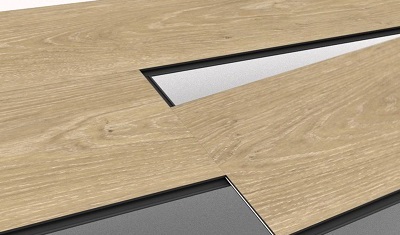
The drawing explains component roles and does not represent measured 3C-Floor layer thicknesses, tests or a specific SKU.
SPC (stone plastic composite) uses a dense mineral-filled polymer core supporting a decorative vinyl surface. The transparent wear layer helps protect the print; the optional backing influences feel and sound.
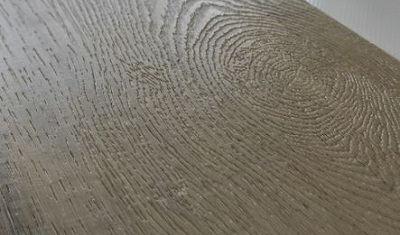
Matte or embossed bathroom SPC may be attractive for wood- and stone-look collections. Texture alone is not proof of compliant slip resistance. Match test documentation, maintenance chemistry and cleaning routines to the destination market.
Request both the plank construction and the installation instructions. A water-resistant product can still allow moisture to reach the substrate at joints, edges or plumbing penetrations. Explore the 3C-Floor SPC product range to shortlist suitable constructions.
Always use instructions for the final approved model. The steps below are decision checkpoints, not a substitute for an installer-approved wet-area detail.
Identify powder room, tub-side floor, hotel bathroom or drained wet area. Check product wet-use approval and local requirements.
Verify it is flat, clean, dry and stable. Address cracks, tile grout lines and moisture conditions to the selected system's requirements.
Review bathtub, shower threshold, toilet, supply pipe and door interfaces before cutting any planks.
Follow the model's joint sequence and permitted layout, and preserve required movement clearances. Do not improvise the locking profile.
Install only the specified flexible sealant, trims, expansion and interface treatments. Avoid pinning a floating floor with rigid finishes.
Check joints, surface damage, thresholds, residual moisture and cleaning instructions. Record the approved product and batch identity.
Some products permit particular perimeter sealant details; other systems have different movement and wet-area requirements. Sealing, caulking or adding underlay without system approval can trap moisture or restrict floating movement. Consult the exact installation document and project waterproofing design. For click-fit terminology, see the click-lock SPC flooring product guide.
Select by water exposure, drainage, installability and maintenance—not one “waterproof” badge.
| Flooring approach | Best-fit scenario | Main caution |
|---|---|---|
| Click-lock SPC | Approved splash-exposed interior bathroom floors outside showers; design-focused renovations | Planks do not form a waterproof membrane; wet-use and perimeter approval are essential. |
| Ceramic / porcelain tile | Bathrooms and showers with correctly designed waterproofing and drainage systems | Tile and grout alone are not the waterproofing layer; slip and grout maintenance matter. |
| Specialist sheet vinyl | Projects needing a specified, suitably sealed or welded resilient floor system | System success depends on compatible substrate, seams, upstands and professional installation. |
| Glue-down LVT | Approved dry-to-damp bathroom applications seeking a low-profile decorative floor | Adhesive, joint and moisture strategy must match substrate and product requirements. |
If the floor includes an open shower or drain, specify an independently approved wet-room system; do not treat an ordinary click-lock floor as a shower membrane.
These verified images come from the 3C-Floor website. They illustrate real SPC product and finish directions; an interior styling photo is not evidence of a completed bathroom installation.


For flooring importers, retail ranges and multi-room projects, consistency is just as important as the first sample.
3C-Floor can discuss colour development, surface texture, backing and private-label packs as part of its OEM SPC flooring program. For wider product selection, the SPC buying guide compares construction, performance questions and purchasing checks across applications.
Share a floor plan or room description, water exposure, target market, finish, wear layer, backing and expected quantity. Ask for proposed samples and model-specific documentation before accepting a bulk quotation.
Short, decision-ready answers to the questions that affect product suitability, ordering and installation.
Yes. An SPC plank with a waterproof rigid core may be suitable for bathroom floors outside showers when the exact product and installation method are approved for that use. Waterproof planks do not automatically create a watertight floor assembly.
Standard click-lock SPC planks should not be assumed suitable inside a shower, around a floor drain or in a continuously wet room. These applications need an explicitly approved waterproofing and drainage system, often using tile or specialist sheet flooring.
Do not judge wet slip resistance by a textured photograph or a waterproof claim. Request wet-condition slip test evidence for the exact surface and intended market, and review bathroom cleaning and maintenance practices.
A 0.3 mm wear layer is a common residential planning option, while a 0.5 mm option may suit higher-turnover residential or selected hospitality projects. Surface traction, joint integrity, finish, and site conditions also matter; confirm the actual model specification.
Bathroom perimeters and penetrations require a detail approved by the flooring manufacturer and project waterproofing designer. Flexible sealant may be specified at some exposed interfaces, but do not eliminate expansion allowances or seal the whole floating floor contrary to installation instructions.
Sometimes, if the existing tile floor is secure, suitably flat and dry, and the proposed SPC click system permits the substrate. Grout joints, finished floor height, transitions, and substrate moisture must be assessed before installation.
No. IXPE or EVA backing can influence comfort and sound, but does not waterproof the room, seal plank joints, correct subfloor irregularities or replace a required moisture-control layer.
3C-Floor offers SPC construction, wear-layer, colour, texture, backing, click-system and private-label packaging options. Buyers should provide their target market, bathroom usage, quantity, required test documents and installation constraints so the proposed SKU can be confirmed.
Tell us where the flooring will be installed and what your buyer needs to approve. We can discuss SPC rigid-core configurations, appearance samples, specifications, OEM cartons and export supply.
Request an application review, samples and a quotation. The final SKU and bathroom installation eligibility should be confirmed in writing.
Request a specification-matched quote ↗Or email: info@3c-floor.com