BUYER 01
Flooring importer
Define destination-market requirements, comparable supplier quotations, carton master data, compliance documents and a clear reorder identifier. For ordinary stock-range planning, see 3C-Floor's importer supply program.



SPC flooring for importers and commercial projects is rigid-core vinyl flooring specified, sampled, packed and released for a defined building use. 3C-Floor supports international buyers planning click-lock SPC planks with selected wear layers, décor and surface finishes, optional backing and OEM packaging. The critical decision is to connect each approved SKU to its project zone, substrate condition, test requirements and delivery phase—so the material arriving at the jobsite matches the product signed off by purchasing and design teams.

Buying a stocked flooring range and buying for a building contract are different transactions. Importers need inventory identification, resale packaging and repeatable supply. Project teams need an approved construction, workable installation conditions and material issued by area and date.
SPC uses a mineral-filled rigid core beneath decorative and protective surface layers. Its moisture-resistant core is useful, but it does not make a concrete slab dry, make the entire floor assembly waterproof, or waive manufacturer installation limits.
Short answer for specifiers: commercial SPC flooring should be selected by project zone, total plank build, wear layer, click profile, attached pad, maintenance conditions and SKU-specific evidence. The importer should lock these details before sampling, approval and staged shipment.
Define destination-market requirements, comparable supplier quotations, carton master data, compliance documents and a clear reorder identifier. For ordinary stock-range planning, see 3C-Floor's importer supply program.
Set room types, accepted samples, material takeoff, design coordination, handover dates and approved alternative products. Focus on the actual build rather than a generic “commercial grade” label.
Confirm substrate readiness, expansion details, layout, carton sorting, installation manual and replacement stock before installation begins. A correct product can still fail when site conditions are outside the written limits.
A useful bid schedule divides the floor into zones that experience different traffic, furniture, moisture and maintenance. The suggestions below are selection prompts, not performance approvals or confirmed stock combinations.
| Project zone | SPC design direction | Check before approval | Possible alternative |
|---|---|---|---|
| Serviced apartments / rental units | Wood-look click plank; practical cleanable surface; 0.3–0.5 mm wear-layer discussion by usage | Subfloor moisture, replacement stock, turnover cleaning, door clearance | Dryback LVT for a low-build bonded system where appropriate |
| Hotel guest rooms | Muted décor; consistent carton lot; optional backing for comfort or acoustic design | Tested floor assembly for acoustics, luggage, cleaning protocol, thresholds | WPC where comfort-led goals outweigh rigid-core priorities |
| Hotel corridors / reception | Evaluate 0.5–0.7 mm wear-layer options and surface finish on a specific model | Suitcase wheels, service carts, slip criteria, entrance grit, joint durability | Specified glued resilient system for challenging rolling traffic |
| Offices / meeting areas | Click plank with coordinated underlay and finish, subject to caster evaluation | Chair castors, point loads, floor-box transitions, daylight exposure | Commercial LVT when fixed installation is preferable |
| Retail / showroom | Wear finish suitable for cleaning and floor traffic; easy-to-maintain visual | Rolling displays, grit, entrance zones, permitted repair method | Specialist commercial flooring if load conditions exceed product approval |
| Wet rooms / exterior / heavy equipment routes | Do not assume standard click SPC is suitable | Standing water, drainage, heat, industrial load, manufacturer exclusions | Site-specific wet-area or industrial system |
For a broader product-category overview, compare the existing commercial SPC flooring range. This page instead focuses on buying controls and the handover from import purchase order to jobsite release.
Use one signed, revision-controlled specification for each model and décor. The table distinguishes published product-family possibilities from facts requiring exact model confirmation; no listed option is an automatic offer, certificate or current-stock guarantee.
| Specification field | Selection / published direction | Buyer approval requirement |
|---|---|---|
| Product type | SPC (stone plastic composite) rigid-core vinyl click plank; other format by inquiry | Exact model, product code, approved sample |
| Overall thickness | Multiple 3C-Floor configurations; distinguish core, wear surface and optional pad | Nominal construction, measurement basis, tolerance and transition height |
| Wear-layer thickness | Published program options include 0.3, 0.5 and 0.7 mm | Actual model thickness and relevant wear/abrasion evidence; not durability inferred from thickness alone |
| Plank / tile dimensions | Size, aspect ratio and joint direction by selected program | Actual length × width, tolerance, pieces/carton and coverage |
| Appearance | Wood- or stone-look décor, matte/embossed/EIR options by inquiry | Décor code, approved print range, surface gloss, bevel and physical control sample |
| Click system | Selected floating click profile, not one universal locking geometry | Joint trial assembly, profile drawing, replacement/repair instructions |
| Backing | IXPE/EVA on selected products; model-specific pad choices | Pad type/thickness, total build-up, acoustic report for the tested assembly if needed |
| Site constraints | Conditioned interior and approved substrate per exact installation instructions | Flatness, moisture testing, sunlight/temperature, movement joints, floor heating rules |
| Performance & evidence | Project- and destination-specific requirements; no blanket claim | Applicable fire, slip, indentation, castor, VOC or acoustic documents matched to tested SKU |
| Packaging & traceability | Neutral or OEM carton/label scope by quotation | SKU, lot and carton ID; area/carton, pallet, weight, release destination, packing list |
Technical background: SPC product data sheet and total thickness versus wear layer selection. Ask for documents for the specific quoted construction.
The most important importer-to-project handover is not a container booking. It is an unbroken chain linking the floor's intended use, the accepted sample, the production lot, the carton label and the installation zone.
List room uses, installed area, substrate type, traffic, cleaning, acoustic targets and handover dates. Include drawings and transitions.
Approve décor, size, wear layer, backing, click profile, technical sheet and any required project-specific test evidence.
Agree checks for visual consistency, dimensions, edge fit, pack identity and quantities. Match the inspection basis to the order.
Prepare cartons/pallets by zone or phase where agreed. Reconcile coverage, piece counts, gross weights and export documents.
Contractor verifies slab and environment, follows model instructions, identifies lot/carton use and retains spare material.
Importers often quote in square metres, factories pack in cartons and jobsite managers request materials by floor, wing or store. Translate all three into one schedule before production so partial deliveries can be checked without manually decoding each pallet.
| Release / zone | Approved SKU & décor | Net installed area | Order quantity | Receiving label & checks |
|---|---|---|---|---|
| Phase A / guest rooms | SKU + revision + shade lot | Measured m² | Area + documented cutting allowance + approved spare stock | Phase A / building / room group / pallet ID |
| Phase B / corridors | Potentially different wear layer & construction | Measured m² | Separate quantity and carton rounding | Phase B / corridor / pallet ID |
| Phase C / lobby | Separately approved surface / performance | Measured m² | Keep high-use zone supply identifiable | Phase C / lobby / control sample |
| Maintenance spares | Approved final SKU and lot | Not counted as installed area | Owner/contractor-agreed reserve | Spare / future replacement / dry storage |
1. Measure the net installed area of each zone from the latest drawings.
2. Apply a project-specific cutting and layout allowance—do not reuse one universal waste percentage across herringbone, diagonal layouts and simple planks.
3. Divide the purchase area by the confirmed m² per carton and round up to whole cartons.
4. Add separately approved owner/maintenance spare cartons and reconcile pallets, mass and loading.
For room-by-room planning, use the 3C-Floor flooring calculator before rounding the final purchase order.
For mixed-SKU container planning, see the wholesale SPC color and reorder guide.
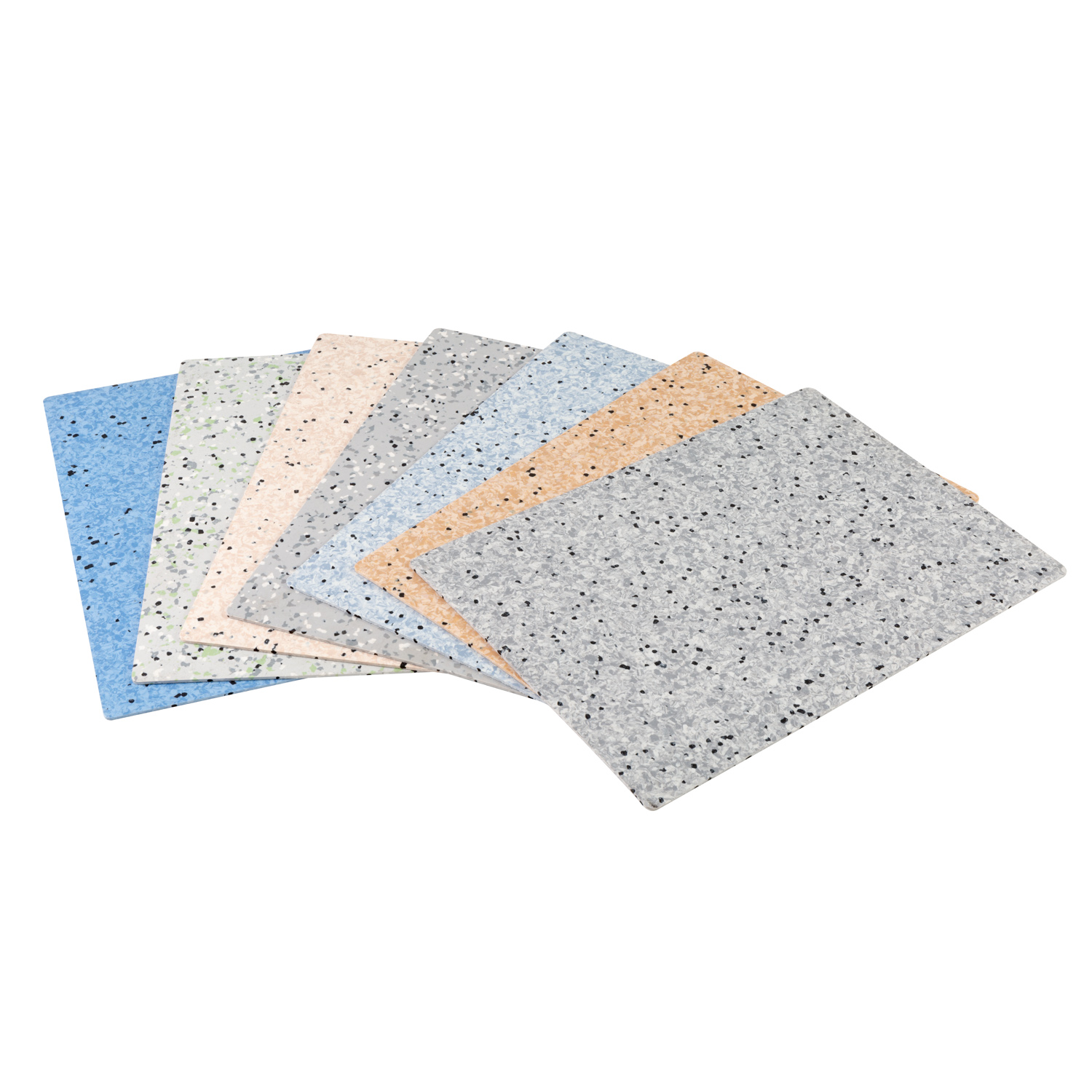
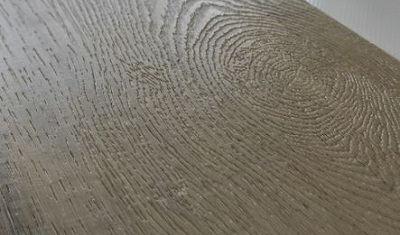
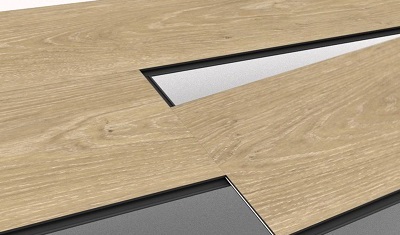
These are actual 3C-Floor website assets, not generic stock photographs. They are useful for understanding what a sample inspection should cover; they do not prove that a particular photograph corresponds to the exact quoted SKU or its test results.
Compare full planks, code labels, visual range, print repetition and realistic lighting before sign-off.

Check the proposed click profile on the actual product, including edge damage, seating height and joint assembly.

This site diagram depicts an ABA multilayer variant. Standard SPC may have a different build—request the cross-section of your selected SKU.
Stone plastic composite flooring can be a practical rigid-core option for conditioned apartment, hospitality, office and selected retail interiors. But specifying a thicker wear layer cannot solve substrate failure, extreme heat, heavy concentrated loads or a missing installation detail.
Click SPC can reduce wet trades where floating installation is permitted and the substrate is prepared to the product's written rules. Review movement joints and door/threshold details early.
An attached IXPE/EVA pad is not an acoustic result by itself. Check the tested full floor assembly; review castor chairs, rolling service carts and static loads with project-specific evidence.
Outdoor use, persistent wet conditions, highly uneven floors, excessive moisture or heavy industrial traffic may require a different system or explicit written product approval.
For bonded commercial spaces, a dryback product may be more appropriate; for certain comfort-led interiors, a WPC alternative may be considered. Compare the exact systems, not marketing categories. The SPC buying guide provides an overview of the tradeoffs, while SPC specification documentation explains which construction and evidence fields belong on the tender sheet.
Specifiers should request written clarification whenever site conditions fall outside the manufacturer's stated installation instructions.
Use the simple on-page worksheet to assemble the essentials before contacting 3C-Floor. It works locally in your browser; no information is sent automatically. The final quote and possible configurations are confirmed by 3C-Floor.
A useful request identifies the actual product and the jobsite that will receive it. The commercial project supply overview explains additional service considerations; for branded cartons or sales collections, reference the private-label samples-to-reorders program.
Build a copyable draft without uploading files or sharing data from this form.
Short answers to recurring importer, estimator and jobsite questions. Final selections must match the exact proposed product, tested assembly, written order and installation instructions.
Commercial-project SPC flooring is rigid-core vinyl plank or tile selected against the building's use, substrate, traffic, maintenance and documentation requirements. Its wear layer, locking joint, surface and installation instructions must be approved for the particular zone.
A 0.5 mm wear layer is a common commercial discussion point and 0.7 mm can be evaluated for more demanding traffic, but thickness alone does not prove fitness. Confirm the precise product's abrasion, indentation, chair-castor and other required results for the planned application.
No. Total plank thickness affects the construction and joint design, whereas the wear layer and tested surface affect appearance under use. Compare the pad, subfloor limits, click fit, traffic and project-specific reports rather than selecting a product by nominal thickness alone.
Sometimes, if the existing surface is structurally sound, sufficiently flat, clean, dry and specifically allowed by the chosen product's installation instructions. Obtain the contractor's substrate assessment and the manufacturer's written installation conditions before approval.
Request a coded physical sample, SKU-specific technical data sheet, installation and maintenance instructions, relevant market and project test reports, packing specification, inspection basis, order revision and shipment documents. Verify that every report covers the actual proposed construction.
Identify cartons and pallets by SKU, décor, approved lot and destination zone or release phase. Reconcile square meters per carton, quantities, pallet weights and packing lists with the project allocation schedule before container loading.
3C-Floor publishes OEM and private-label SPC programs covering décor, surface, wear layer, backing and carton identity. The exact customization, minimum quantities, sample approval and production plan must be confirmed in a written quotation.
Tell , 3C-Floor which zones you are supplying, what construction the architect or contractor needs, how much flooring is required by release and where it must be shipped. Request a matching sample and an itemized factory quotation before the purchase order is locked.
Discuss Your Project Specification ↗