Finished thickness
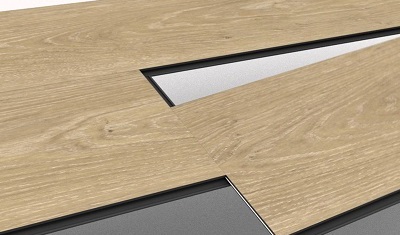
The installed plank build, including attached backing when present. This controls transition and door-clearance planning.



Construction, test evidence & order details—on one reference page. An SPC flooring spec sheet should identify the exact rigid core vinyl product, separate overall thickness from core and pad thickness, state the wear layer and dimensions, and connect performance claims to supporting documents.
Use this technical reference to prepare comparable quotations for import, wholesale, private-label and commercial projects. 3C-Floor offers SPC construction, décor, surface, backing and packaging options. The tables below explain published configuration choices and the fields buyers should confirm; final values, tolerances and reports must match the selected SKU. Request a product-specific technical data sheet and coded sample before approving bulk supply.

A complete SPC flooring technical data sheet includes product identity and revision, overall and core thickness, wear layer, effective plank dimensions, surface, edge, backing, locking profile, product-specific test evidence, installation conditions and packing data. Separate nominal values, measured results and acceptance limits. A brochure describes a collection; a final spec sheet must describe the exact construction being ordered.
Read the available directions alongside the approval fields. This is a range-level planning reference, with final SKU data confirmed by 3C-Floor.
Document status: specification planning. Published options are not a test certificate, guaranteed stock list or approved product submittal. Confirm the combination, measurement basis, acceptance limits and supporting evidence in writing.
| Specification field | Published options / information to record | What to confirm before approval |
|---|---|---|
| Product identity | SPC rigid core vinyl plank / tile; collection, décor code, SKU and sample reference. | Record sheet revision, issue date and the quotation or purchase-order reference. |
| Nominal thickness | Published OEM thickness options: 3.2 / 4 / 4.5 / 5 / 6 / 7 mm; custom constructions by review. | State whether the number includes the pad. Confirm final finished thickness and its tolerance. |
| Body & core thickness | Body = complete plank excluding attached pad. Core = rigid SPC layer only. | Request both values where required; do not infer core thickness from the overall value. |
| Transparent wear layer | Published options: 0.2 / 0.3 / 0.5 / 0.7 mm. | Use one controlling unit; agree layer measurement method and acceptance tolerance. |
| Plank / tile dimensions | Published formats: 1210 × 178 mm; 1520 × 230 mm; 610 × 305 mm. Other sizes by confirmation. | Specify length × width, effective installed coverage, dimensional tolerance and layout. |
| Rigid core | Stone Plastic Composite: calcium carbonate, PVC resin and stabilizers. | Confirm the selected construction and consistency controls. Density and formulation data require SKU-specific confirmation. |
| Surface & décor | Wood / stone visuals; matte, embossed and EIR surface directions. | Approve full-board décor, gloss, texture alignment, repeat pattern and visual variation. |
| Edge treatment | Bevel or edge finish according to the selected product specification. | Record edge geometry and color on the approved sample; check assembled joint appearance. |
| Attached backing | IXPE / EVA / cork options; confirm an unbacked construction if required. | Record material, thickness, density and bond quality. Backing must match relevant reports. |
| Locking & installation | Click-lock floating installation; selected locking profile by product confirmation. | Confirm profile identity, installation method, compatibility and licensing documents where specified. |
| Dimensional / load performance | Request test method, standard edition, result, unit and acceptance criterion. | Match dimensional stability, curl, indentation and relevant load checks to the quoted construction. |
| Fire / slip / indoor air | Destination-market and project requirements to be stated in the RFQ. | Request current, applicable documents. A generic claim is not a SKU-level result. |
| Acoustic performance | Confirm the metric, tested plank and pad, floor assembly and supporting report. | Compare results using equivalent methods and assemblies. Avoid assuming a building-level rating from pad thickness. |
| Installation limits | Subfloor flatness and moisture, expansion spacing, temperature, maximum layout and heating compatibility. | Obtain product-specific instructions; no universal tolerance or temperature limit is declared here. |
| Packing & mass | Pieces/carton, m²/carton, net/gross weight, cartons/pallet and pallet dimensions. | Check units, effective coverage, handling limits and the confirmed loading plan. |
| OEM & supply terms | Neutral / private-label cartons, barcode, instructions and pallet markings. | Confirm quantity, MOQ, lead time, quotation terms and warranty scope for the actual order. |
Need an exact construction? Browse the 3C-Floor SPC product range, then request the matching data sheet and physical sample.
A quotation marked “6 mm SPC” is incomplete until the supplier states which layers are included.
The installed plank build, including attached backing when present. This controls transition and door-clearance planning.
The wear layer, decorative layers and rigid body together. Body thickness is not the same as core thickness.
The mineral-filled polymer layer supporting the milled joint. Confirm its value separately if it is part of the order specification.
The transparent layer above the décor. It is included in the plank body; it is not added again to a stated body thickness.
Arithmetic illustration only, not a declared 3C-Floor SKU. The 5.0 mm body already includes its surface layers; its core is therefore not automatically 5.0 mm.
For comparisons between constructions, use the SPC thickness and layer selection guide. More thickness does not establish wear performance or correct an uneven subfloor.
One mil is one-thousandth of an inch: 1 mil = 0.0254 mm. Rounded market labels should not replace the controlling value and agreed tolerance.
| Millimeters | Calculated mil | Rounded label |
|---|---|---|
| 0.20 mm | 7.87 mil | 8 mil |
| 0.30 mm | 11.81 mil | 12 mil |
| 0.50 mm | 19.69 mil | 20 mil |
| 0.70 mm | 27.56 mil | 28 mil |
Example: 20 mil converts to 0.508 mm, rather than exactly 0.500 mm. Confirm how nominal and measured values will be assessed.
Read each report with the product identity, construction, standard edition, method, result and project criterion together.
| Evidence area | Relevant reference | What the buyer should verify |
|---|---|---|
| Rigid core product specification | ASTM F3261 covers resilient flooring with a rigid polymeric core. The active ASTM listing checked for this page is F3261-26. | Specify the edition required by the contract. An older report is not automatically evidence of compliance with a newer edition. |
| Wear-layer measurement | ISO 24340 describes measurement of layer thickness in resilient floor coverings. | Identify which layer was measured, the test method and the accepted nominal / measured limits. |
| Dimensional stability & curl | ISO 23999 addresses dimensional stability and curling after heat exposure. | Request result and units, specimen construction and exposure conditions; separate length change from vertical deformation. |
| Impact sound | ASTM E492 concerns floor-ceiling assemblies; E989 provides single-number impact-noise metrics. E2179 addresses floor-covering effectiveness on concrete floors. | Confirm the exact assembly and whether the result is IIC, ΔIIC or another metric. Do not compare unlike metrics or transfer results between different assemblies. |
| Indoor-air claims | Request the applicable emissions report or product certification, including its scope and validity. | If FloorScore is required, check the current product listing or certificate. A factory management certificate does not prove flooring emissions performance. |
| Fire, slip & loads | Request the destination-market method, project requirement and exact tested construction. | Check mounting, backing, substrate, wet/dry conditions or load conditions where relevant. No fire class, slip rating or load result is declared on this reference page. |
A report for another pad, thickness or product family needs a documented explanation of applicability to the quoted SKU.
Keep report number, laboratory, issue date, specimen description, results and conditions. A cropped logo or “pass” badge is insufficient.
Document the project limit, units and required method before testing or ordering. Avoid accepting a value whose test conditions are unknown.
Backing selection is part of evidence matching. Review IXPE flooring underlayment and attached SPC backing when pad thickness, acoustic goals or extra-underlay compatibility matter.
A physical sample should confirm the written construction, color, texture and assembled fit. Photographs help shortlist products; dimensions and performance require measurement or testing.


Confirm the profile and installation method through the click-lock SPC flooring specification guide. Thickness and a locking-system name alone do not establish joint quality.

Record foot traffic, cleaning, furniture movement, moisture conditions and transition height. A 0.3 mm wear layer is a common residential planning direction; higher demands may justify 0.5 mm, subject to the exact product.
Review repeated traffic, luggage, rolling chairs, entrance grit and cleaning chemistry. A 0.5 or 0.7 mm wear-layer direction may be considered, but commercial suitability also needs joint, load, installation and project-document checks.
Request assembly-specific sound evidence and the installation moisture strategy. An attached pad does not level the substrate or replace required vapor control. Continuously wet rooms, outdoor exposure and unconditioned spaces require a separately approved system.
Use the SPC buying guide for application-based selection to refine the proposed construction before requesting a final sheet.
Carton coverage: effective length (mm) × effective width (mm) × pieces per carton ÷ 1,000,000 = m² per carton. Exclude locking projections if they are outside the installed coverage.
3C-Floor supplies SPC, WPC, LVT and PVC flooring roll categories, with SPC construction selection, sample evaluation, private-label packing and export coordination. Use the OEM SPC flooring program to align product approval, carton artwork, labels and repeat-order references.
Direct answers about technical data, units, product evidence and quotation preparation.
An SPC flooring spec sheet is a technical record of a specific rigid core vinyl plank or tile. It identifies the product, construction, dimensions, wear layer, backing, locking system, performance evidence, installation limits and packaging. A range-level reference helps prepare an RFQ; an approved SKU-specific sheet is needed for product acceptance.
The thickness basis must be stated explicitly. Overall thickness may include the attached pad, while some quotations describe the plank body before backing. Record overall thickness, body thickness and pad thickness separately. Rigid core thickness is a further measurement because the body also contains the wear layer and decorative layers.
They are close, but not exactly equal. One mil is 0.0254 mm, so 20 mil equals 0.508 mm and 0.5 mm equals about 19.69 mil. Commercial descriptions often round the conversion. Specify the controlling unit, nominal thickness and agreed acceptance tolerance in the order.
Commercial approval depends on the complete product and installation system. Review wear layer, joint performance, dimensional stability, rolling-load suitability, surface cleanability, fire and slip requirements, indoor-air documentation and installation limits. A thickness or wear-layer number alone does not establish a commercial use class or project approval.
No. A water-resistant SPC plank does not waterproof the subfloor or room. Moisture can still affect the substrate, perimeter, adjoining materials and conditions beneath the flooring. Follow the product-specific installation instructions for substrate moisture assessment, vapor control, wet-area detailing and expansion spacing.
Only when the metric, test method and floor assembly are comparable. Identify the exact plank and pad, slab or substrate, ceiling arrangement and test conditions. IIC, delta IIC and impact sound reduction in decibels describe different measurements; a single headline number cannot be transferred automatically to another building.
3C-Floor offers SPC specification and private-label options covering construction, wear layer, dimensions, surface, backing, locking profile and packaging. Send the intended application, market and product requirements so the available combination, sample, documentation and commercial terms can be confirmed before production.
Send the product or sample reference, destination market, application, quantity, thickness basis, wear layer, plank size, surface, backing and locking requirements. Include the required test methods or project criteria, packaging, destination port and delivery window. Request the final data sheet and supporting reports for the exact quoted construction.
Send the application, target market, quantity, construction and required documents. Ask 3C-Floor to confirm the technical sheet, physical sample and packing specification together.