Surface + maintenance
Discuss expected traffic, stains, furniture protection, plank replacement and cleaning. A thicker wear layer cannot prevent every scratch or dent.



The buyer’s field reference · Updated 18 October 2026
SPC flooring terms describe a plank’s core, protective layers, dimensions, surface, backing and installation system. SPC usually means stone plastic or stone polymer composite; wear layer, mil, IXPE, EIR and click-lock describe different parts or attributes. These labels help importers, distributors, private-label brands and project buyers compare equivalent products and avoid ambiguous quotations.
Use this glossary to translate flooring terminology into precise supplier questions. Keep overall thickness separate from wear layer, identify the pad and locking profile, and match performance claims to the exact product and test scope. 3C-Floor supplies SPC flooring and offers construction, décor, surface, backing and private-label options that can be discussed against your market and application.
A practical SPC flooring glossary
Each definition is paired with a procurement check. Start with the 3C-Floor SPC flooring range → when you need a product, then use these terms to make its construction unambiguous.
No terms match your search. Try a shorter word or clear the search to browse all definitions.
Identify the product before comparing performance.
| Term | Plain-English meaning | What to confirm with the supplier |
|---|---|---|
| SPC | Stone plastic composite, also called stone polymer composite: a mineral-filled PVC rigid core used in vinyl flooring. Industry references may use solid polymer core. | Confirm the actual core construction; an acronym alone does not specify quality. |
| Rigid core | A category of multilayer resilient flooring with a stiff polymeric core. SPC is one construction within this category. | Do not assume every rigid core product is SPC; identify the core type. |
| LVT / LVP | Luxury vinyl tile / luxury vinyl plank. These names describe luxury vinyl products and formats; they do not, by themselves, identify a core. | Ask whether the product is flexible, SPC or another rigid construction. |
| WPC | A commonly foamed rigid-core flooring construction, often marketed as wood plastic or wood polymer composite; industry terminology also uses expanded polymer core. | Compare the actual construction and test evidence rather than the expanded acronym. |
| Wear layer | The clear protective layer over the printed décor. Its thickness is distinct from both the surface coating and overall plank thickness. | State the nominal thickness, controlling unit, measurement method and acceptance tolerance. |
| UV-cured coating | A thin surface finish hardened using ultraviolet light; performance depends on its formulation and application. | UV-cured describes curing, not a guarantee against fading, scratching or outdoor exposure. |
| Décor film | The printed layer that supplies the wood, stone or other visual design in a conventional multilayer SPC plank. | Approve the color, repeat pattern and full-board appearance using physical samples. |
Separate what is measured from how it is advertised.
| Term | Plain-English meaning | What to confirm with the supplier |
|---|---|---|
| Overall thickness | The complete finished plank thickness, including factory-attached backing when present. Supplier descriptions may use a different thickness basis. | Write body thickness, attached-pad thickness and overall thickness separately. |
| Body thickness | Thickness of the plank before an attached pad. The body includes its surface layers and rigid core. | Do not call a 5 mm body a 5 mm core without a separate core measurement. |
| Core thickness | Thickness of the rigid structural core alone, excluding the décor, wear layer and attached backing. | Request a layer breakdown if core thickness is a contractual requirement. |
| Mil / mm | A mil is 0.001 inch, equal to 0.0254 mm. A millimeter is a different, much larger unit. | A 20 mil wear layer is 0.508 mm; never interpret 20 mil as 20 mm. |
| Nominal value / tolerance | Nominal is the stated target value; tolerance defines the agreed allowable variation around the specified value. | Distinguish nominal, minimum and measured values before approving an order. |
| Effective dimensions | The installed length and width that contribute to coverage, which can differ from dimensions including projecting locking edges. | Use effective coverage to reconcile plank counts and square meters per carton. |
Specify what a buyer can see and feel.
| Term | Plain-English meaning | What to confirm with the supplier |
|---|---|---|
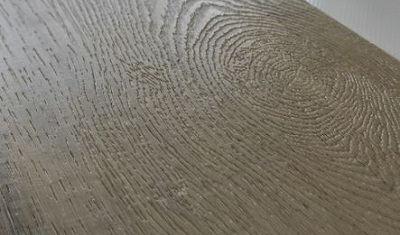
| EIR | Embossed in register: the surface texture follows features of the printed design, such as wood grain or knots. | Inspect print-to-texture alignment on a full plank; EIR is not a wear or slip rating. |
| Embossing | A textured surface pattern. Conventional embossing need not line up with the printed grain. | Approve texture depth and cleanability alongside the visual design. |
| Bevel / micro-bevel | An edge treatment that makes the joint between neighboring planks more visible; micro-bevel usually describes a smaller treatment. | Agree edge geometry, color and the assembled joint appearance on a reference sample. |
| Gloss level | The surface sheen, such as matte or satin. Descriptive names are not a universal measurement scale. | Use a reference sample and an agreed measurement basis if gloss consistency matters. |
| Décor repeat / shade lot | Décor repeat describes recurring print faces; shade lot identifies a production color grouping. Different cartons may contain intended visual variation. | Review several assembled planks and keep batch identification for replenishment. |
The plank and the installation system must work together.
| Term | Plain-English meaning | What to confirm with the supplier |
|---|---|---|
| IXPE | Irradiation-crosslinked polyethylene foam, used as an attached backing or underlay material in some flooring systems. | Confirm pad thickness, density, compression behavior and the tested floor assembly. |
| EVA | Ethylene-vinyl acetate, a polymer used in some cushioning backings and underlays. Material name alone does not predict acoustic performance. | Compare the approved backing construction and test scope, not EVA versus IXPE labels alone. |
| Attached pad / underlayment | An attached pad is factory-bonded to the plank. Underlayment is a broader term for a supporting layer below flooring. | Check whether additional underlayment is permitted; extra cushioning can affect joint support. |
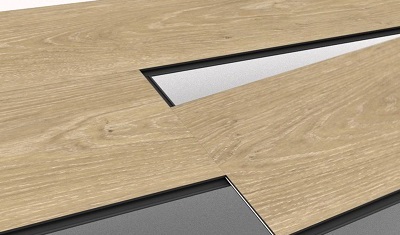
| Click-lock | A milled mechanical joint connecting adjacent planks. Angle and fold-down installation methods depend on the selected profile. | Confirm profile identity, installation instructions and compatibility; profiles are not interchangeable. |
| Floating floor | An installation in which the connected flooring is not bonded over its area to the substrate. | Follow the approved rules for fixed cabinetry, transitions and perimeter movement. |
| Expansion gap | Clearance left at walls, columns and other restraints so a floating floor can move as intended. | Use the exact product instructions; gap size and maximum layout are product-specific. |
| Subfloor flatness | How much the substrate surface deviates over a stated measurement distance. Flatness is different from being level. | Measure against the product limit; a rigid plank does not repair an uneven substrate. |
| Moisture / vapor barrier | A moisture-control layer selected for the substrate and flooring system. A foam pad is not automatically a vapor barrier. | Confirm required moisture assessment, barrier specification and installation detailing. |
| Acclimation | Conditioning flooring to the installation environment when the manufacturer requires it. Procedures vary by product. | Follow the selected SKU instructions for storage, room conditions and any waiting period. |
A claim needs a product, a method and a result.
| Term | Plain-English meaning | What to confirm with the supplier |
|---|---|---|
| Waterproof / water-resistant | Waterproof claims often refer to resistance of the plank to water damage. Water-resistant describes limited resistance under stated conditions. | Read the claim scope: joints, room waterproofing and substrate moisture are separate issues. |
| Abrasion / scratch / indentation | Abrasion is wear from repeated rubbing; a scratch is surface damage; indentation is deformation under load. These are different failure modes. | Request the relevant evidence for traffic and furniture or rolling loads. |
| Dimensional stability | The tendency of a product to retain its dimensions under specified exposure conditions, often including temperature change. | Ask for method, conditions and results; stability does not mean zero movement. |
| IIC / ΔIIC | Impact Insulation Class describes tested floor-ceiling impact sound performance; delta IIC describes improvement under a specified comparison method. | Match the slab, ceiling, plank, pad and method. Different acoustic metrics are not interchangeable. |
| VOC / FloorScore® | VOCs are volatile organic compounds. FloorScore is a certification program focused on indoor-air emissions from qualifying flooring products. | Verify the exact product and current certificate scope. Low emissions does not mean zero emissions. |
| Use class / AC rating | A use class links suitability to a defined classification system. AC abrasion classes are commonly associated with laminate-flooring specifications. | Do not convert an AC label or wear-layer thickness into an SPC commercial approval without an applicable basis. |
| ASTM F3261 | A specification for modular resilient flooring with a rigid polymeric core. A standard reference is not a product certificate. | Record the required edition, exact construction, applicable report and acceptance criteria. |
Make the technical description repeatable in a purchase order.
| Term | Plain-English meaning | What to confirm with the supplier |
|---|---|---|
| SKU / TDS | SKU is a stock keeping unit identifying a product configuration. TDS means technical data sheet. | The sample, quote, TDS, carton and purchase order should point to the same configuration. |
| OEM / private label | OEM describes manufacturing to an agreed buyer program. Private label means selling under the buyer’s brand; customization depth varies. | Define décor, construction, artwork, documentation and approval responsibilities in writing. |
| Golden sample | A retained, identified reference sample approved for an order. It records agreed appearance and construction. | Pair the sample with measurable acceptance limits; one sample cannot represent every allowed shade. |
| MOQ / lead time | MOQ is minimum order quantity. Lead time is the period needed for a defined stage of supply. | Confirm quantity per décor, mixed-order rules and when the production or delivery clock starts. |
| Carton coverage / loading plan | Carton coverage is installed area per carton; a loading plan combines quantities, pallet dimensions, mass and transport limits. | Reconcile pieces, effective area, net/gross weights and final shipment quantities. |
| Incoterms® | ICC trade rules allocating selected delivery responsibilities, costs and risks between seller and buyer. | State the rule, named place and edition. Agree payment and product acceptance separately. |
Building a whole specification? The SPC flooring specification sheet guide → connects these fields to product identity and supporting documents.
The unit trap
A quote can use millimeters for the plank and mils for the wear layer. Normalize both units, then compare the same physical layers. Rounded market labels need an agreed nominal value and tolerance.
The body already contains its wear layer and décor. A 0.5 mm wear layer within that body is not added again. The rigid core alone is a further, separate measurement.
Arithmetic illustration only; this is not a confirmed 3C-Floor SKU or availability statement.
For construction choices, use the SPC body, pad and overall thickness guide →.
Formula: mm = mil × 0.0254. Conversion explains a dimension; it does not assign a wear class.
| Nominal label | Exact conversion | Reading note |
|---|---|---|
| 8 mil | 0.2032 mm | Close to 0.20 mm |
| 12 mil | 0.3048 mm | Close to 0.30 mm |
| 20 mil | 0.5080 mm | Close to 0.50 mm |
| 28 mil | 0.7112 mm | Close to 0.70 mm |
| 30 mil | 0.7620 mm | Different from 0.70 mm |
These are mathematical conversions, not a list of stocked options or performance claims. 0.50 mm is approximately 19.69 mil; it is not exactly 20 mil.
Specify the controlling unit, nominal or minimum requirement, method and acceptance limit. Do not let a rounded carton label silently replace the purchase specification.
A visual vocabulary

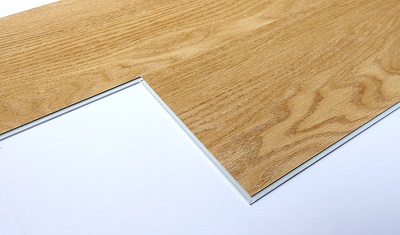

From shorthand to a specification
It is incomplete shorthand until the supplier defines each field. The example below shows how to request clarification; it is not a product offer.
Confirm 6.0 mm finished overall thickness and that 0.50 mm wear layer is included within the 5.0 mm body. Ask for the core thickness only if separately required.
Approve décor, EIR alignment, bevel and gloss. Identify the click profile and IXPE construction; the pad name alone is not an acoustic result.
Add effective plank size, quantity, tolerances, application, evidence, packing and delivery terms. Give the approved combination a sample reference and SKU.
Commonly confused terms
| What a quote says | What it does not establish | Ask this instead |
|---|---|---|
| “6 mm SPC” | Which layers are included. | Is that finished thickness with pad, or plank body only? |
| “20 mil” | Overall plank thickness or a commercial use class. | Is this the clear wear layer, and which unit controls acceptance? |
| “EIR surface” | Slip resistance or scratch-proof performance. | Can we inspect registration and review relevant surface evidence? |
| “Acoustic pad” | A building-level sound rating. | Which metric, test method, floor-ceiling assembly and product were tested? |
| “Waterproof” | A waterproof room or permission to ignore subfloor moisture. | What does the claim cover, and what site moisture control is required? |
| “Certified / tested” | That a report covers the quoted SKU or every advertised claim. | What is the report scope, date, construction and applicable result? |
Discuss expected traffic, stains, furniture protection, plank replacement and cleaning. A thicker wear layer cannot prevent every scratch or dent.
Define rolling loads, fire and slip requirements, cleaning practices and permitted installation. Commercial suitability depends on the complete approved system.
Check acoustic assembly, door clearance, flatness, moisture and transitions. Treat heating systems or intense sunlight as conditions needing specific approval.
For application-led selection beyond definitions, use the SPC buying guide and project selection matrix →.
3C-Floor · factory sourcing support
3C-Floor manufactures and supplies SPC flooring alongside WPC, LVT and PVC flooring rolls. Its SPC offering includes décor, size, wear-layer, surface, backing and private-label packaging options, subject to the selected construction and order confirmation.
Importers and distributors can use one agreed vocabulary across sample requests, quotations, cartons and repeat orders. Request the available combination, sample and matching technical documentation together.
For branded collections, explore the OEM and private-label SPC manufacturing program →.
Send a specification for review ↗SPC flooring inquiry — terminology confirmed
Target country / application / traffic:
Quantity (m²) and quantity per décor:
Plank body (mm) + attached pad (mm) = overall (mm):
Wear layer: nominal value, controlling unit and tolerance:
Effective plank size / carton coverage:
Décor code / texture / gloss / bevel:
Click profile / backing material and density:
Subfloor / moisture / heating / acoustic requirements:
Required reports and applicable construction:
Reference sample / private-label artwork / packaging:
Destination port / delivery terms / requested timing:
Please confirm available options, sample plan and quotation.This checklist collects buyer requirements; it does not declare a certified specification, price, MOQ or delivery commitment.
Direct answers
Short explanations for the terms most likely to change how a flooring quotation is understood.
SPC commonly means stone plastic composite or stone polymer composite in flooring marketing. The core usually combines a mineral filler with PVC and other ingredients. RFCI also uses solid polymer core terminology. Confirm the actual construction instead of judging a floor by the acronym alone.
SPC is one rigid core vinyl construction. Rigid core is the broader construction category, while LVP means luxury vinyl plank and describes a product format. A quotation should identify the plank format and the core construction separately.
Overall thickness describes the complete finished plank, including attached backing where specified. The wear layer is the clear protective layer over the décor and is already part of the plank body. A thicker overall plank does not automatically have a thicker wear layer.
No. One mil equals 0.0254 mm, so 20 mil equals 0.508 mm and 0.5 mm equals approximately 19.69 mil. These labels are often rounded in marketing. State the controlling unit and agreed tolerance in the order.
EIR means embossed in register: the surface texture aligns with features of the printed design. A micro-bevel is a small edge treatment that defines plank joints. Both affect appearance; neither establishes a slip rating, wear class or commercial approval.
Not automatically. IXPE describes a foam material, while a moisture barrier performs a separately specified function. Confirm the approved moisture-control system and whether an additional underlay is allowed for the selected SPC plank and substrate.
No. A plank’s resistance to water damage does not by itself make joints, perimeters, penetrations or the subfloor watertight. Follow the product-specific wet-area and substrate instructions, and obtain separate waterproofing where the project requires it.
Include product and sample references, application, target country, body and pad thickness, wear layer with units, effective size, décor, texture, bevel, click profile and backing. Add quantity per décor, required evidence, packaging, destination port and delivery terms. Ask 3C-Floor to confirm the available construction and sample before bulk approval.
Make every quoted layer clear.
Share your application, country, quantity, thickness basis, wear layer, décor, backing and destination port. Ask for a matched sample, data sheet and flooring quotation.