- 0086 13321818576 (Steven Lee)
- info@3c-floor.com
SPC flooring thickness should be selected by application, not by the assumption that thicker is always better. For practical specification planning, many residential programs sit around 4.0–5.5 mm, busy homes and rental programs often move into 5.0–6.5 mm, standard commercial projects commonly use about 5.0–6.5 mm, and heavier public-use programs may justify 6.0–8.0 mm. The final choice must also match the wear layer, rigid-core quality, click profile, attached backing, subfloor condition, acoustic target and project documentation.

The best SPC flooring thickness is the thinnest construction that still meets the room's traffic, joint-strength, acoustic, transition-height and project requirements. For many homes, 4.0–5.5 mm is a practical starting point. For apartments, rentals and standard commercial spaces, 5.0–6.5 mm is commonly specified. For heavier public interiors, 6.0–8.0 mm may be appropriate when the full construction supports the use. Always compare total thickness, core thickness, wear layer and attached pad separately.
Added thickness primarily changes the rigid plank build, underfoot mass and the space available for the locking profile. It does not automatically create a better wear surface.
The transparent wear layer protects the décor from repeated traffic. A 0.3 mm, 0.5 mm or 0.7 mm wear layer should be selected separately from total plank thickness.
IXPE or EVA may be attached below the core. Ask whether a quoted 6 mm floor is a 6 mm plank, or a thinner plank plus an attached pad.
For a broader construction checklist, see the 3C-Floor SPC Buying Guide, which compares thickness with wear layer, backing, click profile, surface, subfloor and documentation.
The table below is a purchasing framework, not a universal warranty statement. Final selection should be confirmed against the exact SKU, installation conditions, local requirements and approved samples.
Useful for bedrooms, low-traffic homes and renovation lines where floor height and cost are important. Because the plank is thinner, installers and buyers should pay close attention to subfloor flatness and click quality.
A practical range for family homes, apartments and rental programs. It can combine a solid rigid-core feel with residential or stronger wear-layer options without automatically moving into a heavier project build.
Often considered for apartments, hospitality, offices and retail where traffic, attached backing, transition details and joint performance need more attention. A 0.5 mm wear layer is a common commercial reference.
Appropriate for selected higher-spec or heavier-use programs when the complete construction, test scope and installation plan support the application. Extra thickness should not be purchased merely as a quality badge.
| Planning Thickness | Typical Positioning | Wear Layer Direction | Subfloor / Installation Priority | Buyer Check Before Ordering |
|---|---|---|---|---|
| 4.0–4.5 mm | Bedrooms, value residential, low-traffic renovation | 0.3 mm is common residential positioning | Flat, well-prepared base is especially important | Confirm core thickness, milling, seam fit and total floor height |
| 5.0–5.5 mm | Mainstream homes, busy residential, rentals | 0.3 or 0.5 mm depending on traffic and sales position | Check transition height, pad option and click engagement | Compare with the approved sample, not the headline thickness alone |
| 6.0–6.5 mm | Apartments, hospitality, offices, standard retail | 0.5 mm is a common commercial baseline | Coordinate attached backing, sound target and rolling-load exposure | Ask whether total thickness includes pad and whether project documents match the SKU |
| 7.0–8.0 mm | Higher-spec collections and selected heavier-use projects | 0.5–0.7 mm where traffic and project requirements justify it | Review door clearances, transitions, subfloor and expansion details | Verify that extra thickness brings a real structural or project benefit |

A supplier's thickness description can refer to the finished plank, while another quotation may separate the rigid-core board from an attached IXPE or EVA pad. That difference can make two apparently identical “6 mm” offers structurally different.
For surface-life planning, use the SPC Wear Layer Guide: 12 mil vs 20 mil rather than treating total board thickness as a substitute for wear-layer selection.
Commercial buyers usually need more than a thicker plank. They also need wear-layer planning, stable joints, surface cleanability, backing selection, project documentation and repeat-order consistency.
Planning range: often 4.0–5.5 mm for normal homes; 5.0–6.5 mm for busier homes, rentals or premium positioning.
Planning range: about 5.0–6.5 mm for offices, hospitality and mainstream retail programs.
Planning range: around 6.0–8.0 mm where the whole system supports the heavier duty.
For project-specific use cases, compare the commercial SPC flooring guide before finalizing thickness and wear layer.
They perform different jobs. A buyer should specify all three because no single number fully describes SPC flooring quality or suitability.
| Specification | Main Job | What It Can Improve | What It Does Not Fix | RFQ Wording |
|---|---|---|---|---|
| Total / core thickness | Defines much of the rigid plank build and space for click geometry | Substantial feel, structural profile, certain joint and project configurations | Surface abrasion, poor core formulation, bad milling, uneven subfloor | “State total finished thickness and rigid-core thickness separately.” |
| Wear layer | Protects printed décor from repeated surface traffic | Longer appearance retention under suitable use | Dents from concentrated loads, poor click joints, subfloor defects | “Quote 0.3 / 0.5 / 0.7 mm and identify the UV finish.” |
| IXPE / EVA backing | Adds a cushion layer and can support acoustic positioning | Installation convenience and sound/comfort direction | Subfloor leveling, moisture remediation, every acoustic requirement | “State material, thickness, density and whether pad is included in total thickness.” |
| Click profile | Connects planks and controls seam performance | Installation efficiency and joint integrity | Incorrect floor preparation or unsuitable product selection | “Provide click profile, assembly sample and applicable licensing/document details.” |
If acoustic comfort is a project priority, compare acoustic SPC flooring with IXPE / EVA backing options instead of simply selecting the thickest plank.
No. Thicker SPC flooring does not replace subfloor preparation. A more substantial rigid plank may feel less flexible, but click flooring still needs the flatness, moisture condition, expansion spacing and transition planning required by the specific product and installation system.
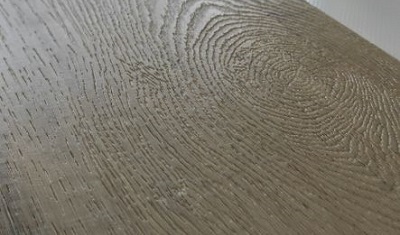
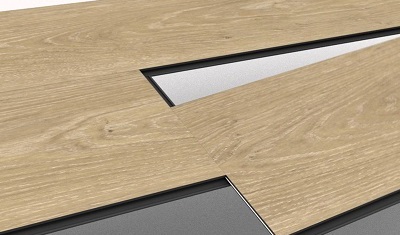
These images are hosted on 3C-Floor and show the product attributes buyers should inspect when comparing thickness quotations.


The most expensive mistake is comparing only “price per square meter for 5 mm SPC.” Make every supplier quote the same construction so that cost, sample and future production can be compared on equal terms.
Write total thickness, core thickness, wear layer, click profile, surface, bevel, backing and plank size into the RFQ.
Record the sample code and visual details so the quotation, purchase order, carton label and bulk order refer to the same item.
Keep décor, gloss, embossing, backing, click system and packaging references so a repeat shipment does not drift from the approved SKU.
For private-label collections, use the OEM SPC flooring program to align thickness with décor, backing, labels, cartons and sample boards.
SPC flooring is sold in multiple total-thickness constructions. For 3C-Floor specification planning, the main practical range is around 4.0–8.0 mm across residential through heavier commercial uses. Exact models can vary, so buyers should confirm the complete SKU rather than treating one market range as universal.
For many homes, 4.0–5.5 mm is a practical starting range. Busy families, pets, rental turnover or a stronger product position may justify 5.0–6.5 mm. The better choice is the construction that also matches the wear layer, click system, backing and subfloor—not simply the thickest plank.
Yes. A properly made 5 mm SPC floor can suit many residential and selected light-commercial programs. Check the core, click profile, wear layer and installation base before deciding. A poor 6 mm floor is not automatically better than a well-controlled 5 mm floor.
Not automatically. A 6 mm board can provide a more substantial construction or different joint/backing options, but those benefits only matter when core formulation, milling precision, dimensional consistency and installation conditions are also controlled.
For offices, hotels and standard retail, about 5.0–6.5 mm is a common planning range, typically with a 0.5 mm commercial-positioned wear layer. Heavier public areas may justify 6.0–8.0 mm and a heavier wear layer when the traffic pattern, project requirements and product-specific documentation support it.
Thickness alone is not an acoustic rating. More mass and an attached pad can change underfoot sound and comfort, but acoustic performance should be specified through the complete construction, including IXPE/EVA material, thickness, density, subfloor and the relevant project requirement.
Sometimes yes, sometimes no. Ask the supplier to separate finished total thickness, rigid-board thickness, wear-layer thickness and pad thickness. This prevents a 5 mm board plus 1 mm backing from being compared incorrectly with a true 6 mm board.
Neither replaces the other. Total/core thickness influences structural build and click geometry, while the wear layer protects the decorative film from surface traffic. Strong specifications match both to the application and verify them against the approved sample.
3C-Floor can help importers, flooring distributors, private-label brands and project buyers compare SPC thickness together with wear layer, surface, click system, backing and packaging. For a useful quotation, include the application, total area or order quantity, target thickness, wear layer, size, décor, surface, backing, destination-market requirements and destination port.
Website: www.3c-floor.com · Email: info@3c-floor.com