- 0086 13321818576 (Steven Lee)
- info@3c-floor.com
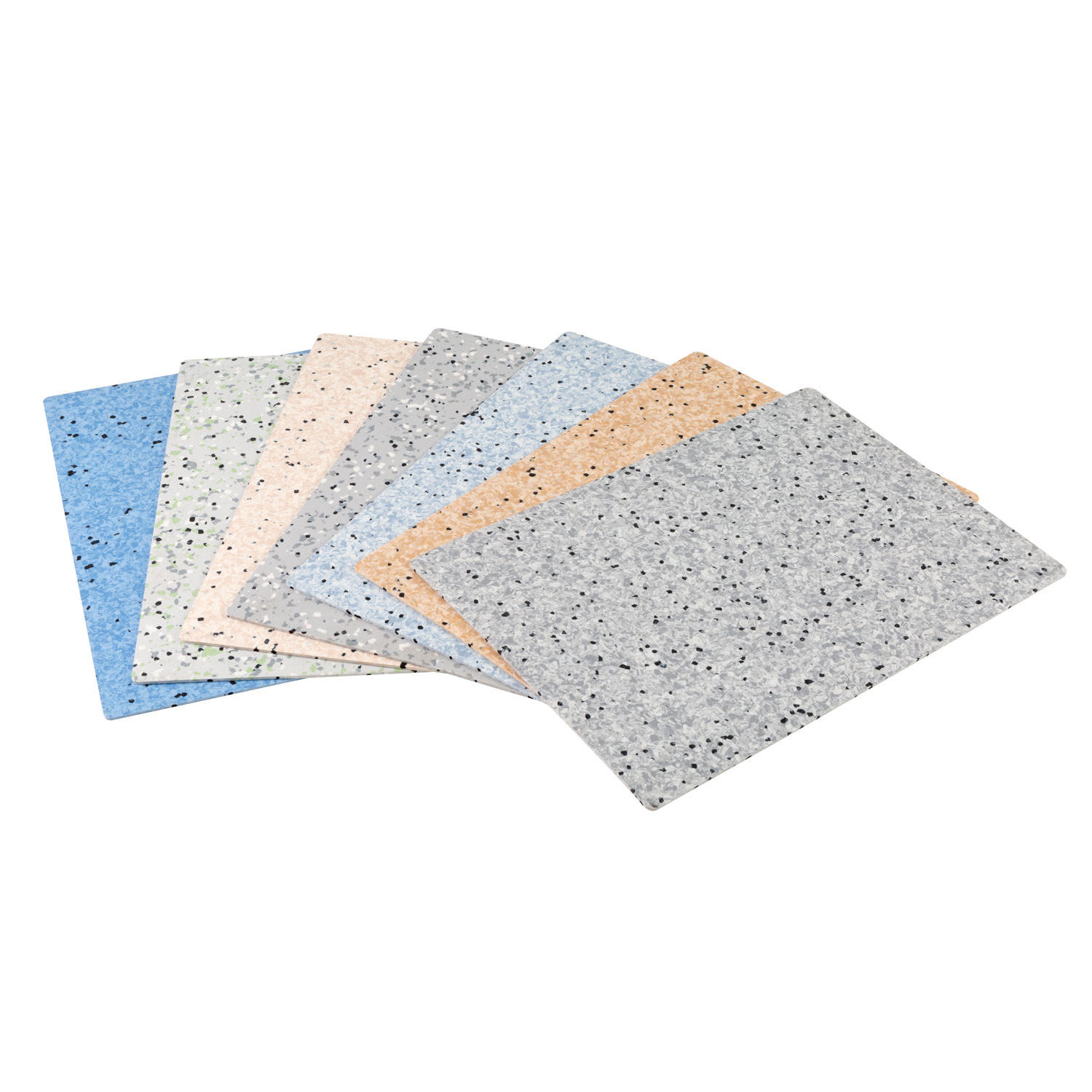
3C-Floor provides professional indoor and outdoor sports flooring solutions for gyms, sports halls, schools, fitness centers, training venues, and multipurpose courts. Designed for shock absorption, traction consistency, wear resistance, and stable supply, our sports flooring systems support both athletic performance and commercial project success.
Whether you are sourcing flooring for a basketball court, badminton hall, volleyball venue, gym studio, school sports center, or community recreation facility, choosing the right sports flooring is not simply about appearance. It is about safety under repetitive impact, comfort during dynamic movement, maintenance cost over years of use, and confidence that the floor system will perform consistently under real project conditions.
As a manufacturing-focused supplier, we support distributors, contractors, importers, project developers, architects, and brand owners with OEM and custom sports flooring solutions tailored to different sports, traffic levels, installation methods, and climate environments.
Standard commercial flooring is not engineered for lateral movement, repeated jumping, ball bounce control, athlete comfort, or impact management. True sports flooring is built differently from the surface down.
Sports flooring is a specialized flooring system developed for athletic environments where movement quality, impact control, grip, durability, and user safety are essential. Unlike ordinary flooring used in offices, retail, or residential spaces, sports flooring must perform under rapid starts and stops, directional changes, jumps, repetitive training, rolling loads from maintenance equipment, and high daily occupancy. 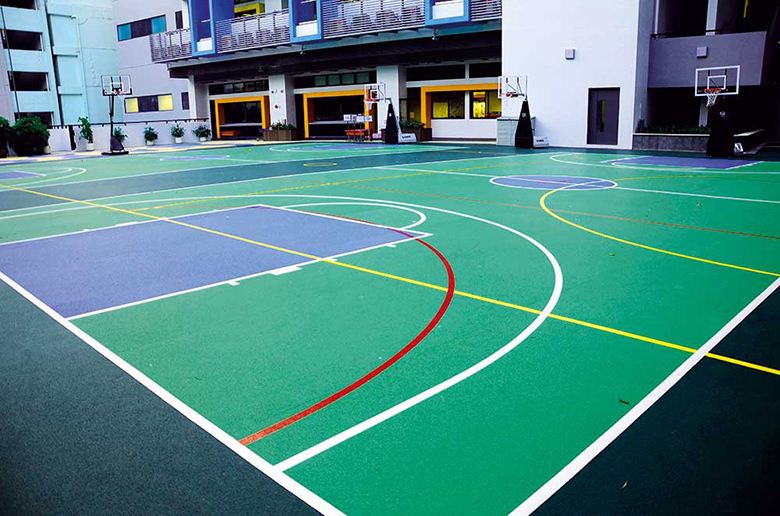
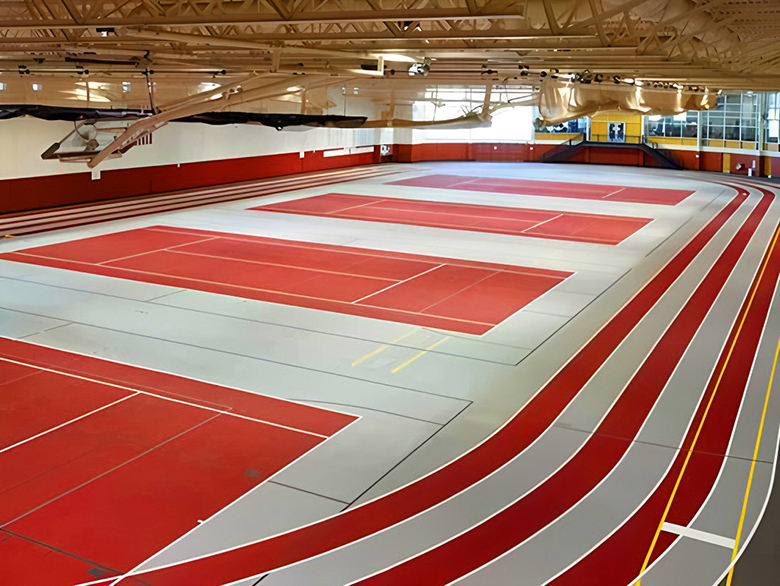
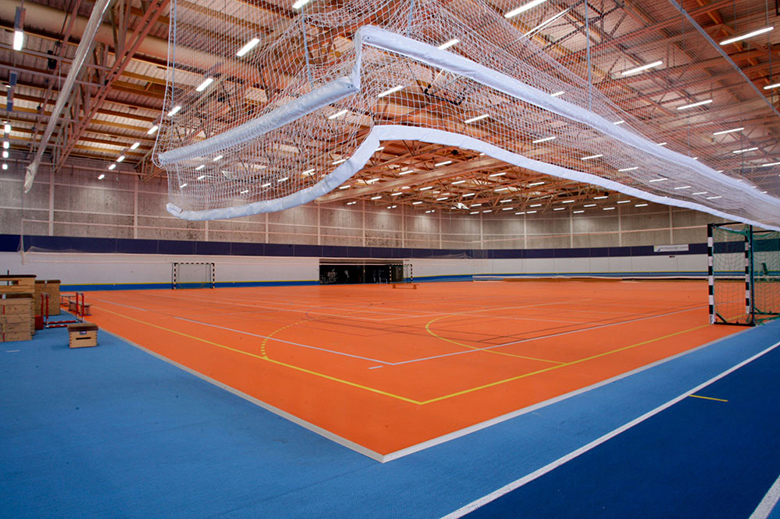
A high-quality sports floor is a functional system rather than a decorative finish. It typically combines a wear-resistant surface, stable structural layers, comfort-enhancing resilience, and an installation approach suited to venue requirements. The goal is not only to create a clean and professional sports environment, but also to support athletes, coaches, facility operators, and project owners over the full life cycle of the venue.
Depending on the application, sports flooring may prioritize different performance factors. For example, a school multipurpose hall may require a balance between comfort, durability, and maintenance simplicity. A badminton court may emphasize foot grip and movement control. A gym studio may focus on underfoot comfort, hygiene, acoustic performance, and repeated daily cleaning.
For commercial buyers and project specifiers, sports flooring affects multiple outcomes at once: athlete experience, facility reputation, safety perception, maintenance workload, life-cycle cost, and project competitiveness. Poor floor selection can lead to premature wear, poor traction, excessive hardness, complicated cleaning, dissatisfied users, and costly replacement cycles.
Professional sports flooring helps solve these issues through engineered surface performance, reliable manufacturing consistency, and application-based product selection. In other words, the correct floor system supports both sports performance and business performance.
Tell us your venue type, sport application, required thickness, target market, and order volume. We can recommend the right sports flooring structure for your commercial or project needs.
The best sports flooring does not win by a single feature. It wins through balanced performance. A floor that is durable but uncomfortable is not ideal. A floor that feels soft but lacks structural stability is also not ideal. Leading sports flooring systems combine multiple performance advantages in one integrated solution.
Repetitive movement places continuous stress on knees, ankles, hips, and the lower back. Sports flooring with good resilience helps reduce impact intensity and improves training comfort. This is especially important in basketball, volleyball, aerobics, dance, school PE, and general fitness environments where jumping, quick pivots, and extended sessions are common.
Too much slipperiness increases fall risk. Too much grip can interrupt movement and increase strain during directional changes. Professional sports flooring is engineered to provide balanced traction, allowing controlled movement while improving user confidence and safety.
Sports venues often experience intensive foot traffic, regular cleaning, ball play, equipment use, and event-based load changes. A durable wear layer and stable material structure help the flooring maintain appearance and function over long service periods.
Flooring used in larger venues or climate-variable environments must maintain structural stability during installation and use. Good manufacturing control and proper material design reduce the risk of deformation, edge issues, or early failure.
Facility operators need flooring that supports practical cleaning routines. A quality sports floor should be easy to maintain, resistant to common stains, and compatible with routine commercial care procedures, helping reduce maintenance burden over time.
Sports flooring should also contribute to the visual identity of a venue. Color options, line marking compatibility, surface texture selection, and custom branding possibilities can improve project presentation and support brand differentiation.
When sourcing sports flooring, professional buyers usually compare products by performance structure, installation suitability, long-term durability, and compliance-related characteristics. Specifications may vary by product category and project need, but the framework below helps decision-makers evaluate options more effectively.
| Specification Item | What It Means | Why It Matters |
|---|---|---|
| Material Type | PVC sport flooring, modular sports tiles, or other sport-specific systems | Determines installation method, resilience, maintenance style, and application suitability |
| Thickness | Different sports floors are produced in various thickness ranges | Influences comfort, support, stability, and use scenario |
| Wear Layer | Protective top layer against abrasion and daily use | Supports durability, appearance retention, and maintenance performance |
| Surface Texture | Embossed, matte, or application-driven traction surfaces | Affects movement control, grip feel, and cleaning behavior |
| Shock Absorption | Ability to reduce impact intensity under activity | Improves athlete comfort and supports safer play |
| Slip Resistance | Surface friction balance for controlled movement | Important for safety and sport-specific performance |
| Installation Method | Roll format, loose lay, adhesive installation, or tile-based system | Affects project timeline, substrate preparation, and maintenance planning |
| Fire / Safety Characteristics | Application-dependent performance and project documentation | Important for public buildings, institutional projects, and compliance workflows |
| Customization Options | Colors, dimensions, branding, packaging, and OEM specification | Critical for distributors, private label clients, and project tender requirements |
| Service Life Expectation | Estimated duration under proper installation and maintenance | Supports cost evaluation and replacement-cycle planning |
Note: Exact product data should be matched to the target application, installation environment, and commercial requirement. For project quotations, it is best to confirm intended use, substrate condition, site location, and performance priorities before final selection.
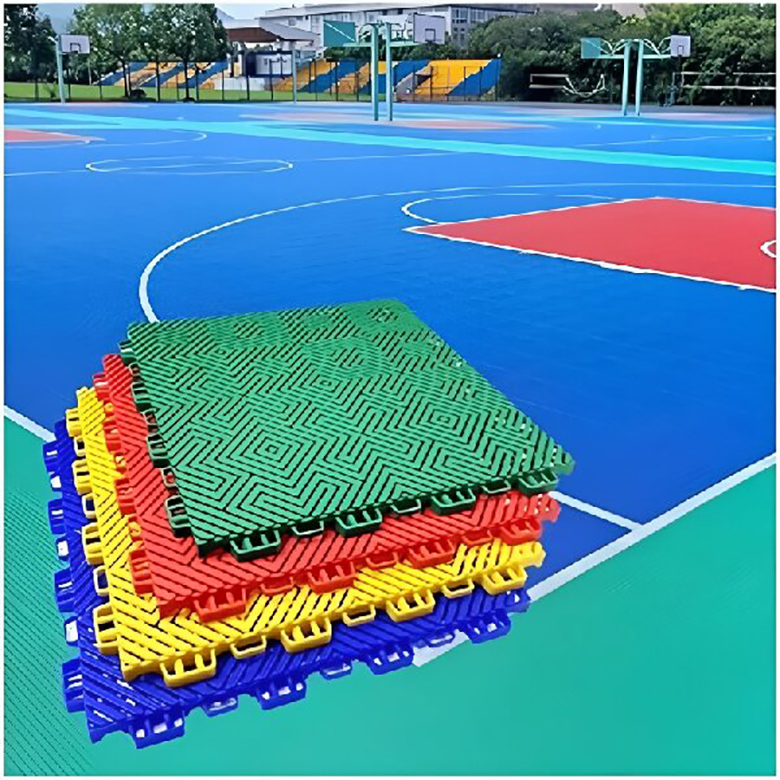
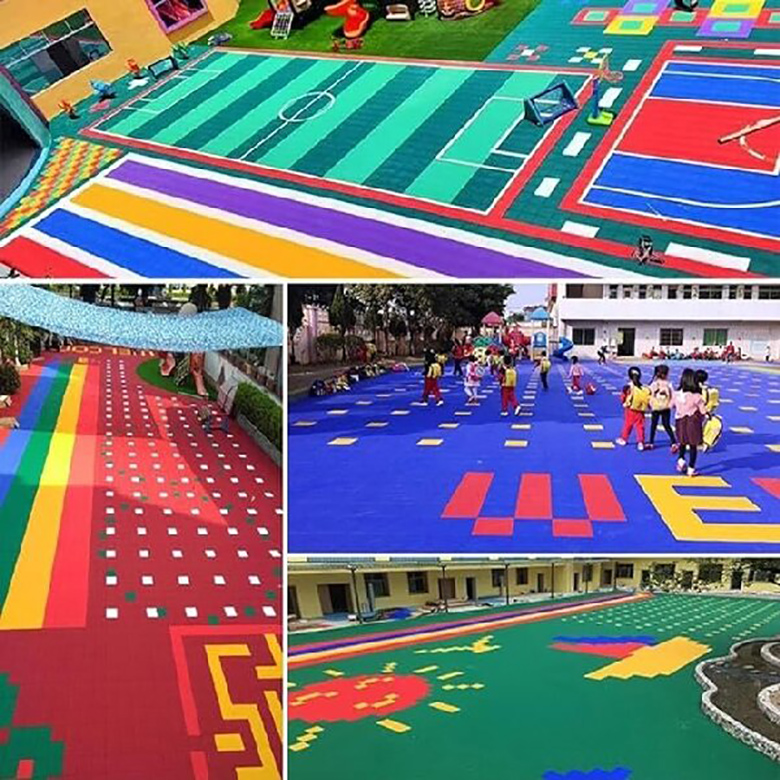
Different sports environments require different flooring structures. One of the biggest reasons projects underperform is that buyers choose a floor based on generic marketing language rather than usage-specific performance. The right sports flooring starts with the right application match.
Indoor sports flooring is typically used in gyms, school sports halls, basketball and badminton venues, dance studios, training centers, and multifunction sports rooms. Indoor systems often prioritize comfort, acoustic behavior, athlete movement feel, traction consistency, and visual presentation.
PVC sports flooring is one of the most common indoor solutions because it combines resilience, practical maintenance, good visual uniformity, and commercial versatility. For multipurpose sports halls, indoor flooring also needs to perform across several activities rather than a single sport category.
Outdoor sports flooring must address weather exposure, UV stability, drainage behavior, surface temperature changes, and maintenance realities in open environments. It is often used for community courts, school playgrounds, public sports areas, rooftop recreational zones, and outdoor training spaces.
Because outdoor venues face more environmental stress than indoor spaces, selecting the right surface structure and project-grade supply partner is essential. Durability, stable performance, and practical replacement planning are major decision factors for outdoor projects.
Multipurpose sport flooring is designed for facilities that host different types of use within one venue. These can include basketball, volleyball, badminton, PE classes, school assemblies, fitness sessions, and community recreation. The challenge is to maintain sport performance while supporting flexibility and durability.
For schools, universities, community centers, and mixed-use gyms, multipurpose solutions can significantly improve space efficiency and project return by allowing one area to support broader functional use.
Gym flooring applications often involve repeated step movement, bodyweight training, class-based exercise, and daily cleaning. The correct floor should provide user comfort, good surface control, attractive appearance, and practical maintenance performance. Depending on the format, gym flooring may also need to handle moderate equipment movement and high weekly usage intensity.
This is why commercial gym operators typically look beyond price alone and compare durability, cleaning practicality, user feel, and long-term replacement cost.
Looking for custom thickness, color, surface texture, packaging, or private label options? We support OEM and customization for distributors, importers, and commercial project buyers.
High-quality sports flooring is used across a broad range of institutional, commercial, educational, and recreational environments. Each application has different expectations, which is why experienced suppliers ask detailed questions before recommending a final product.
Basketball flooring requires reliable movement control, comfort under repeated jumping, wear resistance, and professional court presentation. In school and training settings, durability and maintenance simplicity are especially important.
Badminton courts often prioritize quick footwork response, traction balance, and comfort under intensive lateral movement. Surface feel can significantly influence user satisfaction and facility reputation.
Volleyball venues demand resilience, impact comfort, and stable movement support. Flooring quality influences both safety and confidence during repetitive jumps and landings.
Schools need flooring that balances performance, budget, longevity, and practicality. Sports floors in education settings often see mixed use, making multipurpose suitability a major advantage.
Group exercise studios, gym spaces, and wellness clubs often prioritize comfort, design consistency, maintenance ease, and durable everyday performance.
Community sports spaces require durable flooring that can withstand varied users, multiple activities, and practical municipal or institutional maintenance routines.
Buyers who want strong long-term results usually follow a structured selection process rather than choosing based on sample appearance alone. Here is a practical framework that can be used by contractors, distributors, architects, and project owners.
Is the venue built for basketball, badminton, volleyball, gym training, or mixed-purpose use? Floor recommendations should reflect the dominant activity, not just the general label of “sports flooring.”
The installation environment has a direct effect on flooring design. Indoor flooring and outdoor flooring face very different stress conditions and should not be treated as interchangeable.
A school hall used all day will not have the same wear pattern as a private training studio. Project scale and usage frequency matter when comparing wear resistance and service-life value.
Buyers should assess substrate condition, venue size, installation timeline, and future maintenance access. Choosing a floor without checking site realities often causes project delays and avoidable cost increases.
Are you optimizing for price, lifecycle cost, user comfort, distributor margin, private label branding, or project tender competitiveness? Different priorities lead to different product recommendations.
Consistent quality, clear communication, custom support, export experience, and dependable delivery are often just as important as the flooring itself. A strong supplier helps reduce sourcing risk.
One of the most common sourcing mistakes is assuming that durable commercial flooring can simply replace true sports flooring. While standard commercial floors may look acceptable at first, they are not engineered for athletic movement or impact-heavy environments.
| Comparison Point | Sports Flooring | Ordinary Commercial Flooring |
|---|---|---|
| Primary Design Goal | Athletic safety, performance, comfort, and durability | General foot traffic, appearance, and basic commercial wear |
| Movement Support | Engineered for dynamic sports movement | Not optimized for rapid direction change or jumping |
| Impact Management | Typically designed with resilience and comfort in mind | Often harder and less forgiving under repeated impact |
| Slip Control | Balanced for controlled athletic movement | May be too slippery or too static for sports use |
| User Experience | Supports comfort and confidence during sports activity | May create fatigue or inconsistent movement feel |
| Application Fit | Suitable for sports halls, courts, gyms, and training venues | Better suited to offices, retail, corridors, or general interiors |
For venue owners and commercial buyers, this distinction matters because the wrong flooring choice can negatively affect both user satisfaction and operating cost. The cheapest floor at the point of purchase is not always the lowest-cost solution over the full project lifecycle.
We support wholesalers, importers, project contractors, brand owners, and facility buyers with consistent sports flooring supply and custom project solutions.
Choosing a sports flooring supplier is not only about product format. It is about manufacturing capability, communication quality, customization flexibility, export reliability, and the ability to support real business and project needs.
We focus on professional flooring manufacturing and structured product development rather than acting only as a trading intermediary. This helps improve quality consistency, supply coordination, and technical communication.
For distributors, brand owners, and wholesale buyers, we support customization in specification, appearance, branding, and packaging. This creates stronger differentiation in competitive local markets.
Sports flooring projects have practical realities: budget pressure, deadline pressure, site conditions, specification changes, and bid competitiveness. We aim to align product recommendations with project needs, not generic one-size-fits-all sales language.
Different facilities require different solutions. We help buyers identify the most suitable sports flooring structure according to usage scenario, performance expectation, and long-term maintenance goals.
International supply requires responsiveness, clear documentation, quality stability, and practical packaging support. We work with overseas buyers who need dependable communication and repeatable supply quality.
Our goal is not simply to quote a floor, but to help customers build lasting project results, stronger product offerings, and repeat business opportunities through better-fit flooring solutions.
The following example shows how application-driven sports flooring selection creates better project outcomes for both users and owners.
A contractor working on a mid-sized education and recreation facility required a sports flooring system for an indoor hall used for basketball, badminton, PE classes, and community activities. The client needed a floor that looked professional, remained comfortable over long use periods, supported multiple sports functions, and stayed manageable for daily maintenance staff.
A multipurpose sports flooring system was recommended with an application-appropriate structure emphasizing user comfort, wear resistance, and maintenance practicality. Color selection and venue planning were aligned with the client’s facility presentation goals.
This type of project demonstrates why professional sports flooring selection is not only about material choice, but about matching a flooring system to venue reality.
In competitive international markets, buyers are not only comparing flooring products. They are comparing supply reliability, technical confidence, customization capability, and brand perception. A strong sports flooring page should therefore do more than rank for keywords. It should also strengthen commercial trust.
A strong supplier relationship helps you expand your catalog, improve quote confidence, and differentiate in your market. OEM sports flooring, tailored packaging, and commercial-grade positioning can make your offer more competitive than standard commodity products.
Working with a manufacturer-oriented supplier helps improve product matching, project coordination, and response speed during specification and quotation stages. That can reduce costly misalignment later in the project cycle.
To improve both traditional Google visibility and AI-search visibility, this page is structured around a keyword cluster instead of a single repeated phrase. That helps search engines understand topical depth while improving match opportunities for long-tail and commercial-intent queries.
sports flooring
shock absorption, traction control, wear resistance, dimensional stability, resilience, athletic comfort, impact management, easy maintenance, commercial durability, project-grade supply, multipurpose application, facility safety, long-term value, installation suitability, global supply support
Whether you need a quote for a project, wholesale supply for your market, or OEM customization for your brand, 3C-Floor can help you plan the right sports flooring solution.
These FAQ sections are useful not only for buyers, but also for Google rich results and AI-powered search engines that extract concise answers for user queries.
The best material depends on the venue and intended sport. PVC sports flooring is widely used for indoor sports halls, gyms, and multipurpose courts because it offers a strong balance of resilience, durability, maintenance practicality, and commercial flexibility. Outdoor venues may require different sports flooring systems better suited to weather exposure and drainage needs.
Sports flooring is engineered for athletic movement, comfort, impact control, and traction performance. Regular commercial flooring is usually designed for general walking traffic and appearance, not for repeated jumping, lateral motion, or sport-specific safety.
Start by identifying the main activities, the intensity of use, the indoor or outdoor environment, the maintenance capacity of the operator, and the target budget. In schools and multipurpose venues, flooring often needs to balance user comfort, wear resistance, and functional versatility.
Yes. Many sports flooring solutions are suitable for gyms, exercise rooms, and fitness studios, especially where user comfort, durability, and cleaning practicality are important. The correct product should still be matched to the specific type of training and usage pattern.
Yes. Many commercial buyers require custom thickness, color, surface texture, branding, packaging, and other OEM / ODM options. Customization is especially valuable for distributors, project contractors, and private label brands.
Service life depends on product type, usage intensity, installation quality, maintenance routine, and environment. Well-selected sports flooring typically delivers much better long-term value than unsuitable general-purpose flooring used in athletic settings.
A manufacturer-oriented supplier can usually provide stronger consistency, clearer technical communication, better customization support, and more dependable project coordination than a purely reselling-based source.
To strengthen topical authority and support crawl depth, this page should connect to closely related solution pages within the same website.
Need help comparing indoor and outdoor sports flooring, selecting the right structure, or building an OEM sports flooring product line? Send us your requirements and our team will support your inquiry with a practical recommendation.