Through-body value
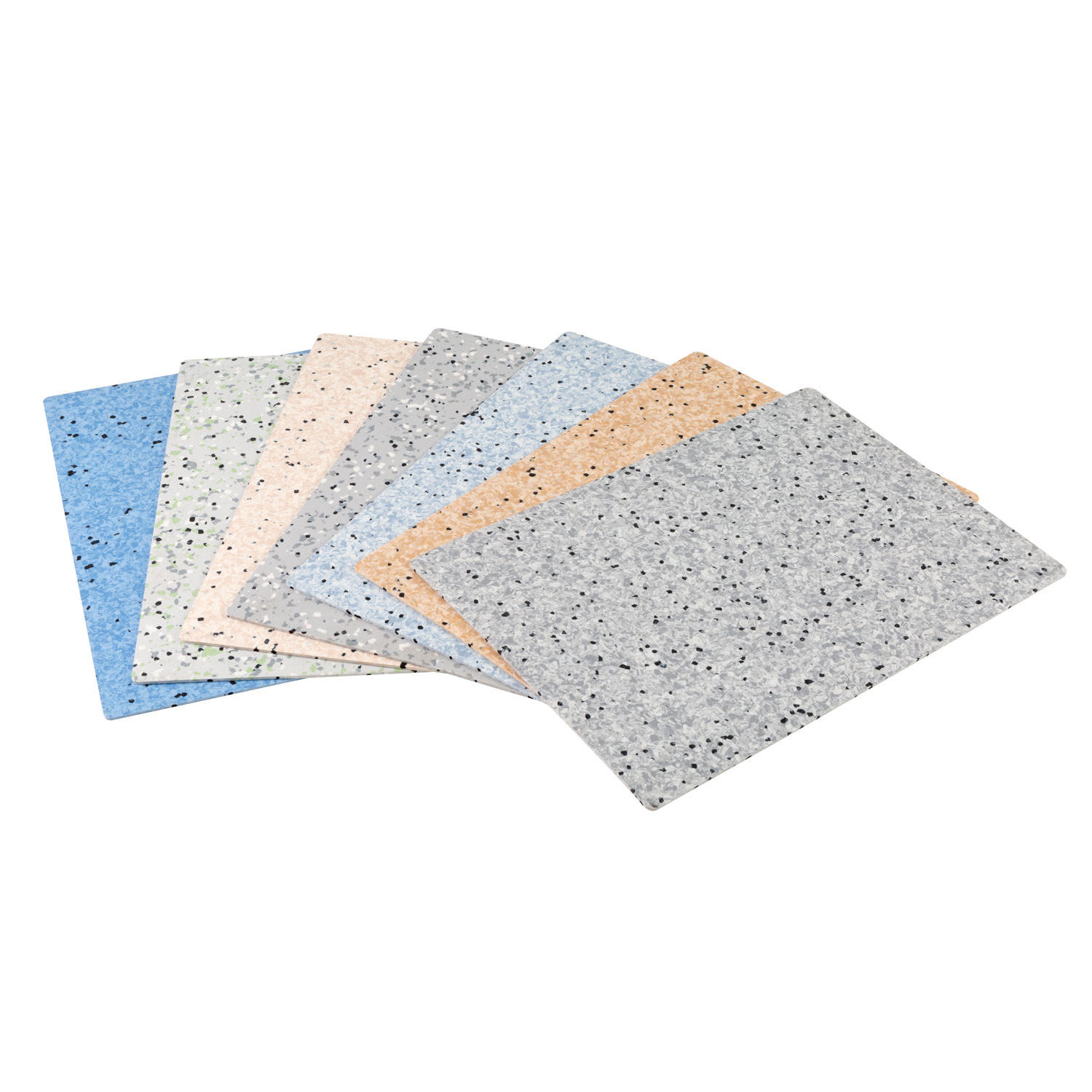
VCT uses a solid composition rather than a printed wood-look film. This makes classic commercial colors and patterns practical for long-running facility programs.



Source vinyl composition tile with the specifications your project actually needs. 3C-Floor supports distributors, contractors, developers and commercial buyers with VCT tile selection, sample confirmation, bulk production, packaging coordination and export supply from China.

A useful VCT supplier does more than send a color chart. For commercial procurement, the job is to keep specification, batch, packing and delivery decisions aligned from sample approval to the final cartons.
Price comparisons are only useful when the specifications match. Use the table below as an RFQ starting point, then confirm the final construction, tolerances, color and packaging for your order.
| Specification | Typical / Published Options | Why It Matters to Buyers |
|---|---|---|
| Product type | Vinyl Composition Tile (VCT) | Designed as modular resilient flooring for indoor commercial and institutional use. |
| Total thickness | 2.0 mm / 2.5 mm / 3.0 mm | Impacts material consumption, transition planning and project specification matching. |
| Tile size | 12 × 12 in; 12 × 24 in | Affects layout, carton coverage, cutting waste and visual scale. |
| Installation | Adhesive / glue-down | Requires a sound, smooth, dry substrate and compatible installation system. |
| Edge | Straight edge | Supports tight modular layouts and predictable tile alignment. |
| Color direction | Multi-color, stone/speckle and project-oriented palettes | Neutral colors hide routine soil; accent colors can support zoning and wayfinding. |
| Use location | Indoor commercial / institutional; selected residential uses | Choose by traffic, maintenance capability and facility requirements. |
| OEM / packing | Discuss project color, label, carton and private-label needs | Useful for distributors, repeat programs and multi-site projects. |
VCT uses a solid composition rather than a printed wood-look film. This makes classic commercial colors and patterns practical for long-running facility programs.
Individual tiles can be removed and replaced when localized damage occurs, helping facility teams avoid replacing an entire floor area.
For large square-meter projects, VCT is commonly evaluated where initial material cost and simple modular coverage are major procurement drivers.
Combining neutrals and accents can create borders, pathways, room zoning and basic wayfinding without changing flooring systems.
Distributors and multi-site buyers can standardize a shortlist of colors, carton labels and reorder references for easier replacement planning.
Share destination market, tender requirements and testing needs early so documentation expectations are checked before mass production.
VCT is strongest where facility teams value economical coverage, routine maintenance, simple color programs and tile-by-tile repair. It is not automatically the best floor for every space—moisture exposure, hygiene requirements, design expectations and maintenance labor should be considered first.


Many buyers searching for a VCT flooring manufacturer are actually deciding between several resilient flooring systems. The best product is the one that matches your traffic, design, maintenance and installation constraints.
| Decision Factor | VCT Flooring | LVT Flooring | Homogeneous Vinyl Sheet |
|---|---|---|---|
| Typical buying priority | Economical modular commercial tile | Realistic design + flexible commercial formats | Seam-control, hygiene and heavy-duty sheet performance |
| Visual style | Speckle, chips, solids, institutional palettes | Wood, stone, concrete, decorative visuals | Non-directional / directional commercial patterns |
| Installation | Glue-down tiles | Dryback, click or loose lay depending on product | Full-spread sheet; seams often welded in demanding areas |
| Maintenance profile | Often uses finish and periodic restoration | Generally lower routine finish maintenance | Designed for frequent commercial cleaning; depends on surface treatment |
| Localized replacement | Very practical tile-by-tile | Practical with modular plank/tile formats | More involved because material is supplied in rolls |
| Best-fit examples | Schools, public buildings, retail, offices | Hotels, retail, offices, apartments, hospitality | Hospitals, schools, laboratories, public facilities |
Need a decorative wood or stone visual instead? See 3C-Floor's LVT and commercial vinyl flooring ranges in the related solutions section below.
A stable commercial order depends on controlled decisions before production. The workflow below is designed for flooring importers, contractors, distributors and project buyers who need repeatable specifications rather than one-off retail cartons.
Tell us the building type, floor area, traffic conditions, installation base and maintenance expectations.
Confirm tile size, thickness, color direction, packaging and any destination-market documentation requirements.
Use physical samples or agreed references to align appearance and specification before bulk production.
Coordinate quantity, carton identification, production schedule, inspection and export packing for shipment.
“How much is VCT?” is rarely enough for an export quote. A specification-based RFQ helps prevent incorrect price comparisons, mismatched cartons and avoidable sample cycles.
Ask about a focused stock palette, repeatable SKU names, carton artwork, private-label identification and reorder planning. A smaller, controlled collection often sells more efficiently than a very broad color list.
Send the finish schedule, room types, total coverage, installation phase and any approved equal requirements. This allows product selection to follow the project instead of forcing the project around a catalog item.
Commercial VCT looks simple, but production consistency affects installation speed and finished appearance. Buyers should agree which items are checked and documented before shipment.
Confirm the agreed nominal thickness and production tolerance so transitions and installed height remain predictable.
Tile dimensions and square corners influence joint alignment across large modular floor areas.
Commercial projects need a planned approach to batch consistency, especially when field and accent colors are mixed.
Check chips, speckle distribution, texture and any approved visual reference under consistent lighting.
Clear product codes, color names, quantities and batch references help site teams stage materials correctly.
Export packaging should protect edges and corners while keeping cartons manageable for warehouse and jobsite handling.
VCT is a glue-down floor. The substrate must be structurally sound, smooth, clean and dry enough for the selected adhesive and local conditions. Moisture issues, uneven leveling or rushed adhesive work can undermine an otherwise acceptable tile.
Remove contaminants, correct irregularities and verify the substrate condition before installation begins.
Match adhesive selection, open time and trowel requirements to the project specification and installation environment.
Dry planning reduces narrow perimeter cuts and helps align borders, accent tiles and wayfinding patterns.
Traditional VCT often uses protective finish and periodic restoration. Include maintenance labor in lifecycle cost comparisons.
Keep replacement cartons from the project batch when possible, especially for multi-color layouts and long-term facilities.
Good receiving records make future replacements, warranty discussions and repeat orders easier to manage.
VCT stands for vinyl composition tile. It is a resilient glue-down commercial flooring material made with vinyl binder, mineral filler and pigments. Its solid construction and modular format make it a practical choice for many high-traffic institutional and commercial interiors.
3C-Floor's published VCT range includes 2.0 mm, 2.5 mm and 3.0 mm thicknesses, with common 12 × 12 inch and 12 × 24 inch formats. Final size, color, quantity, packing and production availability should be confirmed during quotation.
They solve different problems. VCT is often chosen for economical modular coverage, classic commercial colors and straightforward tile replacement. LVT is usually stronger when realistic wood or stone visuals and lower routine finish maintenance are important. For very hygiene-sensitive sheet applications, homogeneous vinyl flooring may be a better comparison.
Traditional VCT is adhesive-installed over a properly prepared substrate. Many VCT maintenance programs also use a protective floor finish with periodic restoration. Exact adhesive and maintenance requirements should follow the selected system, site conditions and project specification.
3C-Floor can discuss project color requirements, carton identification, private-label packaging and other OEM needs. Feasibility, minimum order quantity, sample process and lead time depend on the selected specification and customization level.
Send the required tile size, thickness, preferred colors, order quantity, project/application, destination market, packaging requirements and any test/document requirements. A complete RFQ allows 3C-Floor to prepare a more accurate specification-based quotation.
These internal resources help buyers compare resilient flooring systems and project supply routes without leaving the 3C-Floor website.
Send your tile size, thickness, color direction, quantity, application and destination market. 3C-Floor can review the request and build a quote around the required specification instead of giving you a generic catalog price.