Accessibility-minded flooring · Commercial & residential supply
Vinyl Flooring for Wheelchairs
For wheelchair routes, the right vinyl floor is firm, stable, easy to roll across and compatible with repeated wheel loads. Commercial sheet vinyl and properly bonded LVT are strong options to evaluate; selected SPC floors may also work where the manufacturer approves the exact rolling loads and installation system. 3C-Floor helps importers, contractors and project buyers compare PVC rolls, glue-down LVT and rigid-core products, then confirm samples, construction and order specifications.

Featured answer · 60-second selection
Which vinyl floor should you choose for wheelchair use?
For busy wheelchair routes, start with commercial-grade, full-spread bonded sheet vinyl or glue-down LVT. They can provide a firm surface with controlled joints when installed correctly. Dense-back commercial sheet is worth reviewing where high wheel pressure is expected. Use floating SPC only if its specific locking system, underlay and wheel-load limits are approved for the application.
Next, check wheel weight and turning frequency, residual indentation, slip resistance, seam design, flatness, door transitions, cleaning and local accessibility rules. No single wear-layer or thickness number proves compatibility.
Format selection
Four vinyl flooring systems, four different project decisions
The strongest choice is determined by wheel behavior and the installed floor assembly. These comparisons are selection directions, not blanket approvals for every 3C-Floor product.
| Floor type | Why a buyer may choose it | What to verify before use | Typical decision |
|---|---|---|---|
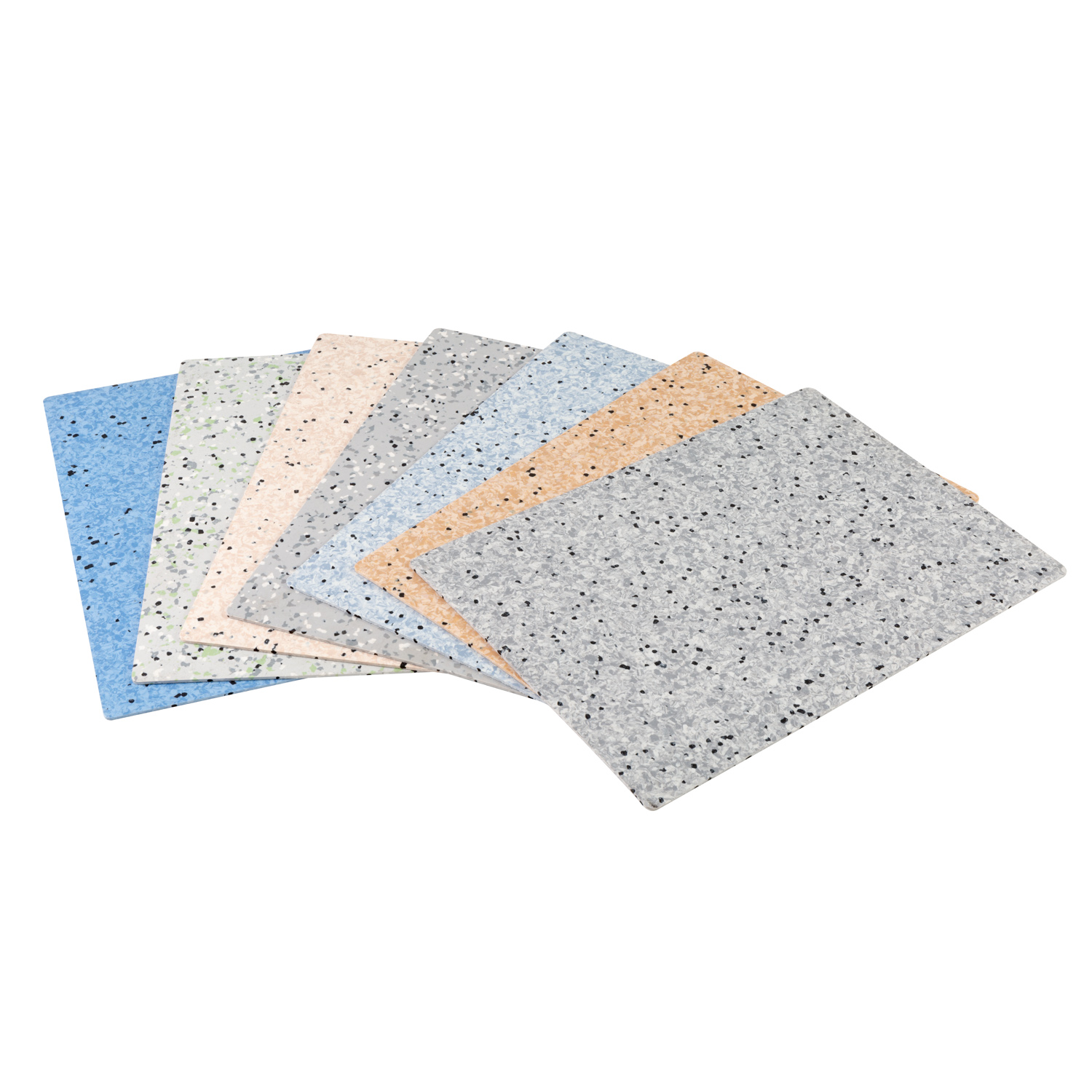
| Homogeneous PVC sheet | Continuous through-body construction; commercial roll format and fewer joints; may support welded seams and intensive cleaning. | Indentation, wheel traffic, seam welding, adhesive, hygiene needs and actual slip data. | High-use corridors, institutional and healthcare projects. |
| Compact heterogeneous sheet vinyl | Dense backing with decorative designs; potentially firmer response than cushion-backed sheet under concentrated rolling traffic. | Backing density, test evidence, residual indentation, welded joint system and cleaning chemistry. | Commercial interiors needing design plus load resistance. |
| Glue-down LVT / dry-back LVP | Direct bonding with a relatively low-profile plank or tile surface; design choice and localized replacement potential. | Adhesive rating for wheels, subfloor smoothness, seam integrity, movement and replacement process. | Homes, assisted living rooms, offices and fitted commercial spaces. |
| Floating SPC click vinyl | Rigid plank construction and renovation-friendly installation where conditions are within system limits. | Written permission for powered chairs, joint stress, wheel point loads, flatness, cushion pad, temperature movement and warranty limitations. | Controlled wheel traffic only when the specific system is validated. |
Procurement shortcut: explore 3C-Floor's PVC flooring roll manufacturing range for sheet formats and its SPC plank flooring range for rigid-core alternatives.
Real product references · 3C-Floor
Inspect the actual floor formats, finishes and joining details
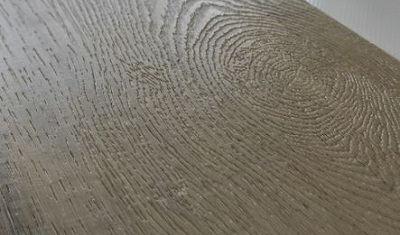
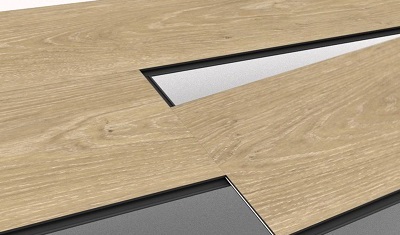
The images below are genuine assets hosted on 3c-floor.com. They show the type of vinyl construction and finishing details to request as physical samples. Their presence does not establish project-specific test results.


Design for the wheelchair—not just the foot traffic
Manual chairs, power chairs and care equipment load a floor differently
Two buildings with the same footfall can require different flooring when wheel size, mass, steering forces, traffic frequency and cleaning change.
01 / MANUAL
Manual wheelchair routes
Look for a firm, smooth, easy-to-roll finish; low obstacles at entrances; secure edges; and manageable traction in wet conditions. Small front casters can catch on raised joints, deep textures and thresholds.
Buyer check: continuous route, entrance mat geometry, maintenance finish and actual caster maneuverability.
02 / POWERED
Electric or powered wheelchairs
Higher occupied mass and tight powered turns may concentrate force on a small wheel contact area. Repeated pivoting may stress click-lock joints or poorly bonded tile edges.
Buyer check: wheel loads, turning pattern, manufacturer approval, adhesive and a site mock-up with the actual equipment.
03 / INSTITUTIONAL
Healthcare & senior living
Wheelchairs may share circulation routes with hospital beds, carts and cleaning machines. Floor selection also depends on welded joints, hygiene, disinfectants and repeated rolling.
Buyer check: seam plan, chemical compatibility, commercial traffic use class and load test documentation.
Application boundary: A floor suitable for an occasional manual wheelchair may not be suitable for a heavy power chair performing frequent stationary turns. Do not assume one manufacturer's SPC approval applies to every click-lock brand or underlay.
Evidence-led specification
What to put on the project data sheet
Wheelchair suitability is a system decision. Ask for each relevant performance claim to be tied to the actual SKU, testing method and installation instructions.
| Specification item | Ask the supplier / installer | Why it matters for wheelchairs |
|---|---|---|
| Vinyl construction | Homogeneous sheet, compact heterogeneous sheet, dry-back LVT or SPC click; full construction drawing. | The backing, core and fixing method respond differently to point and rolling loads. |
| Overall & wear thickness | Approved finished thickness and wear surface specification; confirm model-specific values. | Wear layer relates to surface wear, but does not prove joint strength or indentation resistance. |
| Rolling-load performance | Relevant wheel or caster cycling evidence, test load, wheel type and acceptance criteria. | Frequent travel and turning create repetitive dynamic pressure. |
| Residual indentation | Test result under a relevant method; confirm sample backing and substrate. | Ruts and dents can impair smooth movement and appearance. |
| Slip resistance | Test method and result under anticipated dry, wet and cleaning conditions. | Too little traction can present risk, while highly aggressive textures may increase rolling resistance. |
| Dimensional stability / joints | Movement tolerances, seam welding or edge details, installation temperature guidance. | Gaps or peaking joints create small but important obstacles. |
| Adhesive & substrate | Approved full-spread adhesive if bonded; moisture and flatness limits; cure time. | Movement or loss of bond can cause wheel-related failure. |
| Handover & maintenance | Protection period, cleaning chemistry, repair instructions and replacement stock. | Consistent performance must continue after installation and routine service. |
For a detailed view of SPC layers and click profiles, use the 3C-Floor SPC product data sheet. For LVT wear-surface and fixing choices, see the LVT selection guide.
Testing and assurance
Roll-load and caster reports help—but are not a wheelchair guarantee
Laboratory evidence can narrow the shortlist. ISO 4918 is a caster-chair test for resilient and other floor coverings; useful for understanding some repeated rolling effects, but not a substitute for proof under the actual wheelchair wheel configuration, mass and turning load. For power chairs, request explicit manufacturer confirmation or a project mock-up test.
For example, major commercial flooring suppliers differentiate use under heavy rolling loads and advise product-specific installation methods. 3C-Floor buyers should apply the same discipline: match the floor, adhesive, substrate and equipment instead of selecting by decorative plank photo or thickness alone.
3C-Floor's compact heterogeneous vinyl flooring is a relevant dense-back category to examine for concentrated traffic, while its homogeneous PVC flooring merits evaluation when long corridors, welded seams and repeated cleaning dominate the brief.

The floor system
Installation details that make or break wheelchair access
A proven product can still become hard to navigate if installed over uneven substrate, with unsuitable adhesive, raised transitions or loose joints.
Map the travel path
Mark doorway thresholds, high-turn zones, entry mats, lift lobbies, wet areas and bed/care-cart routes. Reduce avoidable material transitions in continuous accessible paths.
Prepare the subfloor
Check flatness, soundness and moisture against the selected system. Telegraphed ridges, voids or soft underlay can create local wheel resistance and joint stress.
Fix and finish edges
For bonded vinyl, confirm adhesive, trowel, open time and rolling. Detail welds and coved edges where needed. Do not substitute a floating installation without approval.
Handover after curing
Protect the installation until the specified adhesive cure and opening conditions are met. Inspect seams, thresholds and turning points with representative wheelchairs.
U.S. accessibility detail
Under ADA §303, a permitted vertical change in level is generally limited to ¼ in (6.4 mm); changes between ¼ in and ½ in (13 mm) require an appropriate bevel, and larger changes require ramp treatment under the applicable provisions. This is only a summary—always apply the full standard and project drawings.
Practical inspection
Run a small-front-caster wheelchair across all transitions, then perform repeated straight passes and tight turns. Check for adhesive movement, click-joint deflection, lifted edges, noise, marks and unexpected rolling resistance before approving the whole project.
Thickness, traction, and real-life wear
Why a thicker floor is not always the better wheelchair floor
Total thickness and wear-layer thickness solve different problems. A thicker product may include cushioning that feels comfortable underfoot but compresses under small wheels. A thicker transparent wear layer may improve wear reserve yet says little about adhesive bond, indentation or the rigidity of a click joint.
For demanding projects, prioritize documented indentation, rolling-load compatibility, surface finish, backing and floor-system requirements. Surface texture should support safe traction without needlessly increasing the force required for manual propulsion; ask for the relevant slip test and confirm local risk conditions.
A physical sample can also expose coating behavior under hand rims, casters, soil, disinfectants, entry grit and daily mopping. Obtain written guidance for any high-speed scrubber or chemical cleaning system.

OEM & wholesale purchasing
Eight questions to resolve before a bulk order
For importers, floor distributors and project buyers, the most costly problems often appear after the floor is installed. Build these checks into sample approval and purchase orders.
- Wheelchair load: Is the equipment manual or powered? Include occupied mass, wheel size, wheel type and typical turning behavior.
- Traffic: Is it a private residence, school, hotel, care home, hospital corridor or public building?
- Exact construction: Confirm the approved item, backing, finish, wear layer, dimensions, fixing and edge system.
- Sample protocol: Approve a full-size sample and, where necessary, a bonded mock-up with the proposed wheelchair.
- Performance documents: Request relevant indentation, rolling-load, slip and local building-compliance evidence.
- Installation: Agree substrate preparation, adhesive, underlay, weld rods, edge trims and opening-to-traffic time.
- Replacement plan: Reserve matching rolls or planks, color records and batch details for repairs and maintenance.
- Export & private label: Confirm packing, carton labels, roll marks, destination documentation and sample-to-bulk color signoff.
For room-by-room decorative design, review residential LVT options, then check the actual dry-back product and installation method before approving a wheelchair-use specification.
Avoid costly substitutions
Where vinyl should not be chosen without more evidence
Unapproved floating click floors
When heavy power chairs rotate repeatedly in one place, joint loads can differ from ordinary walking. Do not specify floating SPC purely because it is labeled “rigid” or “waterproof.” Request written use approval.
Soft cushion or unstable underlay
A very soft backing, additional foam pad or uneven substrate can increase local deflection. Verify compression behavior and the manufacturer-authorized build-up beneath the vinyl.
Raised transitions and deep texture
A beautiful surface with unplanned thresholds, poorly finished seams or overly coarse texture can impede small casters. Judge the complete route under expected wet and dry conditions.
People also ask · Buyer FAQ
Common questions about wheelchair-friendly vinyl flooring
These short answers are intended for product screening. Final compatibility requires confirmation of the specific floor, installation and intended mobility equipment.
Is vinyl flooring good for wheelchairs?
Yes, appropriately specified and installed commercial vinyl flooring can provide a firm, relatively smooth route for wheelchairs. Confirm rolling loads, point pressure, seams, slip performance and the manufacturer's approval for the exact vinyl product and installation.
What is the best vinyl flooring for an electric wheelchair?
For frequent powered-wheelchair use, bonded commercial sheet vinyl or glue-down LVT is often a suitable starting point because the floor has fewer moving interfaces. Final selection depends on wheel loads, turning behavior, product test evidence, adhesive and subfloor.
Can a wheelchair damage click-lock SPC flooring?
It can, particularly when concentrated wheel loads and repeated pivoting exceed the click-joint or installed-system limits. Request written approval for the proposed SPC SKU, wheel load, subfloor flatness and underlayment before specifying a floating floor.
Is sheet vinyl better than LVT for wheelchair access?
Sheet vinyl reduces joint count and can support welded seams; glue-down LVT permits plank and tile design and localized replacement. Neither format is universally better: compare the wheel traffic, seam plan, cleaning regime and product-specific durability data.
How thick should wheelchair-friendly vinyl flooring be?
There is no universal thickness that proves wheelchair suitability. Overall thickness, wear surface, backing density, residual indentation, wheel loads, adhesive and floor flatness must be assessed together.
Does ADA compliance mean a vinyl flooring product is certified?
No. The ADA Standards address accessible routes and installed floor conditions such as firmness, stability, slip resistance and changes in level. A generic product label alone does not establish that an installed floor meets all applicable accessibility requirements.
Which tests should buyers request for wheelchair-use vinyl flooring?
Ask for relevant rolling-load or caster performance, indentation and residual indentation, wear, slip resistance and dimensional stability evidence for the exact construction. ISO 4918 caster-chair data can inform screening but does not itself certify powered-wheelchair suitability.
What should I send for a wheelchair-accessible flooring quotation?
Send the room use, wheelchair type, estimated occupied weight and wheel arrangement, daily rolling and turning frequency, substrate, wet-cleaning needs, project area, product format, color, target market, documentation needs and destination.
Sources and scope
Technical references for specification teams
Accessibility conditions vary by jurisdiction and building context. The independent resources below inform selection principles; they are not presented as testing certificates or approvals issued to 3C-Floor.
- U.S. Access Board — ADA Guide, Chapter 3: Floor and Ground Surfaces (firmness, stability, slip and transitions).
- U.S. Access Board — ADA Standards, Chapter 3 (Sections 302 and 303).
- Shaw Contract — Resilient Platforms (manufacturer distinctions for rolling load and installation).
From accessibility brief to approved sample
Plan a wheelchair-use vinyl flooring supply program
Tell 3C-Floor which wheels will use the floor, how often they turn, what subfloor and cleaning conditions apply, and which local documentation is needed. The team can discuss suitable sheet, dry-back and rigid-core options for sampling and quotation.
Include in your RFQ
- Product type: sheet vinyl, glue-down LVT or SPC
- Manual/powered wheelchair; weight and wheel configuration
- Project area, room use, quantity and usage frequency
- Thickness, surface, color and installation preference
- Subfloor, moisture, seams and cleaning conditions
- Target market, testing requirements, packing and destination port