Vinyl / PVC
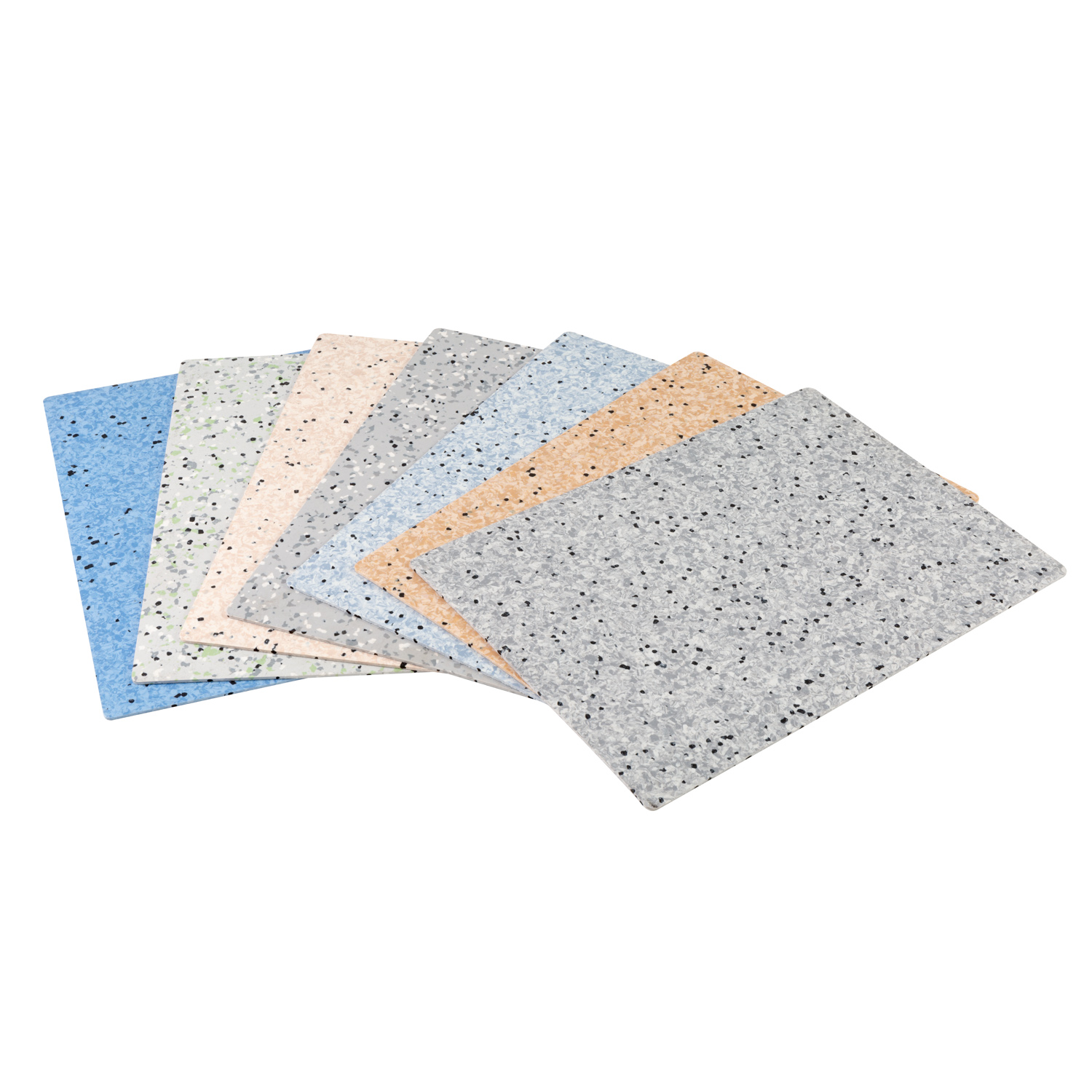
Vinyl flooring is a resilient floor covering based on polyvinyl chloride (PVC), combined with other materials for the selected construction.
In your specificationSpecify the finished construction; “PVC” alone does not identify a grade.



Vinyl flooring terminology describes what a floor is made of, how it is installed and which performance claims need evidence. LVT means luxury vinyl tile; LVP means luxury vinyl plank. SPC and WPC identify different rigid-core constructions. A mil measures thickness and is not a millimeter. These terms overlap, so a product name alone cannot define a purchase.
Use this vinyl flooring glossary to compare supplier quotations, read a technical data sheet and prepare an order for residential or commercial interiors. For importers, distributors, private-label brands and contractors, 3C-Floor supplies SPC, WPC, LVT and PVC flooring rolls, with specification and sample discussions for the selected product.

A rigid-core wood-look plank can be sold as LVP and also identified as SPC. The terms answer different questions.
| Label on the quote | What the label tells you | What you still need to ask |
|---|---|---|
| LVT / LVP | Luxury vinyl category; LVP specifically signals plank format. LVT is also used broadly for modular vinyl. | Flexible or rigid? Which core, thickness and installation? |
| SPC | A dense, mineral-filled rigid core. | Which format, locking system, wear layer and backing? |
| WPC | A foamed composite rigid-core construction. | Which formulation, finished build-up and load suitability? |
| Sheet vinyl / roll | A continuous roll format. | Homogeneous or heterogeneous? Which adhesive and seam treatment? |
| VCT | Vinyl composition tile, a separate material category from LVT. | Which use classification and maintenance system? |
Begin with the LVT flooring range and installation options when comparing modular vinyl. Evaluate WPC rigid-core construction separately when a foamed core is part of your brief.
Plain-English definitions, followed by a practical point to confirm before ordering. Browse by topic or search an acronym.
Name the material and the format.
Vinyl flooring is a resilient floor covering based on polyvinyl chloride (PVC), combined with other materials for the selected construction.
In your specificationSpecify the finished construction; “PVC” alone does not identify a grade.
An umbrella category of flooring with some ability to recover after deformation. Vinyl is one member of this wider material family.
In your specificationDo not treat resilient flooring as a synonym for vinyl alone.
A widely used name for modular luxury vinyl flooring. Depending on market usage, LVT can include rectangular planks as well as tile-shaped pieces.
In your specificationAsk for the format, core and installation system separately.
Luxury vinyl flooring supplied in a plank format, commonly with a printed wood appearance. LVP describes a format rather than a single core recipe.
In your specificationAn LVP collection may use flexible vinyl, SPC or WPC construction.
A broad marketing term covering luxury vinyl products, often including both planks and tiles.
In your specificationReplace the umbrella name with a precise construction in the purchase order.
A dense, mineral-filled PVC rigid core. Stone plastic composite is another common expansion; some suppliers use solid polymer core.
In your specificationConfirm the actual formulation and model rather than relying on the acronym.
A term commonly used for vinyl flooring with a foamed composite rigid core. Wood plastic composite is another expansion; formulations vary.
In your specificationThe name alone does not establish wood content, walking feel or load performance.
Vinyl flooring supplied in continuous rolls instead of individual planks or tiles. It can have homogeneous or heterogeneous construction.
In your specificationConfirm roll width, usable length, joint treatment and installation method.
Vinyl flooring with a substantially uniform composition and pattern through its thickness, rather than a separate printed decorative film.
In your specificationCheck its own technical sheet; printed-LVT wear-layer terminology may not apply.
Vinyl flooring made from layers with different functions, such as backing, reinforcement, decoration and a protective wear layer.
In your specificationRequest the layer build-up for the exact product.
A distinct resilient tile category made with mineral fillers and a vinyl binder. It is not another name for luxury vinyl tile.
In your specificationCompare maintenance requirements as well as initial material cost.
Separate appearance, protection and structure.
The stated gauge of the complete flooring product. Supplier conventions can differ on whether an attached pad is included.
In your specificationWrite the flooring-body thickness and pad thickness on separate lines.
For printed luxury vinyl, the transparent layer above the decorative film that protects the image from progressive wear.
In your specificationConfirm its measured thickness separately from the finish and complete plank.
One thousandth of an inch: exactly 0.0254 millimeters. In vinyl flooring, mil commonly describes wear-layer thickness.
In your specificationA 20 mil wear layer is 0.508 mm, not 20 mm.
A metric length unit equal to one thousandth of a meter. Flooring body, pad and wear layer can all be expressed in millimeters.
In your specificationAlways label which part a dimension measures.
A surface treatment that affects cleaning, scuffing and stain behavior. UV describes a curing process; PUR refers to polyurethane chemistry.
In your specificationConfirm the treatment and evidence; a coating name is not a wear-layer measurement.
The printed layer that gives many vinyl planks and tiles their wood, stone or patterned appearance.
In your specificationApprove color, pattern repeats and sheen using physical samples.
A texture process intended to align surface relief with details in the printed design, such as wood grain.
In your specificationCheck the selected décor on a sample; embossed does not automatically mean EIR.
An angled or profiled edge that visually defines the joint between adjacent pieces.
In your specificationApprove edge shape, color and the appearance of an assembled joint.
The structural body of a plank or tile. Its composition and design affect rigidity, movement and response to loads.
In your specificationIdentify the core type before comparing total thickness or price.
A factory-attached backing may use foams such as IXPE, irradiation-cross-linked polyethylene, or EVA, ethylene-vinyl acetate.
In your specificationAgree material, thickness and compatibility; a pad is not automatically a moisture barrier.
Match the product to its installation system.
Flooring intended to be bonded to the prepared substrate with a separately selected adhesive. Dry back does not mean peel and stick.
In your specificationSpecify the approved adhesive, moisture limits and rolling or curing procedure.
A mechanical edge connection that joins planks or tiles. Click describes the connection rather than proving a particular core material.
In your specificationConfirm the exact profile, assembly method and replacement procedure.
A floor assembly in which the flooring is not bonded across the subfloor. Connected pieces must be able to move as the system requires.
In your specificationFollow perimeter clearances, room-size limits and fixed-object instructions.
A vinyl format designed to use its construction and backing for restraint, with fixing requirements set by the installation instructions.
In your specificationCheck whether perimeter adhesive, tackifier or full bonding is required for the application.
Vinyl flooring with a factory-applied adhesive protected by a removable liner.
In your specificationConfirm substrate preparation, primer and intended-use approval.
The supporting surface beneath the floor covering or preparation layers, such as concrete, screed or an approved board system.
In your specificationConfirm strength, cleanliness, smoothness and moisture condition before installation.
How closely a surface follows a plane across a stated measuring distance. A flat surface is not necessarily horizontal or level.
In your specificationUse the selected flooring system’s tolerance and measuring method.
A material or preparation layer placed beneath the finish floor. The word can refer to different products, including acoustic pads and rigid preparation boards.
In your specificationSpecify the actual material; an extra soft pad may be incompatible with a click floor.
A specified layer or system intended to limit water-vapor transmission. Its function differs from ordinary cushioning.
In your specificationMatch the moisture-control system to the substrate test and installation instructions.
A clearance provided to accommodate movement in a flooring system, often at perimeters and fixed obstructions for floating floors.
In your specificationUse the model’s stated gap and transition requirements rather than a generic dimension.
A controlled process using a compatible welding rod and equipment to join suitable sheet-vinyl seams.
In your specificationConfirm the product and seam system; ordinary click-plank joints are not heat-welded seams.
Holding flooring under the specified site conditions before installation when required by its instructions.
In your specificationConfirm time, temperature and storage orientation for the exact product.
Read a claim together with its test scope.
A claim about resistance to water under defined exposure conditions. A waterproof vinyl component does not establish a watertight floor assembly.
In your specificationAsk which components, joints, exposures and installation conditions the claim covers.
Able to resist water effects within specified limits; it is not a universal duration, depth or room-use classification.
In your specificationRequest the exposure limits and cleaning instructions.
The ability of flooring to retain its dimensions under defined conditions, including temperature exposure.
In your specificationCompare the test method, conditions and result for the selected construction.
The depression remaining after a specified load is removed and a stated recovery period has elapsed.
In your specificationCheck the relevant result for furniture, point loads or wheeled equipment.
The resistance to slipping measured under a specified test method and surface condition. Results from different methods are not interchangeable.
In your specificationMatch evidence to the room’s expected wet or dry conditions and local requirements.
The release of volatile organic compounds from a product into the air. Emissions testing differs from measuring chemical content.
In your specificationRequest product-specific evidence; a low-emission label does not mean zero chemicals.
A rating describing impact-sound insulation of a tested floor-and-ceiling assembly, including its structural layers.
In your specificationCompare equivalent assemblies and reports; the result does not belong to a plank in isolation.
A rating of airborne-sound insulation of a building assembly. STC addresses a different sound pathway from IIC.
In your specificationCheck the complete tested assembly, not just the flooring trade name.
A declared intended-use category supported by the applicable product system and assessment. “Commercial” alone is an incomplete specification.
In your specificationRequest the basis of the classification and suitability for actual traffic, loads and cleaning.
Turn agreed terms into a repeatable specification.
A document that records product dimensions, construction and declared technical characteristics for an identified model.
In your specificationKeep the revision date, product identity and supporting test documents together.
An identifier for a particular saleable configuration, such as décor, dimensions, surface and backing.
In your specificationUse a complete code and specification to control repeat orders.
A production grouping used for traceability. Different lots may show differences that need to be checked during installation.
In your specificationRecord carton labels and agree the color-range approval and spare-stock plan.
The smallest order accepted under a stated supply arrangement. Minimums may apply per décor, construction or packaging design.
In your specificationAsk which minimum applies to each line of a mixed order.
Manufacturing or supply arrangements in which product specifications and branding are agreed for a buyer’s collection. The two terms can cover different scopes.
In your specificationConfirm who owns the artwork, specification and approvals, and which customizations are included.
The net flooring area represented by the pieces in one carton, usually stated in square meters or square feet.
In your specificationReconcile piece size, pieces per carton and coverage before calculating purchase quantities.
The supplier’s written terms defining covered defects, intended uses, conditions, exclusions and remedies.
In your specificationRead the actual terms; warranty years are not a prediction of service life.
No matching terms. Try a shorter word, choose All terms, or reset the search.
Need the construction-specific detail? Use the SPC flooring terms and units guide alongside the product’s own technical sheet.
Convert mil to mm by multiplying by 0.0254. Convert mm to mil by dividing by 0.0254.
Wear-layer thickness and complete-product thickness are separate measurements. A 5 mm plank can contain a 0.5 mm wear layer; the remaining thickness is not another wear layer. Whether an attached pad is included must also be stated.
These examples explain units. They do not establish a 3C-Floor product offering or a residential/commercial approval.
| Declared value | Converted value |
|---|---|
| 6 mil | 0.1524 mm |
| 12 mil | 0.3048 mm |
| 20 mil | 0.5080 mm |
| 22 mil | 0.5588 mm |
| 0.3 mm | ≈ 11.81 mil |
| 0.5 mm | ≈ 19.69 mil |
| 0.7 mm | ≈ 27.56 mil |
A rounded marketing conversion is not a manufacturing tolerance. Keep the agreed nominal unit, permitted tolerance and measurement method in the approved specification.
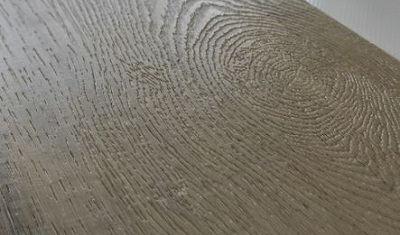
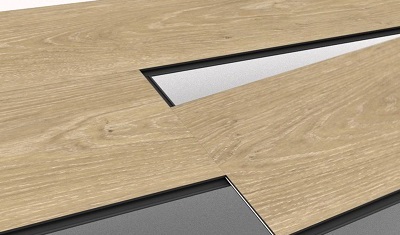
3C-Floor product photographs illustrate backing and surface terminology. A photograph cannot verify thickness, emissions or acoustic results.

The underside helps identify how a product interfaces with the substrate. Confirm the actual fixing method in its instructions.

Approve color, gloss, texture and joint appearance on assembled samples. Wood appearance alone does not identify the core.
Which exposure does the claim cover: the vinyl body, assembled joints or a complete wet-area installation? Surface spills and moisture rising from the substrate are separate issues.
Use the waterproof and water-resistant vinyl comparison to define the claim before choosing a room application.
Which traffic, point loads, wheeled loads, cleaning chemicals and use classification are covered? A wear-layer number alone does not answer those questions.
For a shop, corridor or hospitality project, request model-specific performance evidence and a compatible installation system.
Which flooring, pad, structural slab and ceiling were tested together? IIC and STC describe different sound pathways and depend on the assembly.
Compare matching test scopes, and confirm any additional underlay before installing it beneath a click floor.
Installation notice: confirm the substrate condition, flatness, moisture assessment, adhesive or underlay, conditioning, movement allowances and service environment. Generic terminology does not replace the selected flooring system’s instructions. Continually wet, exterior or specialist-use areas need explicit product approval.
Replace “premium waterproof vinyl” with a product identity, measurable construction and an agreed installation. Then compare the same configuration across suppliers.
Use the flooring collection specification sheet to organize SPC, WPC, LVT and roll options before requesting a model-specific offer.
Direct answers for comparing materials, interpreting units and preparing a wholesale or project brief.
Vinyl flooring terminology covers product families, construction, dimensions, installation methods and performance claims. LVT and LVP identify common luxury-vinyl categories or formats; SPC and WPC describe core constructions. Wear layer, backing and installation must still be specified separately.
LVT means luxury vinyl tile, and LVP means luxury vinyl plank. SPC generally identifies a dense mineral-filled rigid core; WPC generally identifies a foamed composite rigid core. The labels overlap: a plank sold as LVP may have an SPC or WPC core. Request the actual construction and installation system.
No. One mil equals 0.001 inch, or exactly 0.0254 mm. A 20 mil wear layer is 0.508 mm. A 0.5 mm wear layer is about 19.69 mil, often rounded to 20 mil in commercial descriptions; the agreed nominal specification should remain explicit.
No. A 20 mil wear layer measures only the protective layer above the print, not the complete plank. Overall thickness includes other structural layers and may include an attached pad depending on the supplier’s convention. Confirm all three measurements separately.
No. A water-resistant or waterproof vinyl component does not establish a watertight room. Water can reach the substrate through joints, edges and penetrations. Confirm the floor assembly, substrate moisture condition and approval for the intended wet-area use.
No. Dry back flooring is bonded with a separately selected adhesive; click lock describes a mechanical joint, commonly used in floating systems; loose lay uses a purpose-designed construction and backing with restraint determined by its instructions. None of these names removes subfloor preparation requirements.
Define product family and core, flooring-body thickness, wear layer, pad, dimensions, décor, finish, installation system and intended use. Add quantities per SKU, carton coverage, target-market evidence, sample approval, packaging, delivery terms and destination. Ask 3C-Floor to confirm the exact available configuration and commercial terms.
Send 3C-Floor your application, target market, product family, body thickness, wear layer, size, surface, backing and quantity. Add sample, private-label packaging, documentation and destination requirements so the selected configuration can be confirmed.
Technical reading: RFCI on VOC-emissions certification · EF Contract on LVT layers and units · Shaw Contract on acoustic assemblies. General references explain terminology; they do not certify any 3C-Floor product.