Welcome to 3C-Floor — Your Trusted Manufacturer of SPC Flooring, WPC Vinyl Flooring, LVT Flooring & PVC Flooring Rolls.
  • 0086 13321818576 (Steven Lee)
News
Current Location:Home > News

What Does Waterproof Flooring Mean? | SPC, LVT & WPC Guide | 3C-Floor

Update:2026/9/21 10:05:20 Views:5
What Does Waterproof Flooring Mean? | SPC, LVT & WPC Guide | 3C-Floor
Flooring Buyer Guide · Waterproof Meaning Explained

What Does Waterproof Flooring Mean?

Waterproof flooring means the flooring material is designed so water exposure does not damage the plank, tile or sheet under the conditions defined by the manufacturer. It does not automatically mean water can never pass through joints, edges or wall perimeters, and it does not turn the subfloor or room into a waterproof system. For SPC, WPC and vinyl flooring buyers, the practical question is therefore: what part of the product is waterproof, under what exposure, and what does the installation still need to protect?

Product claimWaterproof usually describes the flooring material or a defined installed product system.
Not a room membraneSeams, transitions and the perimeter still matter when water can reach the substrate.
Buyer checkRead the SKU warranty, installation instructions and test scope—not only the carton label.
Grey wood-look waterproof flooring installed in a bright living space
Simple definition A waterproof core can survive water exposure; the installed room still needs correct joints, perimeter detailing and subfloor moisture control.
Direct answer

Waterproof describes the flooring product—not every layer below it

Featured answer

“Waterproof flooring” generally means the floor covering itself is engineered to resist water without swelling, breaking down or losing its intended form during the water exposure covered by the product specification. A waterproof plank can still be installed over a moisture-sensitive or wet subfloor, and water may still travel through perimeter gaps or joints. That is why waterproof flooring and subfloor moisture protection are separate decisions.

The distinction buyers should understand

Waterproof vs water-resistant flooring

Both terms relate to moisture, but they are not interchangeable. “Water-resistant” normally describes limited tolerance to spills or surface moisture. “Waterproof” is a stronger product claim, but the exact meaning still depends on the manufacturer’s documented conditions, warranty language and installation method.

Question Water-Resistant Flooring Waterproof Flooring What a Buyer Should Verify
How does the product handle water? Designed to tolerate limited spills, humidity or surface moisture for stated conditions. Designed so water exposure does not damage the flooring material or defined product construction. Exposure time, test method, warranty exclusions and approved room types.
Can the core swell? It can, depending on the core material and how long moisture remains. A waterproof resilient core is selected specifically to avoid water-related swelling or breakdown. Core composition and SKU-level product documentation.
Are the seams automatically watertight? No. Not necessarily. A waterproof plank does not automatically create a sealed waterproof assembly. Click-joint design, installation instructions, perimeter details and sealant requirements.
Does it stop concrete slab moisture? No. No. Waterproof flooring is not automatically a vapor barrier. Subfloor moisture testing and any required vapor-control layer.
Is it automatically suitable for showers? No. No. Shower and wet-area waterproofing normally requires a purpose-designed waterproofing system. Specific room approval and local project requirements.

Buyer rule: treat “waterproof” as a technical product attribute that must be read together with the installation manual and warranty—not as a promise that every leak, flood or wet-subfloor condition is covered.

Where the waterproof claim comes from

Which flooring constructions are commonly sold as waterproof?

For resilient flooring programs, waterproof performance is usually tied to a non-wood-based vinyl or composite structure. 3C-Floor supplies multiple constructions for different market positions, from rigid SPC to comfort-oriented WPC and design-focused LVT.

01

SPC rigid core

SPC uses a dense stone-plastic composite core. It is widely chosen for kitchens, bathrooms, basements, rentals and commercial interiors because the core is dimensionally rigid and suited to moisture-prone spaces.

See 3C-Floor’s waterproof SPC flooring reference for product-specific structures.

02

WPC vinyl flooring

WPC is another waterproof vinyl-core format, often positioned where buyers want a softer, warmer or more cushioned feel than dense SPC. The right specification depends on traffic, indentation risk and target market.

Compare construction options on the WPC flooring manufacturer page.

03

LVT / LVP

Luxury vinyl tile and plank can be used in waterproof flooring programs, but installation style matters. Glue-down, click and loose-lay products manage joints, subfloor preparation and replacement differently.

Review the main LVT flooring constructions before specifying a project.

04

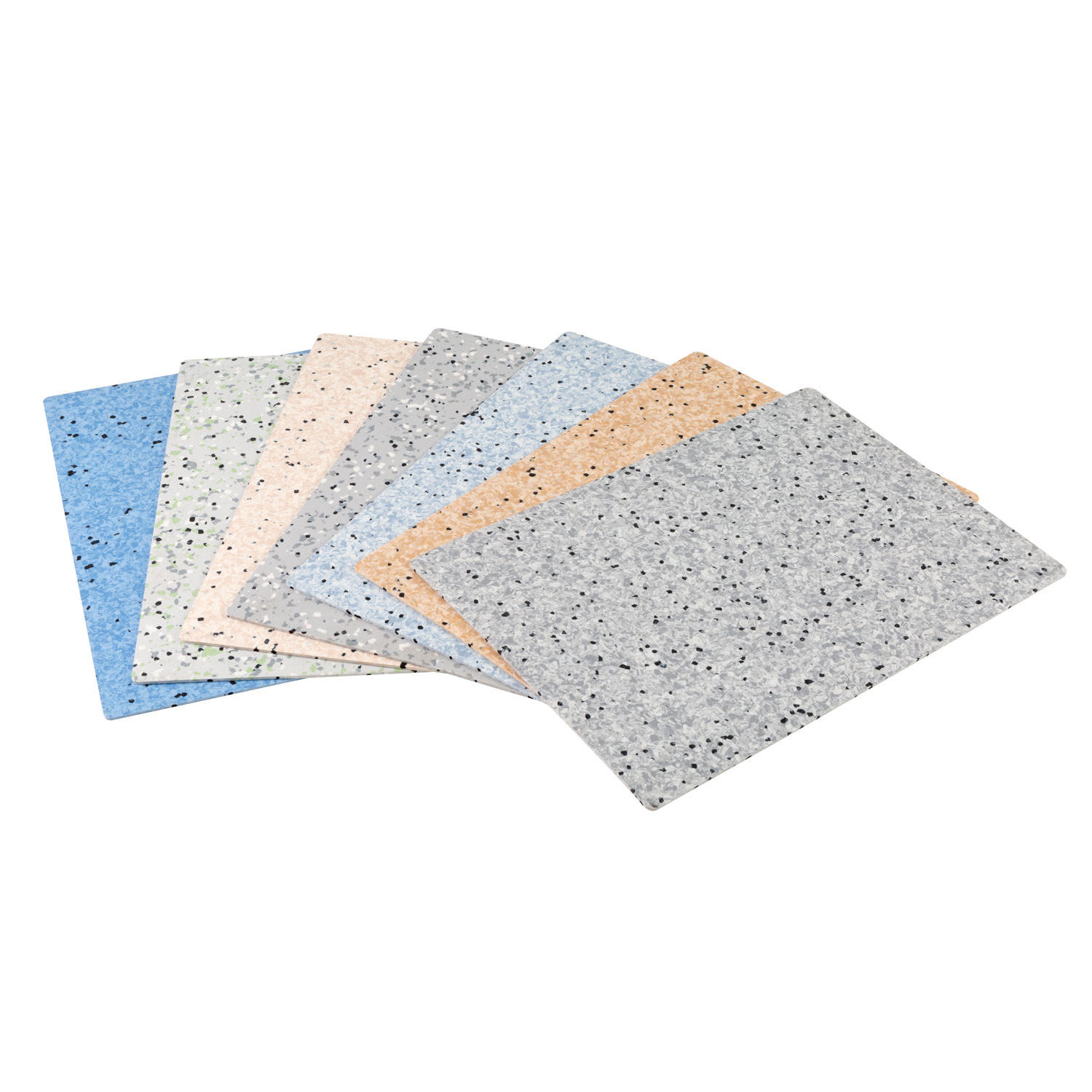
Sheet & roll vinyl

Vinyl sheet can reduce the number of seams across large areas. It remains important to manage substrate preparation, adhesive compatibility, seam treatment and edge details according to the product system.

A point many product pages miss

A waterproof plank is not the same as a waterproof room

Waterproof flooring solves one part of the moisture problem: the floor covering itself. The complete installation still includes joints, perimeter gaps, door transitions, pipes, wall junctions, substrate conditions and—in some projects—vapor movement from below.

Water from above

Kitchen spills, pet water, wet cleaning and bathroom splashes act on the top surface. A waterproof core reduces the risk that the plank itself will swell or disintegrate.

Water through the assembly

Liquid can still find a path at room edges, penetrations, damaged joints or transitions. The product may remain intact while the material beneath it becomes wet.

Moisture from below

Concrete slab moisture and vapor are substrate conditions. A waterproof core does not automatically remove the need for moisture testing or a project-specific vapor-control strategy.

Procurement implication: when a buyer asks “Is this flooring waterproof?”, the follow-up should be “What exactly is waterproof—the core, the full plank, the joint, or the installed system—and what water events are excluded?”
3C-Floor image set

Waterproof flooring in product, surface and installed contexts

These images use real 3C-Floor website assets and are paired with descriptive ALT text so the page is understandable to users and image search systems.

Why SPC is frequently used for waterproof programs

The core does most of the moisture work; the wear layer does a different job

SPC flooring combines a rigid mineral-plastic core with a printed décor layer and a transparent wear layer. Buyers sometimes confuse overall thickness, wear layer and waterproof performance, but they solve different problems.

  • Rigid core: provides shape, stiffness and water-resistant product structure.
  • Wear layer: protects the visual surface from abrasion and daily traffic.
  • Decor film: creates wood, stone or other visual designs.
  • Optional IXPE/EVA backing: can add comfort, acoustic support and installation convenience, but does not automatically replace a vapor barrier.
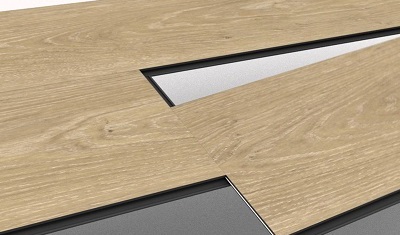
  • Click profile: determines how planks connect; joint quality matters for stability and surface water behavior.

For total-thickness planning, use the SPC flooring thickness guide instead of assuming that a thicker plank is automatically more waterproof.

SPC vinyl flooring plank stack showing rigid multi-layer construction
Room-by-room interpretation

Where does “waterproof” matter most?

Kitchens & dining areas

Frequent spills, wet cleaning and appliance leaks make waterproof resilient flooring attractive. Buyers should still coordinate the floor with cabinet installation, expansion space and appliance protection.

Bathrooms & laundry rooms

A waterproof SPC or vinyl core can handle routine splashes better than moisture-sensitive wood-based flooring. It should not be treated as the waterproofing membrane for showers, drains or structural wet areas.

Basements & slab-on-grade spaces

Waterproof flooring helps with surface spills, but basement and slab moisture can come from below. Concrete moisture evaluation and project-specific vapor control remain separate steps.

Hotels & apartments

Waterproof flooring supports repeatable room packages across bedrooms, kitchens, corridors and selected wet-use interiors. For B2B supply, repeat-order control of color, locking profile, wear layer and backing matters as much as the waterproof label.

Retail & light commercial

Moisture resistance can simplify maintenance, but commercial projects must also specify traffic load, wear layer, rolling loads, indentation, slip expectations and cleaning chemistry.

Renovation projects

Waterproof click flooring is often selected for fast renovation. Existing floors still need to be stable, clean and sufficiently flat, and substrate moisture should be evaluated before installation.

Buying decision

How to evaluate a waterproof flooring claim before you buy

A useful specification separates the marketing phrase from the measurable product construction. Ask the supplier to define what the claim covers and to connect it to the exact SKU you are approving.

1

Identify the core

Ask whether the product uses SPC, WPC, flexible LVT or another structure. Waterproof behavior starts with the material system, not the printed décor.

2

Read the water limitations

Confirm whether the claim covers routine spills, standing water, joint exposure, leaks, flooding or only the core itself. The warranty wording is more useful than a single icon on packaging.

3

Check the installation system

Click, glue-down and loose-lay systems manage joints differently. Confirm the approved substrate, perimeter gap, transition, underlay and sealing details.

4

Separate surface wear from waterproofing

Wear layer thickness addresses traffic and abrasion. It is not a substitute for a waterproof core or a correct installation system.

For attached backing: use 3C-Floor’s IXPE flooring underlayment guide to compare backing thickness with click-joint support and total plank build. Attached foam improves the floor system in specific ways, but it should not be assumed to perform every moisture-control function.
RFQ checklist

What should importers and project buyers send with a waterproof flooring inquiry?

A detailed RFQ makes it easier to compare like-for-like quotations and reduces the risk of receiving samples that look similar but use different constructions.

Product & performance

  • SPC, WPC, LVT/LVP or vinyl sheet/roll
  • Overall thickness and separate wear-layer thickness
  • Plank or tile dimensions
  • Click, glue-down or loose-lay installation
  • Backing material and thickness, if attached
  • Room type, traffic level and expected water exposure
  • Required test documents for the target market

Commercial program

  • Target market and application
  • Décor, texture and color direction
  • Order quantity and repeat-order expectations
  • Private-label carton, label and pallet marking
  • Destination port
  • Sample approval requirements
  • Any project-specific warranty or installation requirement

Build the waterproof specification before comparing prices

3C-Floor can help B2B buyers compare SPC, WPC and LVT structures according to room use, thickness, wear layer, installation method, backing, décor and packaging. For the broader OEM range, see the verified waterproof flooring manufacturer page.

Common sourcing mistakes

Four mistakes that make “waterproof” less useful as a specification

Buying the label instead of the SKU

Two products can both be marketed as waterproof while using different core density, joint geometry, surface protection, backing and warranty language. Approve the complete SKU, not a category name.

Assuming waterproof means flood-proof

A plank may survive water while water migrates under the floor. Flood recovery, subfloor drying and mold prevention are building-system issues, not only flooring-material issues.

Ignoring the subfloor

A waterproof top layer cannot flatten an uneven base or resolve uncontrolled vapor from below. Subfloor preparation remains part of the installation specification.

Using thickness as a shortcut

Total plank thickness affects rigidity, finished height and click geometry; the wear layer affects surface durability. Neither number alone proves water performance.

Frequently asked questions

Waterproof flooring questions buyers ask most often

What does waterproof flooring mean?

Waterproof flooring means the flooring material or defined product construction is designed so normal water exposure does not damage it under the stated conditions. It does not automatically mean the entire installed floor, room perimeter or subfloor is watertight.

What is the difference between waterproof and water-resistant flooring?

Water-resistant flooring offers limited moisture tolerance; waterproof flooring makes a stronger claim that water will not damage the defined flooring material or product system. The exact difference should be confirmed in the product specification, installation guide and warranty.

Is SPC flooring really waterproof?

SPC flooring is widely specified as waterproof because its dense stone-plastic composite core is not a wood-fiber core that swells in the same way as many moisture-sensitive materials. Buyers should still verify the exact SKU, click system, use area and warranty scope before approving a program.

Can waterproof flooring be used in bathrooms?

Many waterproof SPC, WPC and vinyl products are suitable for bathroom floors when the manufacturer approves the application. They do not replace the waterproof membrane, drain detailing or wet-area construction required for showers and other continuously wet zones.

Does waterproof flooring protect a concrete subfloor from moisture?

No—not automatically. A waterproof flooring core protects the floor covering from water damage, while concrete moisture and vapor come from the substrate side. Moisture testing and any required vapor-control layer remain separate project decisions.

Is waterproof vinyl flooring the same as waterproof SPC?

SPC is one type of waterproof vinyl flooring, but waterproof vinyl can also include WPC, LVT/LVP and sheet constructions. SPC is distinguished by its dense rigid core; WPC is usually positioned for more cushioned comfort; LVT can be flexible or click-based depending on the system.

Does an attached IXPE backing make the floor more waterproof?

An attached IXPE pad primarily supports acoustic, comfort and installation objectives; it should not automatically be treated as the project’s vapor barrier or waterproof membrane. Verify the full approved construction before removing a separate moisture-control layer from the specification.

What should I include in a waterproof flooring RFQ?

Send the product type, application, thickness, wear layer, plank size, installation method, backing, décor, expected water exposure, quantity, packaging, target market, required documents and destination port. This allows the supplier to quote a defined construction rather than a generic “waterproof floor.”

Need an SPC, WPC or LVT waterproof flooring program?

Send 3C-Floor your target market, room type, total thickness, wear layer, size, surface, backing, color direction, quantity, packaging requirements, documentation needs and destination port. The quotation can then be built around one defined construction instead of a vague “waterproof” label.

Landlord hotline:
+86-021-54361792
Email:
info@3c-floor.com