- 0086 13321818576 (Steven Lee)
- info@3c-floor.com
Short answer: in the current U.S. flooring market, resilient vinyl—especially luxury vinyl plank/tile (LVP/LVT) and rigid-core SPC—is one of the strongest mainstream flooring families by industry sales and digital product interest. Laminate also leads some homeowner installation surveys, while hardwood remains a premium favorite. “Most popular” changes depending on whether you measure total sales, household projects, online interest, room type or price segment.
For importers, distributors and project buyers: if you need a broad-appeal, wood-look, low-maintenance program, start by comparing LVP/LVT, SPC and WPC. Then choose the construction by traffic, moisture exposure, installation method, acoustic needs, target price and repeat-order strategy—not by trend alone.

The clearest answer is not “one material wins everywhere.” Current data points to a cluster of leaders: resilient vinyl/LVT dominates industry sales, rigid core is the largest part of LVT, SPC remains the largest rigid-core construction, and luxury vinyl leads flooring visualization activity in the Americas. At the same time, a large homeowner-services survey reports laminate as its most common recent installation material. That makes the useful answer more precise: LVP/LVT and SPC are the strongest broad-market choices for a buyer who wants current demand plus wide application flexibility; laminate and hardwood remain important competing categories.
Floor Covering News reported resilient flooring at 36.5% of total flooring dollar sales for 2025, with LVT generating more dollar sales than any other flooring category.
The same 2026 industry report said rigid-core products accounted for about 70% of LVT sales, keeping SPC and WPC central to current resilient-flooring demand.
A 2026 Roomvo study covering 2025 visualization behavior reported luxury vinyl leading the Americas at 36%, followed by tile at 25%.
Popularity is useful only when it helps a buyer narrow the specification. The table below separates market momentum from project fit. It is not a universal quality ranking; each construction solves a different mix of moisture, comfort, installation, appearance and budget needs.
| Flooring Type | Why It Is Popular Now | Moisture Direction | Installation Direction | Strong Use Cases | Buyer Watch-Out |
|---|---|---|---|---|---|
| LVP / LVT | Realistic wood/stone visuals, easy maintenance, multiple constructions and broad residential/commercial acceptance. | Vinyl construction is highly water-resistant; the full floor system still depends on subfloor and perimeter details. | Click/floating, glue-down and loose-lay options exist by product family. | Homes, apartments, hospitality, retail, offices, renovation. | “LVP” is not a complete spec. Confirm core/body, wear layer, backing and installation system. |
| SPC rigid core | Rigid click construction, dimensional stability, wood-look designs and strong position within the LVT market. | Core is moisture-tolerant; installation and substrate moisture still require control. | Usually click/floating in mainstream rigid-core programs. | Kitchens, living areas, apartments, retail, renovation and many commercial uses. | Do not assume a rigid plank can bridge an uneven subfloor. Joint quality and flatness matter. |
| WPC rigid core | Softer feel and acoustic/comfort positioning compared with denser rigid constructions. | Designed for moisture-resistant resilient-floor programs; verify exact product specification. | Commonly click/floating. | Bedrooms, living areas, apartments and comfort-led residential/hospitality programs. | Compare density, indentation behavior, backing and total build—not only total thickness. |
| Laminate | Affordable wood look, improved visual quality and strong homeowner demand in some installation datasets. | Varies widely. Water-resistant or waterproof marketing must be checked against the exact product system. | Commonly floating/click. | Bedrooms, living rooms, value-focused residential projects. | Do not transfer moisture claims from one laminate line to another. |
| Engineered hardwood | Real wood surface, premium appearance and strong design/resale appeal. | Not automatically waterproof. Moisture and humidity control remain important. | Floating, glue or nail methods depending on construction. | Premium residences, living areas, hospitality and design-led projects. | Specify veneer/wear layer, core, finish and moisture limits separately. |
| Porcelain / ceramic tile | Durability, wet-area fit, stone/concrete visuals and strong regional use. | Excellent tile-body water tolerance; grout, substrate and waterproofing assembly still matter. | Bonded installation. | Bathrooms, entries, kitchens, commercial public areas. | Hard/cold feel, substrate preparation and labor can influence project economics. |

Current flooring demand is being pulled by a practical combination: buyers want the look of wood, easier cleaning, lower maintenance, moisture-tolerant construction, fast renovation and predictable repeat-order programs. Luxury vinyl and rigid-core products can address those priorities without asking every project to accept the maintenance or climate sensitivity of real wood.
For a deeper construction overview, see the verified 3C-Floor SPC flooring range. Buyers who need flexible luxury vinyl options can compare the LVT flooring range.
A useful flooring program changes by room. The most popular material overall can still be the wrong specification for a particular substrate, traffic level or acoustic target.
Moisture tolerance and easy cleaning push many buyers toward LVP/LVT or rigid-core SPC. Confirm joint system, perimeter detailing, subfloor moisture and slip requirements for the actual project.
Wide-plank wood visuals are strongly on trend. SPC, WPC, LVP, laminate and engineered wood can all deliver the look; construction should be selected by budget, sound, feel and moisture conditions.
Comfort and noise control become more important. WPC, LVP with suitable backing, laminate with underlay and wood products all compete here. For resilient programs, compare attached backing separately from total plank thickness.
Traffic, rolling loads, maintenance cycles, downtime and replacement strategy matter more than a trend label. Glue-down LVT may suit low-profile commercial layouts; SPC can suit rigid click programs when the substrate is appropriate.
If your buyer is choosing between the two major rigid-core directions, use 3C-Floor’s SPC vs WPC comparison to separate rigidity, comfort, acoustics and installation considerations.
The material trend and the visual trend are not the same thing. Across vinyl, laminate and wood categories, 2026 reporting consistently shows a move away from cold gray and high gloss toward warmer, more natural-looking surfaces.
Natural oak, honey, caramel, greige and medium-brown directions are replacing cool gray as the default visual language in many markets.
Wider plank proportions create fewer seams and a calmer open-plan look, especially in living areas, apartments and hospitality spaces.
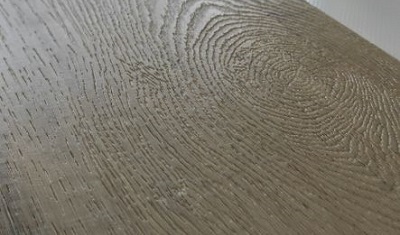
Low-sheen and embossed surfaces are favored over glossy finishes because they look more natural and can disguise everyday scuffs and dust better.
Patterned layouts and more synchronized wood textures help resilient flooring compete visually with natural wood while retaining engineered-floor practicality.
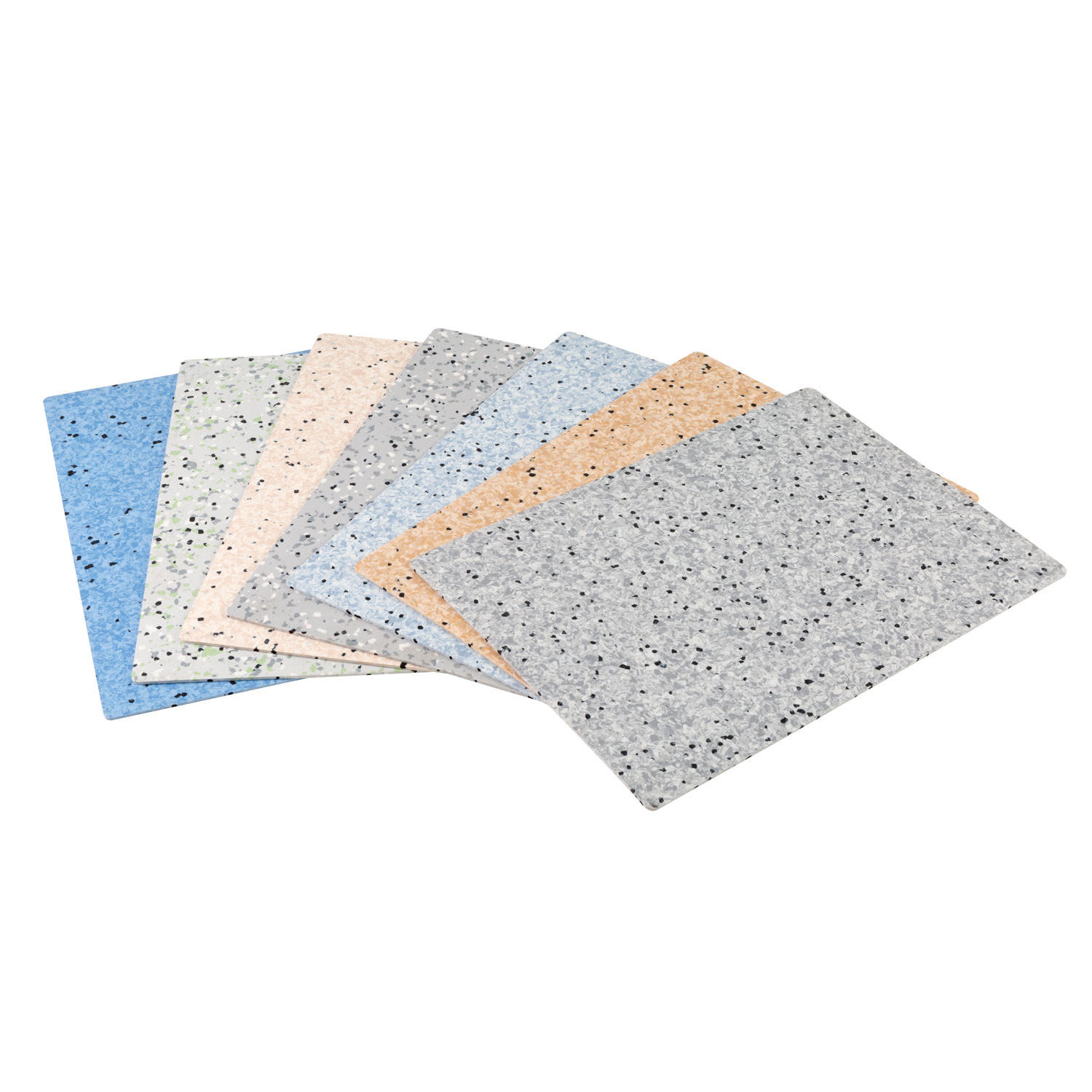
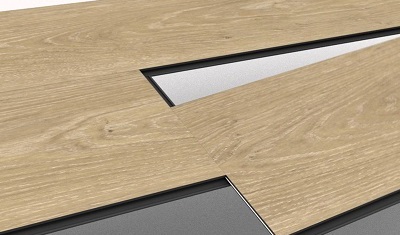
The images below are hosted on 3C-Floor’s website and show several aspects buyers compare before ordering: installed scale, plank construction, surface appearance, profile geometry and moisture-resistant flooring behavior.


Do not build a collection around one “winning” material. Build around customer problems. A distributor can use SPC for broad rigid-core demand, WPC for comfort-led programs, and LVT/LVP for click, glue-down or loose-lay flexibility. Then shape the assortment with current décor directions rather than creating too many nearly identical SKUs.
For comfort-focused rigid-core sourcing, compare the verified 3C-Floor WPC flooring range. If the collection is specifically wood-look vinyl plank, see the luxury vinyl plank buyer guide.
Popularity does not prevent specification mistakes. An accurate B2B flooring quote should identify the full product, not just “SPC 5 mm” or “LVP oak.” Send the known values below; where something is undecided, state the application and target market instead of guessing.
Acoustic backing is increasingly important in apartments and hospitality. Review the IXPE flooring underlayment and SPC backing guide before treating backing thickness as a generic add-on.
These verified 3C-Floor pages cover the product families and selection issues most closely connected with current flooring demand.
Rigid-core product range and SPC construction direction.
Luxury vinyl tile and plank family overview, applications and installation formats.
Comfort-oriented rigid-core vinyl flooring direction.
Detailed LVP construction, installation and OEM purchasing guide.
Rigid-core comparison for comfort, stability and project selection.
Backing, acoustic planning and SPC IXPE selection for buyers.
For the broad U.S. market in 2026, resilient vinyl—especially LVT/LVP and rigid-core SPC—has the strongest combination of industry sales share, visual-search interest and broad room suitability. However, some homeowner installation datasets report laminate first, so “most popular” depends on the metric. For a B2B assortment, LVP/LVT, SPC and WPC deserve close comparison because they cover multiple price, installation and application segments.
Yes. 2025 market data published in 2026 shows SPC remains the largest part of the rigid-core resilient category. Its popularity comes from a rigid click construction, wood-look visuals, moisture-tolerant core and suitability for many residential and commercial programs. The exact product still needs correct subfloor preparation, joint quality and application-specific specification.
Both are highly popular. Industry sales and visualization data strongly support LVP/LVT, while Angi’s recent installation sample reports laminate leading its own customer projects. The practical distinction is that popularity varies by channel: retailer sales, contractor projects, DIY installations and online visualization behavior are not the same dataset.
Warm natural tones are prominent: light oak, honey, caramel, greige and medium brown. Matte or low-sheen surfaces and wider plank proportions are also widely reported. For OEM collections, approve the physical décor and embossing sample rather than selecting color from a screen alone.
LVP/LVT and rigid-core SPC are common choices because moisture management and easy cleaning are important in these rooms. A water-resistant or waterproof plank does not make the entire room assembly waterproof; subfloor moisture, perimeter details, transitions and installation instructions still matter.
Commercial projects commonly use resilient products such as glue-down LVT, SPC, homogeneous/heterogeneous vinyl sheet and other project-specific constructions. The right choice depends on traffic, rolling loads, cleaning cycles, downtime, subfloor conditions and required test documentation—not popularity alone.
No. Total thickness and wear layer do different jobs. Buyers should compare the entire build: core/body, wear layer, click profile, backing, surface, plank size, edge and installation method. A thicker headline number does not automatically mean a better fit for the project.
Send the product family, installation method, total thickness, wear layer, size, surface, backing, décor, quantity, application, target market, packaging requirement, any required documentation and destination port. If part of the specification is undecided, describe the end use and target channel so the product direction can be discussed before the quote is finalized.
Tell 3C-Floor your target market, application, preferred construction, thickness, wear layer, plank size, backing, décor direction, quantity, packaging and destination port. Compare SPC, WPC and LVT/LVP specifications before locking the collection.
Suggested URL: https://www.3c-floor.com/what-type-of-flooring-is-most-popular-now.html
Content scope: Current market trend and buyer-selection guide. This page intentionally differs from 3C-Floor’s existing “Why SPC Flooring Is So Popular in 2025” article by comparing multiple flooring categories, current 2026 market signals, room fit and B2B sourcing decisions.
Data note: Market-share figures describe reported 2025 U.S. industry performance or 2025 digital behavior published in 2026. They should not be treated as a guarantee of future demand in every country or sales channel.