WPC with IXPE
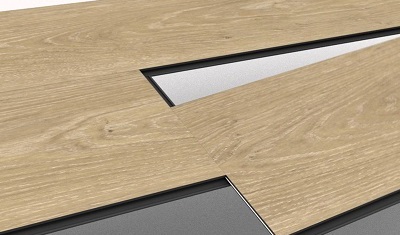
IXPE is a cross-linked polyethylene foam commonly selected for attached-pad flooring where buyers want resilient support, a clean premium appearance and a strong comfort-and-acoustic story without making the pad overly soft.
A backing is not an afterthought beneath WPC flooring. It changes how the finished plank feels, sounds, installs and fits a price tier. 3C-Floor builds WPC with EVA underlay, WPC with IXPE and WPC with cork backing as coordinated product systems—not as one plank with three interchangeable marketing labels.
WPC backing usually refers to the resilient underlay attached to the underside of a WPC click plank. Its job is to create a more controlled interface between the WPC core and the subfloor. Depending on the backing material and density, it can improve walking comfort, soften impact sound, reduce the hollow character of a floating floor and simplify installation by eliminating a separate loose pad.
The critical point for distributors, contractors and private-label buyers is that the pad must support the locking system. A backing that is simply “thicker” is not automatically better. Too much compression can increase movement under the board; too little resilience may not deliver the comfort or room sound buyers expect from WPC.
The strongest product line is not built by declaring one material the winner. It is built by assigning each backing to the right customer expectation, channel price and installation condition.
IXPE is a cross-linked polyethylene foam commonly selected for attached-pad flooring where buyers want resilient support, a clean premium appearance and a strong comfort-and-acoustic story without making the pad overly soft.
EVA provides soft cushioning and shock absorption at a commercially attractive cost. It is useful when a distributor needs a comfortable WPC click product at a mainstream price point and the pad density is matched carefully to the click system.
Cork gives a dense, warm and distinctive natural-material story. It is often considered for premium WPC ranges where tactile feel, sound damping and merchandising differentiation are more important than reaching the lowest possible unit cost.
These are procurement directions rather than universal rankings. Density, formulation, plank construction and the tested floor-ceiling assembly can change the result.
| Buyer Priority | IXPE Backing | EVA Underlay | Cork Backing |
|---|---|---|---|
| Product positioning | Premium mainstream; widely recognized attached-pad upgrade | Value to mid-market; practical comfort story | Premium / natural-material differentiation |
| Walking feel | Resilient and controlled when density is matched correctly | Softer, cushioning feel; compression control is important | Firm, warm and dense feel |
| Impact sound strategy | Good option for engineered acoustic programs; verify complete assembly | Useful for everyday comfort and sound softening in value programs | Strong premium sound-damping direction; assembly still determines final result |
| Moisture planning | Closed-cell foam is well suited to resilient flooring; slab moisture must still be managed | Practical foam backing; does not replace moisture testing or required vapor control | Requires disciplined subfloor moisture planning, especially over concrete |
| Typical planning thickness | 1.0–2.0 mm | 1.0–2.0 mm | 1.5–2.0 mm |
| Channel use | Dealers, private label, apartments, hospitality | Volume retail, builders, rentals, residential renovation | Premium retail, boutique collections, upscale residential |
Planning ranges are starting points for RFQ discussion. Final WPC backing thickness, density, click-system compatibility and test data should be tied to the approved production SKU.
For OEM development, 3C-Floor treats backing selection as the last part of a six-layer product architecture rather than a separate accessory decision.
Use the table as a quotation framework—not a substitute for a technical data sheet. 3C-Floor can adjust the combination around your market, target price and approved sample.
| Specification Item | Typical Planning Direction | Why Buyers Should Care |
|---|---|---|
| Product type | Waterproof WPC vinyl plank with factory-attached backing | Combines the plank and underlay into one controlled SKU for purchasing and jobsite handling. |
| Total thickness | Approx. 5.5–8.0 mm for many backed click programs; custom structures available | Impacts feel, transition planning, price position and core geometry. |
| Wear layer | 0.3 / 0.5 / 0.7 mm directions | Should follow actual traffic expectations instead of being chosen as an isolated headline number. |
| Backing | IXPE 1.0–2.0 mm; EVA 1.0–2.0 mm; cork commonly 1.5–2.0 mm | Thickness and density must work with click-joint support and the intended installed feel. |
| Plank format | Common wood-look plank formats plus custom dimensions | Affects carton efficiency, visual scale, room layout and channel merchandising. |
| Surface | Matte emboss, wood grain, EIR direction, micro-bevel / painted bevel options | Enables value, mainstream and premium tiers without changing the core concept. |
| Installation | Floating click-lock system; profile confirmed by SKU | Attached backing can streamline installation, but subfloor flatness and moisture requirements still apply. |
| OEM packaging | Private-label cartons, labels, installation inserts, pallet marks and sample boards | Turns the product into a repeatable branded program rather than a generic container purchase. |
For distributors and flooring brands, backing can become a deliberate merchandising tool. A three-tier architecture makes the differences easy for sales teams and customers to understand.
WPC with EVA underlay
WPC with IXPE
WPC with cork backing
Impact-sound performance belongs to an assembly: plank, backing, subfloor, ceiling system, room construction and test method. A laboratory value from one assembly should not be presented as a guaranteed result for every building.
Backing must absorb impact without allowing excessive vertical movement under the plank edges. For that reason, a second soft underlayment should not be added automatically beneath a WPC plank that already has an attached pad. Confirm any extra vapor-control or acoustic layer against the approved installation specification.
Residential dealer, apartment project, hotel, builder package or premium private label.
Choose total thickness, wear layer, format, décor, emboss and click profile.
Evaluate IXPE, EVA or cork by support, feel, cost, moisture planning and acoustic brief.
Check color, backing adhesion, edge quality, connected-plank feel and packaging presentation.
Confirm technical sheet, carton marks, inspection checkpoints, loading plan and repeat-order reference.
A detailed RFQ lets the factory quote the floor you actually need and reduces rework between price, sample and mass production.
The supply advantage is coordination. 3C-Floor can develop the WPC core, attached underlay, surface direction, click profile and private-label details as one approved product instead of forcing buyers to manage unrelated components.
IXPE, EVA or cork is selected with the plank construction and locking system in mind, helping preserve the intended installed feel and joint support.
Build differentiated value, mainstream and premium collections using coordinated backing, wear layer, décor, bevel and package choices.
Sample approval, carton references, QC checkpoints and loading coordination help turn a first order into a repeatable international SKU.
There is no single best backing for every WPC program. IXPE is commonly chosen for resilient support and premium attached-pad positioning, EVA for cost-conscious comfort programs, and cork for a dense natural-material premium direction. The final choice should match click geometry, total thickness, subfloor conditions, acoustic requirements and target price.
A factory-attached IXPE pad is normally intended to function as the approved underlayment layer for that plank system. Adding another soft layer can change joint support, so any additional underlayment or vapor-control layer should follow the approved installation specification.
Both can improve comfort and impact sound compared with a bare plank. EVA is often selected for economical cushioning, while IXPE is frequently used where buyers want a denser closed-cell attached pad and premium product positioning. Density, thickness and the complete flooring assembly matter more than the material name alone.
It can be, provided the concrete meets flatness and moisture requirements and the specified moisture-control method is followed. Cork should not be used as a substitute for correcting a wet slab or for a required vapor barrier.
Yes. 3C-Floor can coordinate backing type and thickness with plank thickness, wear layer, décor, embossing, click profile, cartons, labels and sample approval for OEM and private-label WPC flooring programs.
Include the destination market, application, total thickness, wear layer, plank size, backing preference and thickness, click system, décor and surface direction, packaging requirements, expected quantity, testing needs and target delivery schedule.
Tell 3C-Floor whether you want WPC with EVA underlay, WPC with IXPE or WPC with cork backing, plus your total thickness, wear layer, décor, click system, market and quantity. We can help turn those inputs into a sample-ready OEM specification.