- 0086 13321818576 (Steven Lee)
- info@3c-floor.com
3C-Floor supplies WPC flooring for buyers who need more than a standard catalog plank. We support distributors, flooring brands, importers, contractors, sourcing companies, and project purchasers looking for a reliable WPC flooring manufacturer able to balance appearance, comfort, dimensional stability, waterproof performance, and commercially workable delivery.
Whether your program requires click lock WPC flooring for residential collections, a private label wood plastic composite flooring line for retail distribution, or a quote-ready custom WPC flooring manufacturer for hospitality and apartment renovation work, the real buying decision usually comes down to a few essentials: stable product construction, clear specification control, OEM flexibility, dependable lead time, testing discipline, export experience, and responsive communication from sample stage to container loading.
This page is built to help serious buyers evaluate 3C-Floor as a WPC vinyl flooring manufacturer from both the product side and the supply side. It explains how WPC flooring is built, where it performs best, what technical decisions matter most, which customization options drive commercial value, and how an experienced China WPC flooring supplier can support long-term programs instead of one-off transactions.
A WPC flooring manufacturer is not simply a trader offering wood-look planks from multiple factories. In the flooring business, the difference between a real manufacturer and a general supplier affects nearly every part of the order: construction consistency, color repeatability, click precision, surface performance, pad bonding quality, packaging control, and the speed at which samples become saleable products. For buyers building a serious flooring line, working with a true WPC floor factory is usually the difference between a program that scales and one that creates avoidable complaints.
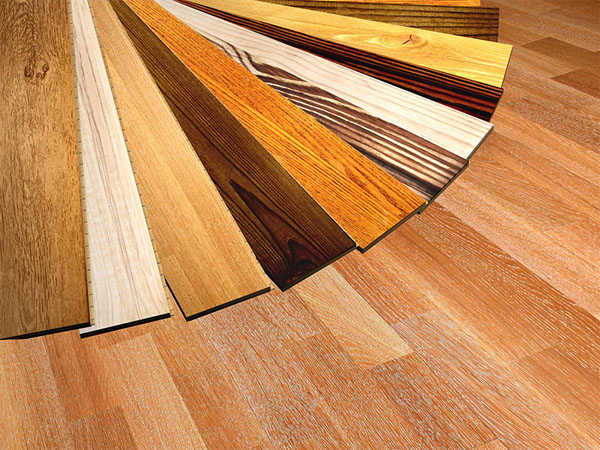
WPC stands for wood plastic composite, a category of multilayer vinyl flooring that combines a decorative surface with a waterproof composite core and, in many cases, an attached underlayment. Compared with many traditional floor options, WPC flooring is selected for the combination of visual design flexibility and practical use: it offers a warmer, softer feel underfoot than many denser rigid-core alternatives, while still delivering the waterproof, easy-maintenance, and floating-installation advantages buyers expect from modern vinyl plank programs.
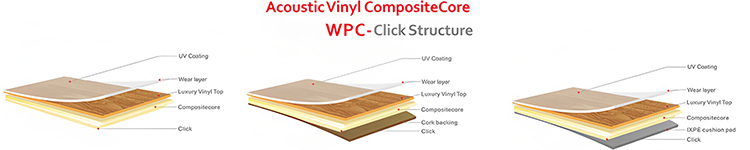
When buyers search for a WPC flooring manufacturer, they are usually not only looking for a product category. They are looking for a production partner that can turn a target market position into the right floor construction. A retail distributor may need a comfort-driven collection for residential remodeling. A flooring brand may need an OEM WPC flooring line with custom carton artwork, tailored plank sizes, and color stories designed to match competitor benchmarks. A contractor or sourcing company may need waterproof WPC flooring for apartment, hotel, or light commercial interiors where installation efficiency and replacement consistency matter just as much as the surface design.
That is why the best WPC flooring supplier is evaluated on two levels. First, the product must work: stable click connection, attractive design, wear resistance appropriate to the use environment, good dimensional behavior indoors, and a convincing underfoot feel. Second, the supply system must work: sample development, technical communication, documentation, production scheduling, QC discipline, and export execution. A buyer may like the first sample, but without a real production system behind it, the second or third container often becomes the real problem.
3C-Floor approaches WPC flooring as part of a larger vinyl flooring manufacturing platform that serves residential, commercial, OEM, and export buyers. That matters because many customers sourcing WPC flooring today are also comparing SPC flooring, LVT flooring, custom vinyl flooring, and underlayment combinations at the same time. In other words, the purchasing decision is rarely isolated. It is often part of a broader product strategy, and buyers benefit from working with a manufacturer who understands how these categories relate in performance, pricing, construction, and market positioning.
Send your target thickness, wear layer, size, surface, quantity, and market requirement. 3C-Floor can help align product structure with your commercial goal.
One of the most important reasons buyers choose a waterproof WPC flooring manufacturer is that moisture resistance has become a baseline expectation in modern residential and light commercial interiors. Kitchens, bathrooms, apartment units, hospitality guestrooms, and renovation projects all demand flooring that looks refined while reducing the practical risks associated with spills, damp conditions, and day-to-day cleaning. WPC flooring answers this need with a waterproof construction that supports broader application flexibility than many traditional options.
Comfort is one of the strongest commercial advantages of WPC flooring. Buyers comparing WPC vs SPC often find that WPC offers a more cushioned feel and a quieter walking experience, especially in bedrooms, living spaces, senior housing, and hospitality environments. For distributors and brands building a comfort-led collection, that difference is not a minor detail. It becomes part of the sales story, the showroom experience, and the reason a customer upgrades instead of buying purely on price.
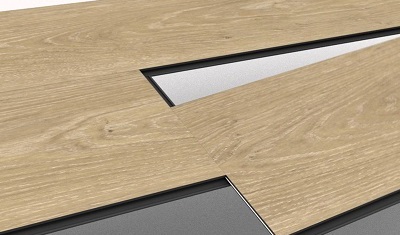
A good click lock WPC flooring program should reduce installation friction rather than create it. Buyers want planks that install smoothly, help maintain line alignment, and support floating installation over suitably prepared subfloors. This matters in both retail and project channels because installation ease influences labor expectations, renovation speed, customer satisfaction, and the perceived quality of the product. Even an attractive floor loses value if the click system creates avoidable installation issues on site.
Modern WPC flooring is not just about waterproof construction. It must also look convincing in the market. Buyers increasingly expect realistic oak, walnut, ash, maple, stone, and contemporary neutral finishes, along with surface treatments such as embossed grain, synchronized texture direction, or premium wood-look visual depth. A capable custom WPC flooring manufacturer should be able to align visual design with the buyer’s price tier and market identity, rather than forcing every customer into the same generic décor library.
Not every market needs the same wear layer. A home-focused collection may prioritize comfort and style while a light commercial program may require a stronger durability position. That is why buyers often ask a wholesale WPC flooring supplier to develop several versions under one color platform. Instead of overspecifying every order, an experienced manufacturer helps the buyer choose a structure that fits the actual channel, foot traffic level, and budget logic behind the collection.
For many distributors and project buyers, attached underlayment is not just a convenience feature. It affects sound reduction, underfoot feel, installation workflow, and perceived product upgrade. In residential and hospitality segments, this can materially influence sales success. A WPC plank manufacturer that understands pad combinations, bonding consistency, and positioning strategy can help buyers avoid the common mistake of treating underlayment as an afterthought rather than part of the finished product value.
A real OEM WPC flooring manufacturer should help buyers shape the final product around commercial goals. That includes color set building, private label packaging, wear layer selection, board dimensions, embossed surface choice, carton quantity logic, and visual presentation for samples and showrooms. This is especially important for importers and brands who are not merely purchasing flooring, but building a line architecture intended to compete against established products in their own market.
The strongest product can still fail commercially if communication is slow, sampling is inconsistent, or production updates are unclear. Serious buyers therefore judge a China WPC flooring supplier by responsiveness, documentation quality, export packing discipline, and shipment coordination as much as by the floor itself. Stability in these areas reduces buying risk, improves reorder confidence, and supports the long-term relationships that matter most in flooring distribution.
Technical details matter because WPC flooring is not purchased as a generic concept. It is purchased as a defined construction with performance expectations. The right structure depends on market segment, distributor strategy, showroom positioning, foot traffic assumptions, and whether the product is intended for mainstream residential use, premium home renovation, apartment turnover, hospitality refurbishment, or selected light commercial interiors.
Below is a practical specification framework for discussing a WPC flooring manufacturer program with 3C-Floor. These options help buyers move from broad inquiry language toward a quote-ready product structure. In real sourcing, the best specification is the one that balances performance, visual appeal, installation practicality, and cost discipline at the same time.
| Specification Item | Typical Options / Notes |
|---|---|
| Product Type | WPC vinyl flooring / wood plastic composite flooring / click-lock floating plank |
| Total Thickness | Typically 4.0mm – 8.0mm depending on target use and product positioning |
| Wear Layer | 0.2mm / 0.3mm / 0.5mm typical options for different channel needs |
| Plank Dimensions | 1195 × 141 / 163 / 192 mm; 1220 × 150 / 180 / 228 mm; 1530 × 180 / 228 mm; custom program discussion available |
| Surface Finish | Embossed, wood grain, EIR-style visual direction, crystal or other market-oriented finishes |
| Decor Layer | Wood-look, stone-look, contemporary neutrals, private label collections, regional style adaptation |
| Installation | Click-lock floating installation for renovation-friendly and distribution-friendly use |
| Underlayment | Attached pad options depending on acoustic, comfort, and market requirements |
| Fire Performance | Class B1 reference for selected constructions |
| Testing Focus | Dimensions, wear resistance, scratch behavior, tear/peel strength, aging, formaldehyde-related checks, water resistance, and other requested items |
| Packaging | OEM carton artwork, private label marks, pallet labels, barcode support, export-ready packing |
| Supply Mode | OEM / ODM / private label / wholesale / project-based export supply |
Buyers should never treat these numbers as isolated values. Thickness, wear layer, core feel, and attached pad work together to shape how the floor feels in a showroom, how it installs on site, how it is explained by a salesperson, and how it is priced against competitor products. That is why many successful importers do not ask only for the cheapest available structure. They ask for the right structure for their channel.
In practical terms, a distributor building a value-oriented residential collection may choose one construction and a brand targeting a quieter, premium plank line may choose another. A project trader bidding apartment renovations may care more about installation speed, color consistency, and repeat availability. A retailer targeting family homes may care more about softness underfoot and the visual warmth of the plank set. The best WPC flooring supplier is the one that can translate those business goals into material decisions clearly.
Customization is where a basic product inquiry becomes a real business opportunity. Many buyers searching for a custom WPC flooring manufacturer are not looking for unusual flooring only for its own sake. They are looking for a product program that fits a specific sales channel, margin structure, and brand presentation. That may mean adjusting the wear layer for a higher-value collection, selecting more commercially usable plank sizes, building a cleaner décor set for regional tastes, or adding private label packaging so the product enters the market under the buyer’s own brand instead of a factory label.
For OEM WPC flooring development, the most common customization points usually include thickness, wear layer, click profile, dimensions, underlayment option, surface texture, bevel preference, gloss balance, and packaging layout. Beyond that, serious buyers also think about how the full product story will be sold: color board design, sample presentation, carton communication, barcode setup, pallet identification, and whether the range should sit as an entry, mid-range, or premium line inside the customer’s own portfolio.
Private label buyers benefit most when customization is approached commercially instead of cosmetically. A new logo on a carton is not enough. The real value comes from making sure the product structure, appearance, and packaging language all reinforce the intended market position. A wholesaler may want straightforward SKUs optimized for volume movement. A retail brand may want fewer colors but stronger differentiation. A project-focused buyer may prefer cleaner, repeatable tones that work well across apartments, hospitality rooms, and common areas where replacement consistency matters more than novelty.
3C-Floor supports WPC flooring customization as part of a broader flooring manufacturing environment that already works across SPC flooring, LVT flooring, custom vinyl flooring, and underlayment-related programs. That matters because many customers are deciding not only what the WPC floor should be, but also how it should sit next to alternative categories in the same offer structure. A supplier who understands that comparison can help buyers avoid overlapping SKUs, confusing price ladders, and unbalanced collections.
Share your target market, price level, and preferred construction. We can help build a specification path that is realistic for both sales and production.
WPC flooring is often selected because it bridges appearance, comfort, and practicality more effectively than many traditional categories. It works especially well where buyers want a warm wood-look floor, easier maintenance, floating installation, and more forgiving underfoot feel. For that reason, a good WPC flooring manufacturer is often supporting multiple customer types at once: residential distributors, project traders, home improvement sellers, hospitality suppliers, and commercial buyers who need a softer stepping surface in controlled indoor spaces.
Living rooms, bedrooms, family spaces, and open-plan interiors often benefit from WPC flooring because comfort and visual warmth matter just as much as durability. Home-focused distributors frequently choose WPC when they want a more upgraded feel than entry-level vinyl while still keeping the waterproof and easy-clean value proposition that modern homeowners expect.
Moisture-prone indoor rooms are one of the clearest use cases for waterproof WPC flooring. Buyers supplying kitchens and bathrooms often want the look of wood with less concern about everyday spills, routine mopping, or damp-use environments. This is where WPC flooring’s construction becomes part of a direct end-user sales advantage.
Renovation programs value products that install efficiently, look modern, and fit predictable budgets. WPC flooring can work well in apartment turnover or multifamily upgrades when the project needs an attractive floating floor with a quieter, more comfortable walk feel and straightforward replacement logic across multiple units.
Hotels, serviced apartments, and guest-facing interiors often need a balance of style, acoustic improvement, and maintenance practicality. WPC flooring can support that balance, particularly in spaces where the design brief calls for natural wood visuals but the operations team still needs waterproof, easy-care flooring performance.
For selected commercial interiors with controlled traffic and comfort-focused design, WPC flooring offers an attractive alternative to harder-feeling categories. The correct wear layer and construction choice are important here, but when properly specified, WPC can support offices, boutiques, showrooms, and customer-facing spaces where ambience matters.
Many WPC flooring buyers are not installing the floor themselves at all. They are building a flooring line to sell into local dealer networks, ecommerce channels, design studios, or wholesale accounts. In those cases, the real application is a distribution strategy, and the product must support repeatable commercial use from sample stage through reorder.
Choosing a WPC flooring supplier is ultimately about risk control. Buyers are not only purchasing planks. They are purchasing production discipline, technical communication, and the confidence that the supplier can support the order after sampling, after confirmation, and after the first shipment. That is why experienced importers and distributors usually ask deeper questions: How broad is the manufacturing system? Is there in-house testing? How quickly does the team respond? Can the supplier handle multiple product categories if the program expands later? Can the factory support OEM development without losing control of the base construction?
3C-Floor positions itself as a flooring manufacturer with a broad vinyl flooring production platform rather than a narrow single-product vendor. According to the company’s official site, the business has focused on PVC vinyl flooring manufacturing in China for more than twenty years and lists a production structure that includes SPC rigid core click flooring, WPC flooring, LVT click, LVT dry back, loose lay, and vinyl rolls. The same official information also presents a workforce of more than 1000 workers across three factories and an overall production capability exceeding 1.5 million square meters per month, including six WPC production lines within that wider system. That kind of scale matters because it suggests the company is set up not only for isolated inquiries, but for ongoing production programs and broader flooring category coordination.
Another important factor is quality communication. 3C-Floor’s official site describes an in-house lab and test reporting covering dimensions, wear resistance, anti-scratch behavior, tear and breaking strength, aging, water-related checks, and other performance items, while also noting support for third-party testing. For buyers, that does not merely sound technical. It changes how projects are managed. When test expectations, construction logic, and documentation pathways are discussed early, the supplier relationship becomes more predictable and easier to scale.
Responsiveness also matters. Flooring orders move through many small but critical decisions: sample approval, décor adjustment, carton review, production scheduling, label confirmation, loading plan, and post-shipment follow-up. The official 3C-Floor site states that questions are answered within 24 hours and highlights its service mindset as part of after-sales support. For international buyers working across time zones, that kind of communication discipline is practical value, not just marketing language.
WPC flooring sits inside a wider portfolio that includes SPC, LVT, custom vinyl flooring, underlayment, and related categories. This is useful for buyers comparing constructions or building a larger flooring offer.
Multiple factories, a large production workforce, and listed WPC production lines support buyers who care about continuity, repeat ordering, and capacity confidence instead of one-time sourcing only.
In-house checks and third-party test support help importers and project buyers manage compliance expectations, shipment readiness, and customer-facing product confidence more effectively.
The product system is compatible with custom specs, branding, packaging, and export-oriented coordination that wholesalers, brands, and distributors usually require.
Fast feedback and structured communication reduce friction during sampling, confirmation, production planning, and reorder management.
3C-Floor is suitable for buyers who want a manufacturer able to discuss both product details and channel logic, from entry collections to more differentiated flooring lines.
Buyers often compare WPC flooring with SPC flooring, traditional LVT, and laminate before finalizing a sourcing direction. The best option depends on the market strategy. If the goal is greater comfort and acoustic softness, WPC usually deserves serious consideration. If the goal is maximum rigidity and stronger indentation resistance, SPC may move higher on the list. If the goal is a glue-down category or a different price structure, LVT may be more relevant. If the buyer is comparing appearance-focused products from outside the vinyl category, laminate may also enter the conversation.
| Category | Main Strength | Typical Limitation | Best-Fit Positioning |
|---|---|---|---|
| WPC Flooring | Softer, warmer, quieter underfoot with waterproof construction | May not be the first choice when the brief is maximum rigidity | Comfort-led residential, hospitality, premium renovation, private label collections |
| SPC Flooring | Dense rigid core, strong stability, often favored for heavier-use interiors | Can feel harder underfoot compared with WPC | High-traffic residential, selected commercial, stronger rigid-core positioning |
| LVT Flooring | Flexible design and installation formats depending on construction | Does not deliver the same WPC-style cushioned core feel | Glue-down or alternative vinyl strategies, project-specific categories |
| Laminate Flooring | Familiar visual category and broad retail awareness | Different moisture behavior and maintenance expectations versus waterproof WPC | Price-sensitive or traditional retail channels depending on market habits |
In commercial practice, many importers do not choose one category and ignore the others. Instead, they use WPC, SPC, and LVT together to build a complete offering. WPC becomes the comfort-led range, SPC becomes the rigid-performance range, and LVT fills other channel needs. That is another reason why working, with a manufacturer that already understands multiple vinyl flooring categories can be an advantage. It allows the supplier conversation to focus on portfolio logic rather than only on whichever category was mentioned first in the inquiry.
For buyers asking specifically about WPC flooring, the deciding factor is often not whether WPC is “better” in the abstract. It is whether WPC is better for the intended sale. If the target customer will respond most strongly to comfort, acoustic feel, and a softer step while still expecting waterproof performance, WPC flooring has a strong commercial argument.
Send your channel, price target, and use scenario. We can help compare WPC flooring, SPC flooring, and other vinyl formats for a more accurate sourcing decision.
To show how a WPC flooring manufacturer relationship works in practice, here is a representative supply model based on the kind of requirements common in export flooring programs. This is not presented as a named public project. It is a typical example of how a distributor-level WPC flooring order is structured when the buyer is building a repeatable line rather than placing a one-time opportunistic order.
The buyer in this scenario is a regional flooring distributor serving home renovation dealers, local contractors, and apartment refurbishment accounts. The distributor wants a new wood-look waterproof collection positioned above entry-level vinyl but below the highest premium category. The product goal is clear: a quieter, more comfortable floor than standard rigid-core options, with click installation, attached pad, modern oak visuals, and private label packaging that can be sold under the distributor’s own brand.
The first step is not color selection. It is product positioning. The buyer defines the intended market, target selling level, preferred wear layer, approximate plank width, and how the floor should be presented in showrooms. From there, the WPC flooring manufacturer can narrow the recommended structure. The discussion then moves into décor direction, underlayment option, sample approval method, and packing details. This matters because if the distributor chooses colors first but does not lock the construction correctly, the collection may look attractive on the sample board yet fail to perform commercially in the channel.
In a representative order flow, the distributor confirms a mid-range to premium residential construction with a click-lock profile, attached pad, and a décor set focused on commercially safe wood visuals instead of experimental patterns. Carton artwork is developed for private label use. Barcode and pallet marks are aligned with warehouse handling needs. The buyer requests sample boards that sales representatives can carry into dealer meetings. At the same time, the WPC floor factory prepares the production schedule and clarifies which checks will be performed before loading.
The real value of the manufacturer relationship appears after approval. A professional WPC flooring supplier does not simply say “production started.” The supplier helps the buyer keep the program controlled: final color confirmation, carton proofing, quantity break by décor, packing review, shipping window, and any required documentation for the destination market. This reduces the risk that the buyer receives the correct floor but the wrong commercial setup. In flooring export, both product and presentation must arrive correctly.
After launch, the distributor gains several commercial advantages. First, the floor is easier to position because the comfort and waterproof story are clear. Second, the private label presentation helps preserve margin and brand identity. Third, reorder logic becomes simpler because the product structure was defined properly from the beginning. Instead of re-sourcing from zero every time, the distributor can expand the collection with related colors, alternative wear layers, or companion SPC/LVT categories if market demand grows.
This kind of case is why many buyers prefer working with a WPC flooring manufacturer instead of a general reseller. The manufacturer relationship is not only about making flooring. It is about building a system the buyer can keep selling.
Many sourcing problems begin long before production. They start when the buyer does not ask the right questions early enough. A strong WPC floor factory should welcome specification-focused questions because clarity improves production efficiency. Below is a practical evaluation framework that helps buyers make a better decision before confirming a container order.
Ask what thicknesses, wear layers, dimensions, surfaces, and backing options are available, and request guidance based on your channel rather than only a price list. A capable manufacturer should help explain why one construction fits a residential collection better while another makes more sense for a project or commercial-use program.
Good samples should represent a real product path, not just a visually attractive one-off. Confirm how colors are approved, how textures are selected, and whether the sample structure matches the structure that will go into production. This helps avoid showroom success followed by shipment disappointment.
Buyers should understand which performance items are checked, what documentation can be discussed, and whether third-party testing can be supported when required. This is especially important for importers and project buyers who must answer technical questions downstream from their own customers.
If you are building a private label or branded collection, do not limit the discussion to carton printing. Ask how far customization can go across dimensions, wear layer, décor range, sample presentation, and market positioning. The more clearly this is defined early, the more repeatable the program becomes.
A manufacturer should be able to explain how production planning works, how décor quantities affect scheduling, how packaging review is handled, and what communication you can expect before loading. Buyers who ignore this often discover too late that a technically acceptable supplier is still operationally difficult.
Even if you are currently buying WPC flooring only, it is useful to know whether the same supplier can also support SPC, LVT, custom vinyl flooring, or underlayment. Many successful flooring buyers expand later, and a broader manufacturing base makes that easier.
When buyers evaluate a WPC flooring manufacturer this way, they reduce risk and improve their chances of building a stable product line. Price still matters, of course. But in export flooring, price only works when the product structure, supply process, and customer-facing presentation all work together.
To support long-term content reuse and stronger product navigation, this page can naturally connect to related categories and service pages already relevant to the same buyer journey. These internal links help users move from WPC flooring into comparison categories, factory capabilities, and supporting product systems.
You can also add more contextual in-content links later inside product comparison paragraphs, OEM sections, or FAQ answers without changing the page structure.
From specification alignment to export packing, 3C-Floor supports buyers who need a real manufacturing partner rather than a generic catalog response.
In most OEM programs, buyers can discuss wear layer, plank size, thickness, surface texture, décor range, attached pad, carton artwork, labels, sample boards, and other presentation details. The most successful custom projects start by defining the target market first, then adjusting the product around that commercial goal rather than choosing options randomly.
WPC flooring is widely selected for indoor spaces where moisture resistance matters, which is why it is commonly used in kitchens, bathrooms, apartments, and other everyday interiors. As with any flooring product, correct installation and suitable subfloor preparation still matter, but waterproof construction is one of the core reasons buyers choose WPC over more moisture-sensitive categories.
The most practical difference is feel and positioning. WPC flooring is often chosen for a softer, warmer, and quieter walking experience. SPC flooring is often chosen for higher density and stronger rigid-core character. The right choice depends on whether your market values comfort first or heavier-duty rigidity first. Many distributors carry both because they serve different customer expectations.
There is no single correct answer without context. Common wear layer options include 0.2mm, 0.3mm, and 0.5mm. The right choice depends on your target channel, price level, and expected foot traffic. A home-focused distributor may not need the same structure as a hospitality refurbishment supplier or a light commercial project buyer.
Yes. Export-oriented suppliers commonly support private label packaging, multilingual cartons, pallet labels, barcode marks, and related shipment details. Buyers should confirm these items before production begins so the final container is commercially ready for warehousing, distribution, or direct resale in the destination market.
WPC flooring can be suitable for selected commercial interiors when the structure is chosen correctly and the application is appropriate. It is especially relevant where comfort, acoustic softness, and modern visual presentation are important. The manufacturer should help the buyer decide whether WPC or another flooring category fits the traffic level and performance expectation more accurately.
To get a faster and more accurate quotation, send your target thickness, wear layer, dimensions, quantity, preferred surface or décor direction, attached pad requirement, packaging idea, destination market, and any testing or documentation expectations. Even approximate information is useful because it helps the supplier recommend a realistic construction path instead of replying with a generic price.
Direct factory cooperation usually improves specification control, communication speed, customization depth, and reorder consistency. It can also make it easier to expand later into related categories such as SPC flooring, LVT flooring, or custom vinyl flooring, which is useful for buyers building a broader product portfolio over time.
If you are looking for a WPC flooring manufacturer that can support waterproof comfort-led products, OEM development, private label packaging, export coordination, and long-term commercial supply, 3C-Floor is ready to discuss your project. Whether you need a quote for a standard collection, a custom WPC flooring manufacturer for a branded line, or a China WPC flooring supplier that can help you compare WPC with SPC and LVT before sourcing, the next step is simple: send the specification direction you have now, and refine from there.
Good flooring programs are rarely built by choosing a random plank from a catalog. They are built by aligning product construction, market position, and supply execution from the beginning. That is exactly where a serious manufacturer relationship creates value.